Upper Egypt

Ancient Baking, Modern Needs: The Revival of Egypt’s Traditional Clay Ovens

In Luxor, artisan Ammar Abdelnabi revives Egypt’s traditional clay ovens, blending heritage, sustainability, and rural craftsmanship in modern homes.
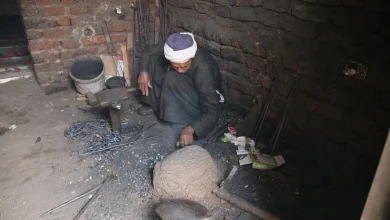

On a quiet street in the Al-Awamiya district of Luxor, southern Egypt, Ammar Abdelnabi carefully molds wet clay with his hands inside the home of Saber Abdelwahab, who recently decided to return to the use of a traditional clay oven after finding that a modern metal one failed to meet his expectations. The earthy scent of clay fills the air, conjuring memories of a time when these rural ovens were an essential feature of everyday life in Egyptian villages.

This centuries-old craft had nearly disappeared with the spread of gas and electric ovens, but it is now witnessing a slow revival, driven by economic pressures and a growing nostalgia for the taste and rituals of traditional bread-making.

Economic Pressures and a Return to Tradition

Ammar, who has been building traditional ovens for nearly fifteen years, began his career in plasterwork before gradually specialising in clay oven construction. Over time, accumulated experience allowed him to refine his techniques and introduce practical design improvements that make daily use easier, particularly for elderly homeowners.

In recent years, many families turned to gas ovens, but soaring fuel prices have prompted a renewed interest in traditional clay alternatives. According to Ammar, financial considerations play a decisive role, alongside the superior quality of bread baked in these ovens. “The bread cooks slowly and evenly,” he explains, “which helps it stay fresh longer without spoiling. And of course, there’s the taste people have grown up with.” Large families, especially in rural communities that still maintain collective or weekly baking traditions, are among the most enthusiastic adopters.

Clay oven
Fully constructed Clay oven. Photo: Abo Elhasan Abd Elsattar

How a Traditional Clay Oven Is Built

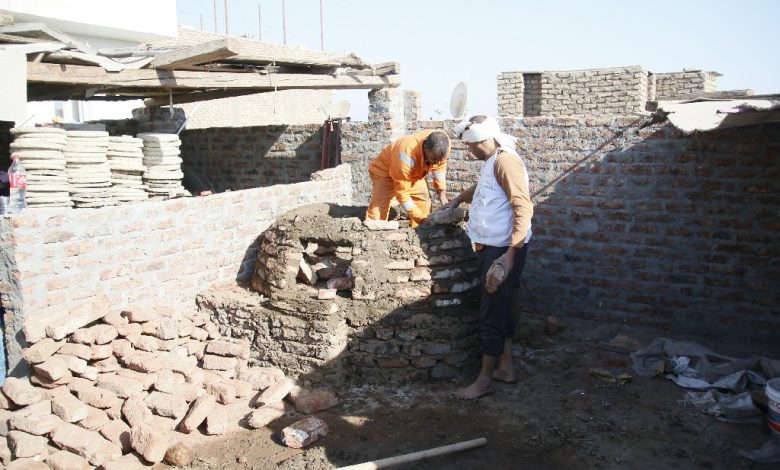
Constructing a traditional oven typically takes between seven and ten days, largely depending on drying times. The process begins with shaping the base, known locally as the kursi, followed by forming the main clay slab. Once dry, the dome, fire chamber, and ventilation openings are sculpted. Clay remains indispensable to the process, as cement retains heat improperly and prevents the oven from “breathing,” which compromises both performance and bread quality.

Sand and heat-resistant materials are blended into the clay mixture to help the oven retain warmth for longer periods, allowing multiple baking cycles without repeated firing.

Tailored Designs for Every Household

There is no standardized size for these ovens. Dimensions vary according to family size and baking needs. Smaller ovens accommodate around twenty loaves, while larger ones can bake up to fifty at a time. Design adjustments often reflect the baker’s physical habits, including hand dominance, to ensure ease of movement. Ammar also incorporates subtle ergonomic touches, such as side ledges for tools and varying seating heights to reduce physical strain during long baking sessions.

oven3
Construction of clay oven. Photo: Abo Elhasan Abd ElSattar

Heat Insulation and Safety Measures

When installed on rooftops, ovens are insulated using layers of coarse salt and brick to prevent heat transfer into living spaces below. Ground-level ovens typically do not require this step, particularly when built on agricultural land, where moisture levels are higher.

The Essential “Burning” Phase

Once construction is complete, the oven undergoes a critical curing stage known locally as al-harq. A fire is lit inside for several hours to dry the materials thoroughly and stabilize the structure. The oven is then sealed until the following day, ensuring durability and safe operation under high temperatures.

From Domestic Use to Cultural Tourism

Traditional ovens are no longer limited to private homes. Several eco-lodges, heritage hotels, and tourist villages across Upper Egypt have begun installing them to offer visitors an immersive cultural experience. In some cases, they function purely as decorative elements evoking rural charm, while in others, they are actively used to bake traditional bread for guests, blending gastronomy with heritage tourism.

oven4
Construction of clay oven. Photo: Abo Elhasan Abd ElSattar

A Craft with Lasting Value

A well-constructed clay oven typically lasts around ten years, though longevity varies according to usage intensity. Internal surfaces wear down first due to constant heat exposure, while the external structure often remains intact far longer. Despite the simplicity of the craft, demand for these ovens is steadily increasing throughout Luxor’s villages, reflecting a broader revival of traditional practices amid contemporary economic and cultural shifts.

Related Articles

Back to top button
BabMasr