The Mahmal Festival: Al-Qusayr Keeps Mamluk Tradition Alive
Al-Qusayr celebrates the annual Mahmal Festival on Mid-Sha’ban, honouring Egypt’s historic role in serving the Two Holy Mosques through a centuries-old Mamluk tradition with decorated camels and festive processions.
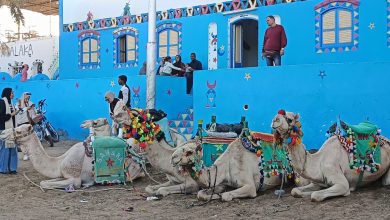
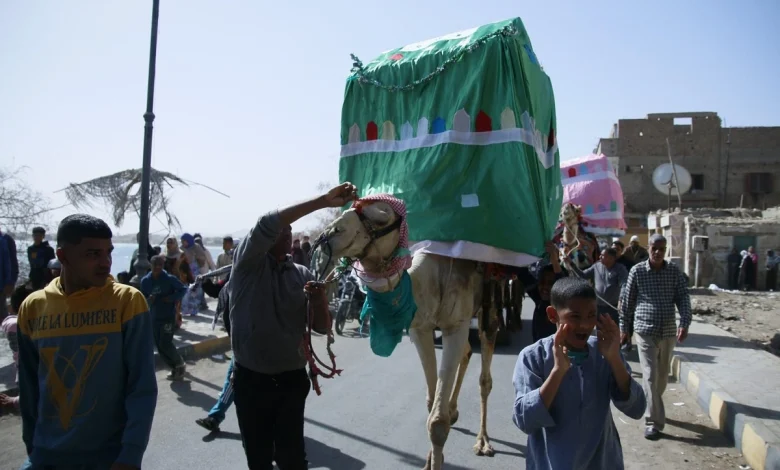
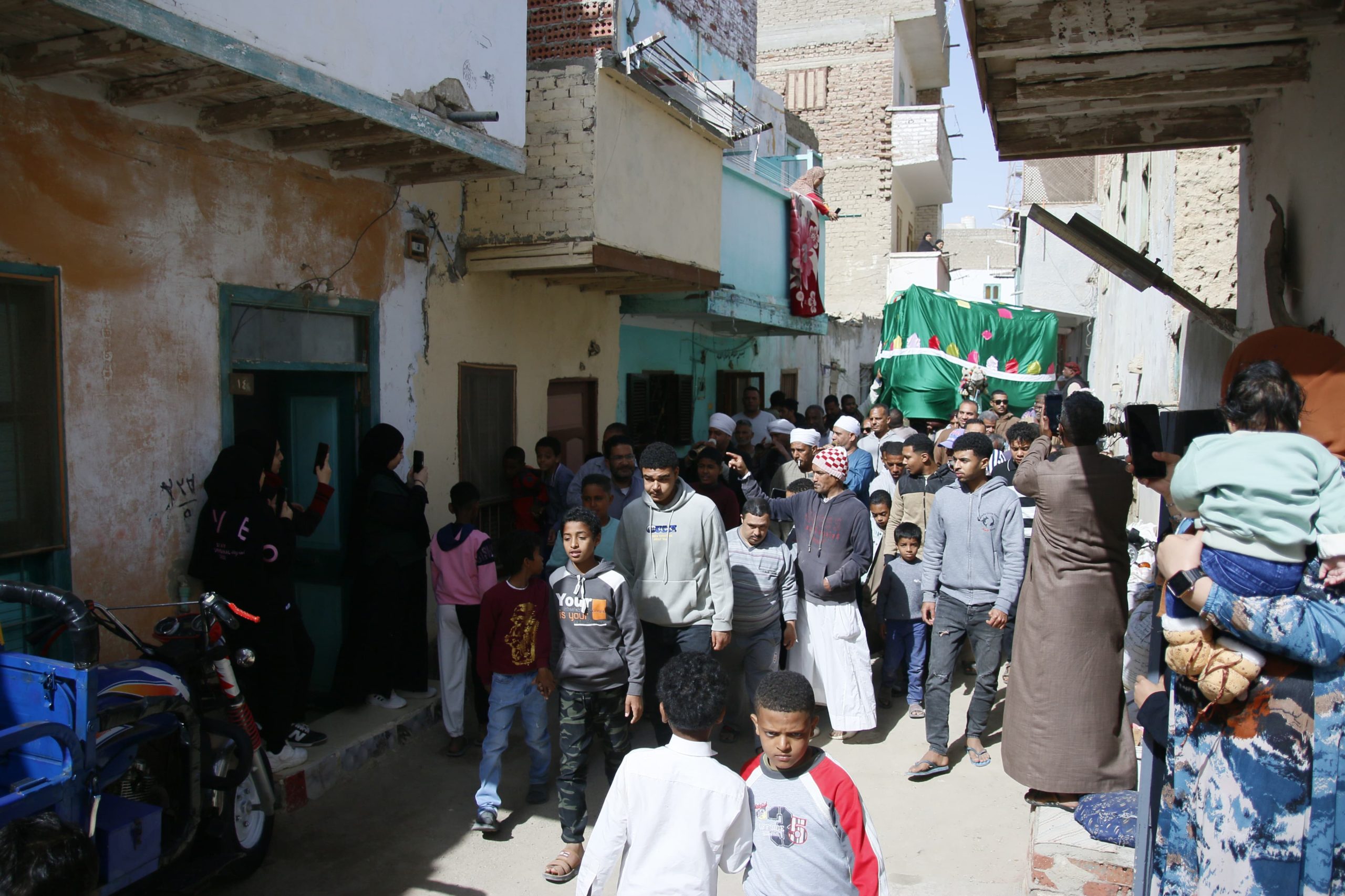
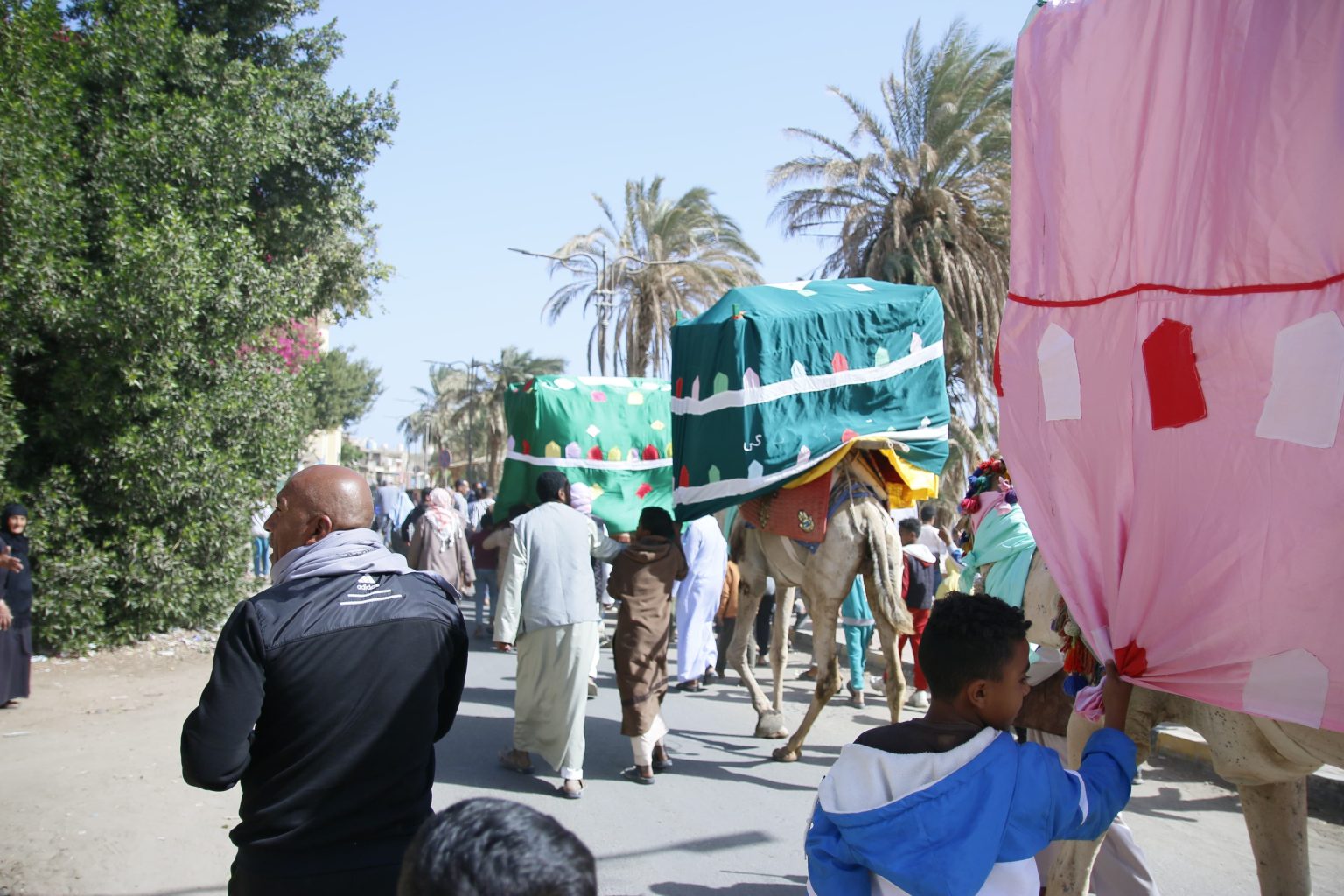
In a solemn yet celebratory procession, the Red Sea city of Al-Qusayr marked Mid-Sha’ban with “The Mahmal Festival”, a day eagerly awaited by residents each year. The sounds of mizmar (reed pipe), drums, and dhikr chants filled the streets as twelve camels walked through town, each carrying a decorated howdah (ceremonial palanquin) adorned with bright colours and Islamic inscriptions. The scene symbolically reenacts the historic sending of the Kaaba’s covering (kiswa) to the Two Holy Mosques. Along the route, women and children stood on balconies and in doorways, showering the procession with sweets and dates to express their joy for this occasion, which holds a deep place in the city’s collective memory.
Preparing for the Festival
Abd al-Salam al-Bijawi, responsible for organising the celebration and custodian of the shrine of Sheikh Abdul Qadir al-Jilani, explains the preparations. “We start getting ready about two weeks before Mid-Sha’ban arrives. We prepare the garments and shrines, finalise the procession arrangements, and coordinate with religious chanting groups and local mizmar bands. The aim is to revive this popular commemoration of the Mahmal in Al-Qusayr, a scene that young and old look forward to every year.”
Children and women participate by preparing sweets and distributing popcorn, dates, and candies. These are either handed to participants on Mahmal Day or tossed from balconies as the procession passes, expressing the community’s joy.
Twelve Camels, Twelve Saints
The number of camels in the Mahmal procession reaches twelve, corresponding to the number of saints’ shrines in the city. From each shrine, a camel emerges carrying a howdah covered with new, ornamented fabric, symbolising an aspect of celebrating the Ka’aba’s covering.
These shrines include those of Sheikh Abdul Qadir al-Jilani, Sheikh Abdul Ghaffar al-Baghdadi, Sheikh Abul Hasan al-Shadhili, Sheikh Ahmad Radwan, the Hajj square of Zakiyya, and Sheikh Ahmad Hassan, alongside shrines of other scholars and righteous individuals who passed through Al-Qusayr while spreading the faith or whom God called while heading to or returning from Hajj.
A Day Woven into the City’s Identity
Nasr Hussein Abdullah, a 67-year-old Al-Qusayr native, grew up knowing the Day of the Mahmal as an integral part of the city’s fabric—a scene inseparable from collective memory because of its religious significance and the strong social bonds it creates between families and tribes.
Al-Qusayr was one of the main ports for pilgrims arriving from and departing to the Arabian Peninsula, Morocco, and West Africa. A quarantine building erected near the shore served as the designated place for examining incoming pilgrims, sometimes detaining them for periods reaching sixty days.
Witnesses to the Pilgrimage Journey’s Hardships
The city contains numerous shrines of individuals who passed away while travelling to or from Hajj.The pilgrimage was long and arduous, requiring great endurance whether by land or sea. This gave Al-Qusayr’s people, especially the Ababda tribe, a prominent role in receiving pilgrims, caring for them, and providing comfort, in addition to their participation in receiving the Kaaba’s covering and celebrating its passage.
Adel Ayesh, Chairman of the Board of the Association for the Preservation of Heritage in Al-Qusayr, notes that the shrine owners’ origins trace back to West Africa, Yemen, Saudi Arabia, Morocco, Somalia, and India, reflecting the diverse nationalities of pilgrims who passed through Al-Qusayr throughout history. Tombstones show that death during the Hajj journey wasn’t rare; in fact, it was viewed as a blessed death.
Community-Wide Celebrations
The celebration extended beyond decorating shrines and parading the howdah to the entire city. Home walls were decorated with folk drawings expressing people’s joy at receiving the Hajj season and pilgrims heading to Mecca. This gave the city a distinctive festive character reflecting the depth of its connection to this religious and historical occasion.
Rumeisaa Mahmoud, an Al-Qusayr resident, has participated in Mahmal Day preparations since childhood, helping prepare giveaways, preparing incense, sending howdah garments for washing and ironing, and contributing to decorating the howdah. “This instilled in us a feeling of appreciation and gratitude for the shrine owners and taught us the greatness and status of the Holy Kaaba, especially with the covering’s passage through our city.”
A Day Full of Celebrations
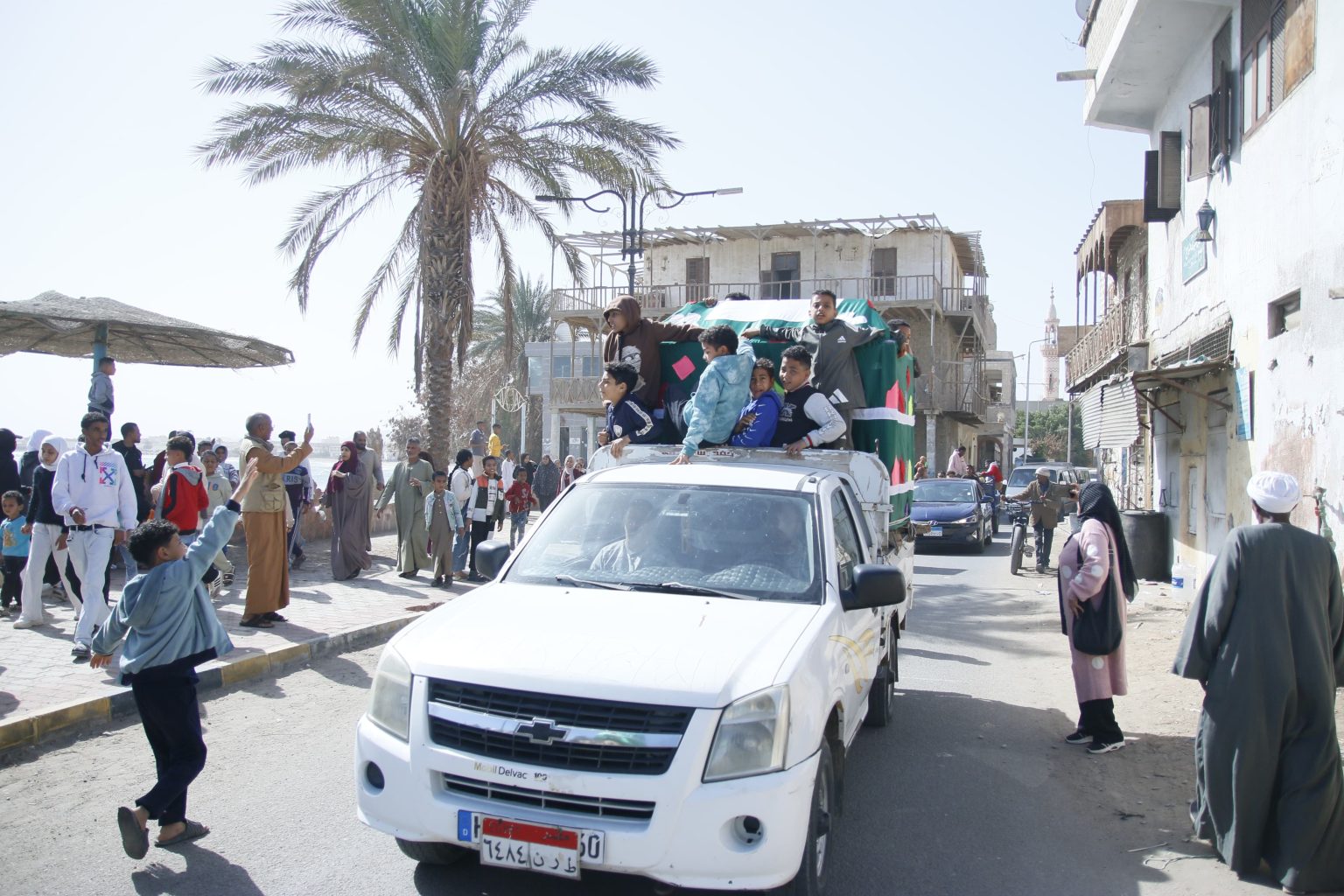
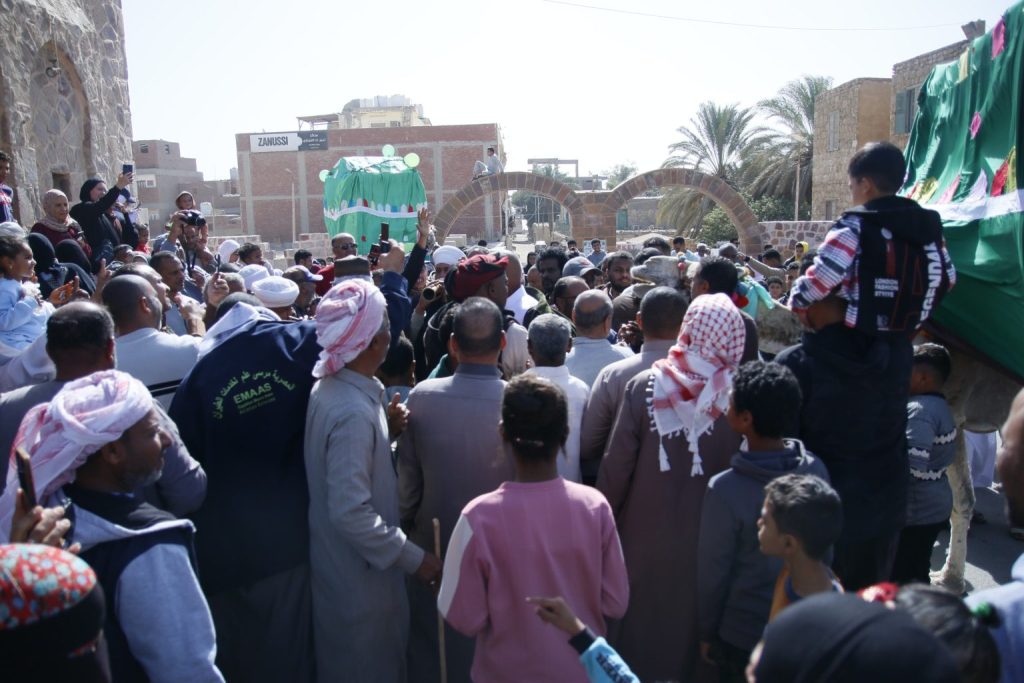
Safaa Sayed Ayesh explains that Mahmal Day celebrations begin early at six o’clock in the morning. Each shrine’s howdah is prepared, then local mizmar bands and religious chanting groups arrive to start from the first shrine. They bring the designated camel to the square of Sheikh Abdul Ghaffar, then return to bring the remaining camels one by one. The procession moves in an organised manner to visit all shrines, with camels kneeling before each shrine during the morning.
The afternoon brings the celebration’s completion, parading the howdah around the shrines seven times while reciting dhikr and chants that glorify Hajj rituals and exalt the Holy Kaaba, highlighting its place in Muslims’ hearts and giving the day a distinctive spiritual character.
Marwa Sa’doun Ahmed notes that residents hold a night of dhikr and Quran recitation on Mid-Sha’ban eve in the city’s largest square and shrine. People gather to announce the next day as Mahmal Day, emphasise participation in the celebration, and finalise preparations,reflecting the spirit of participation and solidarity among Al-Qusayr’s people in reviving this ancient folk and religious heritage.
Historical Significance: A Political and Religious Symbol
Historians confirm the Mahmal Festival isn’t just an ordinary day or folk festival—it’s a celebration that has preserved its identity across many centuries.
Dr Taha Hussein al-Jawahiri, author of a book on Al-Qusayr’s history, explains: “The Mahmal Festival is one of Al-Qusayr’s main festivals. It was associated with the arrival of a caravan carrying the Holy Kaaba’s covering, a tradition established by Egypt’s Mamluk sultans. The Mahmal was an empty howdah, while the covering was transported in closed boxes on camel backs, travelling a long, organised route toward Hejaz. Over time, the Mahmal became more than transport; it transformed into a political and religious symbol emphasising Egypt’s role and its sultans, who were titled ‘Servants of the Two Holy Mosques.'”
Origins in the Mamluk Era
The Mahmal’s origins date back to the time when it was transported to Hejaz during Shajar al-Durr’s reign, marking the emergence of the first Mahmal in the Mamluk era. The Mahmal itself was an empty howdah, said to be Shajar al-Durr’s own, while the covering was placed in closed boxes and carried by camels toward Hejaz. The celebration flourished during al-Zahir Baybars’ reign, when Egypt’s Mamluk sultans bore the title Servants of the Two Holy Mosques.
Defining the Mahmal
Researcher Mustafa Muhammad Ramadan explains in his study “Sources of Modern Egyptian History” that the term “Mahmal” refers to the camel (jamal) that carried gifts in kind and money to the Ancient House (the Kaaba). It was covered with a dome of juukh (a type of fabric) and accompanied the Hajj caravan every year, starting from Shajar al-Durr’s Hajj in 645 AH or since al-Zahir Baybars’ sultanate in 670 AH.
Some researchers believe “Mahmal” originally referred to the conical wooden structure decorated with ornaments, designated for the Sultan if he went on Hajj, remaining empty if the Sultan didn’t accompany the pilgrims.
The Mahmal’s Design
Hani Dawah, in his research “The Journey of the Kaaba Covering from Egypt to Hejaz,” describes the Mahmal as a square wooden frame with a pyramidal top, covered with a curtain of red or green brocade, often adorned with plant decorations and inscribed bands embroidered with gold threads, ending with tassels.
The Mahmal featured four silver tips plated with gold at its corners, two small Qurans inside gilded silver boxes suspended at the top, and the Noble Covering. The Mahmal sat on a large camel called “jamal al-mahamil” (the camel of the litters), and this camel enjoyed exemption from work for the rest of the year.
The Kaaba’s Covering
Amr Hassan describes the covering in his research, “From the Fatimids to Abdel Nasser: The Story of the Kaaba Covering and the Mahmal Journey from Egypt to Hejaz.” The covering stood 14 meters high, with its upper third adorned by a belt known as the Kaaba’s belt, embroidered with silver wires decorated with gold, inscribed with phrases like “There is no god but Allah, Muhammad is the Messenger of Allah,” “Allah, glory be to His majesty,” and “Glory be to Allah and praise be to Him, glory be to Allah the Almighty.” Below it, Surah Al-Ikhlas appeared inside squares embroidered in the same way.
The covering also included the lintel and border, small and large pillars, and connecting pieces, plus the covering of Maqam Ibrahim’s station, curtains for various doors in the Haram, and the bag for the Holy Kaaba’s key, alongside the covering of the Noble Prophet’s Chamber and the curtain of the Prophet’s Pulpit.
To preserve the honour of sending the Holy Kaaba’s covering, the “House of the Covering” (Dar al-Kiswa) was established in 1233 AH in Cairo’s Khurunfush district, at the intersection of Bain al-Suraya Street and Bab al-Sha’riyya Square. This house still stands today, preserving the last covering made for the Kaaba inside. It remained operational until 1962.
The Egyptian Mahmal Celebration
Dr. al-Jawahiri continues that the Mahmal used to parade through Cairo’s streets accompanied by drums and mizmars, with many celebratory elements like decorated shops and horse dancing. The governor or his deputy personally attended the Mahmal’s departure, and its parade in Cairo continued for about three days.
The Mahmal procession consisted of a camel carrying the Kaaba’s covering, followed by camels carrying water and pilgrims’ belongings and soldiers guarding the procession all the way to Hejaz, and finally men of Sufi orders beating drums and raising banners, accompanied by performers called “afarit al-mahmal” (the Mahmal sprites).