Upper Egypt

Aga Khan Necropolis Reveals Missing Link in Aswan’s Cemetery History

Egyptian archaeologist Ahmed Masoud discusses groundbreaking discoveries at the Aga Khan archaeological necropolis, revealing new insights into Late Period, Ptolemaic, and Roman burial practices in ancient Aswan.

By Wafaa Amin
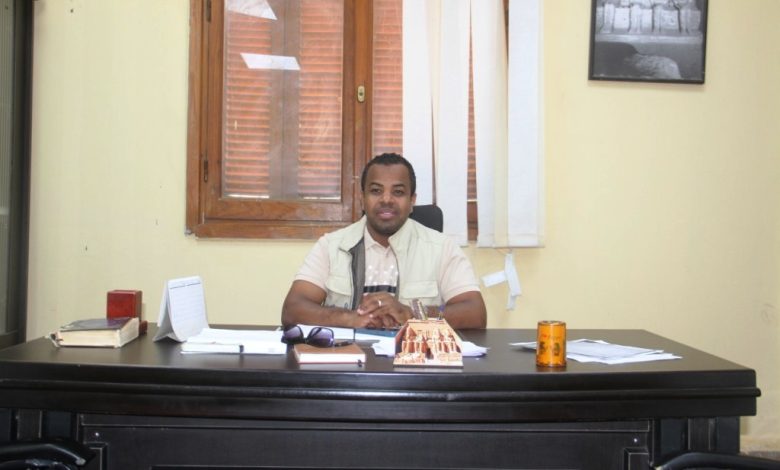
On the West Bank of the Nile in Aswan, where mountains meet the river and sand guards the secrets of history, the archaeological necropolis in the Aga Khan area has revealed new pages from Egyptian civilisation during the Late Period, Ptolemaic, and Roman eras. Archaeologist Ahmed Masoud, Director of Antiquities for Abu Simbel, led an in-depth study titled “The Archaeological Necropolis in the Aga Khan Area of Aswan: An Archaeological-Architectural Study.”

The study redefines the understanding of Aswan’s civilizational, military, and religious role throughout history. In this interview conducted by Bab Masr, Masoud discusses the most significant discoveries made by the archaeological mission, the secrets and rituals hidden within the tombs, and information being revealed for the first time.

The Significance of the Aga Khan Archaeological Site

How would you describe the importance of this archaeological necropolis?

The West Aswan area has been the main necropolis for rulers and residents since the earliest historical eras. Ancient Egyptians looked across to the West Bank opposite Abu and Souno to carve their eternal homes. From the Old Kingdom through the Greco-Roman period, rock-cut tombs were built there, aided by the geological nature of the area, which is composed of sandstone mixed with layers of shale.

These tombs extended along the Nile from Mount Tingar in the south to Al-Kobaniya in the north. Archaeological excavation work since the early 19th century has led to the discovery of many rock-cut tombs in separate necropolises dating to different eras. The Aga Khan area discovery completes the missing link in the historical sequence of ancient necropolises in Aswan. However, large areas remain unexplored, which future excavation work may continue to reveal.

Key Findings from the Archaeological Study

What are the most prominent findings of your research?

My study highlights the importance of the historical and civilizational role played by the Aswan region throughout Egypt’s eras, especially in the Greco-Roman period. Aswan’s geographical location directly at the source of the Nile’s First Cataract formed the natural border of the country, making it a strategic site and base for military garrisons since the end of the fourth millennium BC.

The region became an important commercial centre between Egypt and sub-Saharan Africa. Aswan served as the launch point for trade with Nubia, from where Egyptians and later Persian, Ptolemaic, and Roman rulers embarked on journeys to bring luxury goods like ivory, animal skins, gold, incense, and spices across the borders.

Aga Khan Tombs
A piece from inside the Aga Khan tombs – Courtesy of Archaeologist Ahmed Masoud

Burial Practices and Egyptian Funerary Rituals

Did the excavations reveal different burial and mummification methods? Were there non-Egyptian funerary rituals?

The evidence confirms the practice of complete Egyptian funerary rituals in the Aga Khan necropolis tombs, despite the succession of eras. Mummification was the main feature, though the quality varied from tomb to tomb. Well-mummified bodies wrapped in linen were found, placed on funerary beds next to offering tables, with colored decorations of Egyptian character. Bodies were sometimes covered with cartonnage pieces, black resin, or wrapped in matting and linen bandages.

This reflects the continuation of Egyptian religious identity even into the Ptolemaic and Roman periods. Burial methods varied, in coffins or without, and coffins were placed on benches or in burial niches, as later excavations revealed.

Understanding Tomb Owners Without Inscriptions

The walls of the Aga Khan tombs lack inscriptions, contrary to common practice. Why? How is the tomb owner’s identity determined?

Indeed, the tomb walls are devoid of inscriptions, writings, or depictions. Their owners were content with scenes executed on some coffins, wooden panels, and cartonnage pieces, similar to other necropolises from the same historical period.

Researchers determine tomb owner identity through the tomb’s style, which indicates social class, plus the type and quality of mummification. More skilled mummification indicates higher rank. The quality of wooden coffins, whether carved for priests or dignitaries, and the nature of artifacts discovered inside, such as amulets, cartonnage, and religious symbols, also help sketch the features of the societal strata using the necropolis.

Aga Khan Tombs1
A piece from inside the Aga Khan tombs – Courtesy of Archaeologist Ahmed Masoud

Archaeological Discoveries and Artefacts

What artefacts were found inside the tombs?

Many artifacts were discovered, though most were scattered due to ancient looting since the Roman era and modern looting before official excavations began. The most important discoveries include wooden, stone, and pottery coffins, painted cartonnage pieces, amulets, beads, funerary pottery vessels, colored wooden funerary panels, rare funerary beds revealing refined burial rituals, and lamps used for lighting in religious ceremonies.

Religious and Military Significance

What role did religion play? Who were the most prominent individuals buried there?

The necropolis was initially designated for wealthy families holding important positions with religious titles like “First Priest of Elephantine” and “Purification Priest.” The priests’ relationship with the site was linked to the Temple of Khnum on Elephantine Island and the vicinity of the Philae temples, reflecting the direct religious connection between these temples and the necropolis.

Archaeological analyses revealed the presence of mummies of non-Egyptian individuals, indicating use by foreign communities present in Aswan during late periods. Two death cards inscribed in Greek letters were found.

Were any military tools or evidence found?

No weapons, shields, arrowheads, or defensive fortifications were found inside the necropolis, confirming the site is purely funerary. It reflects diversity in the buried classes: priests, administrators, merchants, and soldiers. Some recently uncovered mummies showed bone injuries represented by fractures and amputated limbs.

These injuries likely occurred from military conflict and violent confrontations. These individuals could be soldiers or combat participants, highlighting the vital military role of the region during this period. This may explain the large numbers of burials inside reused tombs.

Aga Khan (1)
The Aga Khan area and mausoleum in Aswan. Courtesy of Archaeologist Ahmed Masoud

Connections to Other Egyptian Necropolises

What similarities exist between the Aga Khan necropolis and other Egyptian cemeteries?

The study revealed many similarities between the Aga Khan tombs and the tombs of Philae priests at Al-Shallal dating to the Ptolemaic period, as well as some oasis tombs from the Greco-Roman periods. This sheds light on desert routes connecting the oases and Nubia, and between the oases and the Nile Valley, reflecting historical relationships between the Nile Valley and desert regions.

The Discovery and Naming

What was the Egyptian role in this discovery? Why this name?

The necropolis name was chosen by the first Egyptian archaeological work team at the site, affiliated with the Aswan Antiquities Inspection Area, in 2015, before the Italian mission arrived in 2019.

The plateau where the necropolis was carved overlooks the Nile River directly from the east. It was named the Aga Khan tombs based on proximity to one of the most famous West Bank landmarks: the mausoleum of Aga Khan for Sultan Muhammad Shah, Aga Khan III, who was buried in a majestic tomb built specifically for him there in 1959. The mausoleum lies directly south of the plateau where the necropolis tombs are carved.

Site Selection and Dating

Why was this mountainous site chosen as a necropolis?

The Aga Khan necropolis extends over a rocky hill directly overlooking the Nile River. The tombs were built in a high rocky area away from the two main residential areas at that time: Elephantine Island, which lies opposite the necropolis to the east, and Souno, Old Aswan, located on the east bank of the Nile.

Due to these topographic conditions, the tombs were carved into sandstone at several levels from bottom to top, reaching a height of about 50 meters. The site was chosen for its vantage point overlooking Elephantine Island and the city of Aswan, as well as for its rocky formation and the ease of carving tombs into sandstone.

What time period do these tombs date to? How many have been discovered?

The Aga Khan necropolis dates to the Greco-Roman periods, from the 3rd century BC to the 3rd century AD, with limited evidence suggesting use may go back to the Late Period, 26th Dynasty, based on surface remains found on the hill.

Ancient Aswan represented the southern border of Egypt and a center for border protection and trade with Nubia and Africa. The necropolis contains more than 226 tombs for individuals from urban elites, temple priests, administrators, and merchants, in addition to some soldiers and common people.

The choice of this site was not coincidental but based on geospatial, religious, and military considerations. The plateau’s height and direct overlook of the Nile River, Elephantine Island, and the Temple of Khnum gave the buried a high symbolic and spiritual status. The hard, sandy rock nature allowed for easy carving of burial chambers and structural stability without additional construction, plus being away from residential areas preserved the sanctity of tombs according to ancient Egyptian traditions.

Current Excavation Status and Future Plans

What is the latest update on excavation and documentation work?

The necropolis contains approximately 250 tombs that were counted and inventoried during the latest survey. Work was conducted on 20 of them between 2015 and 2018 by an Egyptian team from the Aswan Antiquities Inspection. Excavation work was completed in 2019 through cooperation between the Egyptian-Italian mission from the University of Milan, the Aswan and Nubia Antiquities Area, under the supervision of the Supreme Council of Antiquities.

Is there a plan to protect and develop the site for tourism?

There is a plan to document the necropolis, protect the tomb entrances, and include it in a new tourist route. This route would start from Qubbet al-Hawa, pass through the Northern Tombs, then the Aga Khan Necropolis, and reach the Aga Khan Mausoleum. This would make the site part of an integrated project to protect and enhance cultural heritage in West Aswan and become a complete historical route connecting ancient and contemporary Egyptian history.

Related Articles

Back to top button
BabMasr