Upper Egypt

Voices from Egypt’s High Dam: 55 Years of Stories from the Builders Who Made History

The Aswan High Dam stands as one of the world’s most ambitious engineering projects. On its 55th anniversary, the Egyptian workers who built this monument share their remarkable stories of sacrifice, determination, and national pride.

By Wafaa Amin
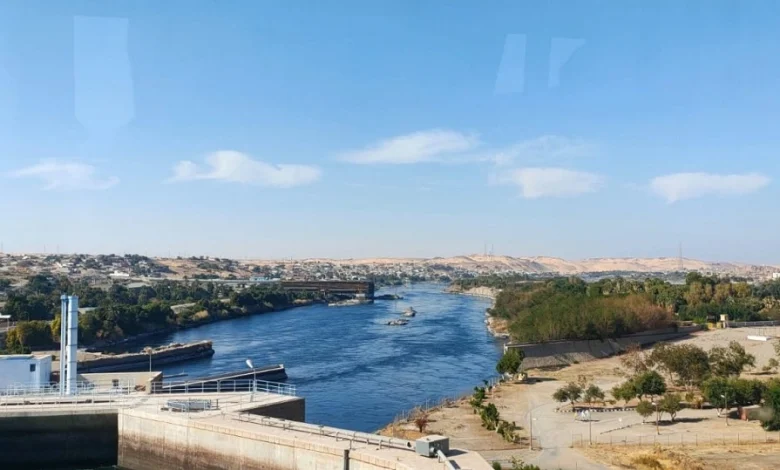
The Aswan High Dam, constructed from 1960 to 1970 in southern Egypt, stands 111 meters high and stretches 3,830 meters in length, creating Lake Nasser, one of the world’s largest artificial lakes. When Western powers withdrew funding in 1956, Egypt turned to the Soviet Union for support, making the dam a Cold War symbol. Today, the dam provides 10 per cent of Egypt’s electricity, protects against floods and droughts, and irrigates millions of acres of farmland.

The dam celebrated its 55th anniversary just days ago, marking more than half a century since this monumental project was completed. For Egypt, the dam represents far more than an engineering achievement. It is a national story of determination, sacrifice, and collective will that transformed the Nile River and Egypt’s future.

On January 15, 1971, the date now recognised as Aswan Governorate’s official holiday, President Anwar Sadat inaugurated the completed dam. Today, the builders who made this historic achievement possible share their memories with Bab Masr offering rare insights into the human story behind the concrete and steel.

The Medical Officer Who Survived the Explosions

At 86 years old, Hajj Ibrahim Muhammad Hamed, known locally as “Al-Durrash,” still lives in the High Dam workers’ colony east of the dam itself. These housing units were specifically built for the thousands of labourers, technicians, and specialists who dedicated years of their lives to the project.

Hajj Ibrahim joined the dam construction effort in 1960, during a critical period when Egypt desperately needed skilled workers willing to take on dangerous assignments. “I worked in first aid at hospitals and medical facilities,” he recalls. “This experience qualified me to serve as a medic at the High Dam construction sites.”

Mobile Medicine in a War Zone

When he began, Hajj Ibrahim received a basic medical kit and was stationed in a mobile wooden medical booth that moved from location to location, following the workers as construction progressed across the massive site. “The work was far from easy,” he explains. “Shifts lasted 12 consecutive hours before another colleague would relieve me.”

Often, he sat alone in the medical booth with just one assistant whose job was to help transport the injured or, in tragic cases, the deceased. “I would receive injured workers, conduct initial examinations, and treat minor injuries on site. Critical cases went immediately by ambulance to the hospital.”

All workers on the High Dam project received completely free medical treatment, including surgeries, with no financial burden on the workers or their families. When workers died, Hajj Ibrahim would accompany their bodies and personal belongings to the morgue, a deeply human responsibility that carried enormous emotional weight.

Hajj Ibrahim Mohamed. Photo: Wafaa Amin

A Near-Death Experience

One incident remains seared in Hajj Ibrahim’s memory. He was working in his medical booth near the dam’s diversion channel, before the Nile River’s course had been redirected. “I didn’t know about the daily explosion schedule, which happened precisely at 2:30 PM every day,” he says.

At the last possible moment, a fellow worker intervened and pulled him nearly a kilometre away from the blast zone. “Minutes later, I watched rocks falling from the mountains after the explosion, like rain pouring from the sky. It destroyed my medical booth.”

Despite his miraculous survival, Hajj Ibrahim felt overwhelming sadness about losing the medical supplies, especially since he was new to the position. “I went to management in tears,” he recalls. “But their response was reassuring: ‘Your safety is our priority above everything else. We need you to continue with us. We’ll provide another first aid kit.'”

A Safer Phase Begins

With the completion of the Nile’s diversion in 1964, the project entered a new phase that was more stable and less dangerous. Injury rates decreased significantly as the dam moved into its primary construction and operational stages.

During this period, President Gamal Abdel Nasser made frequent visits to the site, ensuring he walked among the workers and personally checked on their well-being. “The workers operated as one united force, like a tireless beehive with thousands of workers from every speciality: welders, technicians, mechanics, labourers, alongside Soviet experts,” Hajj Ibrahim remembers.

The dedication was extraordinary. “Sometimes an injured worker, covered in his own blood, would insist on continuing his work so the project wouldn’t stop,” he says.

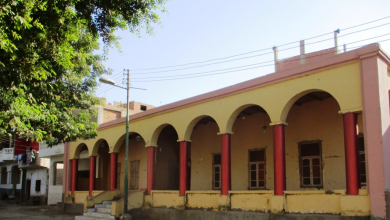
High dam workers’ housing units. Photo: Wafaa Amin

Life in the Workers’ Colony

Regarding living conditions, Hajj Ibrahim explains that monthly wages didn’t exceed 20 Egyptian pounds (approximately $67 USD at the time), but the spirit of cooperation made up for modest pay. Workers shared food and daily necessities. The Egyptian government provided free housing units within the dam workers’ colony, creating a tight-knit community.

“I’m happy I fulfilled my duty,” Hajj Ibrahim says with pride. “My children went on to earn university degrees and professional qualifications.”

The Electrician: “We Worked with One Spirit”

Preparing for the Soviet Equipment

Hajj Muhammad Abdullah Mala was born on April 26, 1945, and worked as a senior technician at the dam before his retirement. After earning a technical diploma from Kom Ombo Industrial Secondary School’s electricity department in 1965, he immediately joined the High Dam project as part of an entire graduating class recruited from schools across Egypt.

The project’s scale demanded massive numbers of specialised technicians. By the time Hajj Mala arrived, the concrete phases, foundations, and the dam’s main body were already complete. Work had shifted to electrical and mechanical installations, including the massive gates that would control the Nile’s flow.

“My speciality was electrical installations,” he explains. “We also prepared equipment arriving from the Soviet Union for installation inside the dam structure.”

Six Months of Intensive Training

Hajj Mala and his colleagues underwent six months of intensive practical training at a specialized center in East Aswan. The curriculum covered welding, electrical installations, and equipment assembly, ensuring the Egyptian workforce could install sophisticated machinery without requiring additional modifications.

“We worked according to precise engineering drawings provided by Egyptian and Soviet experts,” he notes. “Everything had to be exact to accommodate the equipment arriving from the Soviet Union.”

Hajj Mohamed Youssef. Photo: Wafaa Amin

A Beehive of International Cooperation

When asked about the atmosphere at the High Dam site, Hajj Mala describes it as a tireless beehive where every worker understood their role perfectly. “Everyone worked with one spirit, without discrimination. Our goal was singular: completing the project.”

The collaboration between Soviet experts and Egyptian workers was particularly remarkable. “Russian experts worked side by side with Egyptians without any arrogance,” Hajj Mala emphasises. “They set an example of seriousness and discipline, working long hours, sometimes 24 consecutive hours. This instilled in everyone a spirit of commitment and dedication.”

A Russian Worker’s Sacrifice

Hajj Mala recalls an unforgettable incident involving a Russian worker who was severely injured while operating a sheet metal cutting machine. One of his fingers was completely severed. “He grabbed the severed finger, wrapped it in a handkerchief, and begged us not to inform anyone because he was afraid of being sent home. Then he continued working without first aid or medical treatment,” Hajj Mala says, still amazed decades later. “This scene showed the incredible determination everyone felt to complete the work.”

The Daily Routine

The workday began at 4:00 AM. Workers would board trains at 5:00 AM heading to the dam site, begin work at 6:00 AM, and return at 2:00 PM when their shift ended. Housing was provided for workers in the Al-Seil neighbourhood, where two families typically shared one fully equipped apartment. Over time, these families became deeply interconnected.

Meals were provided to workers at heavily subsidized prices. A complete meal of meat, rice, and vegetables cost only three piasters (less than one cent USD), prepared in food facilities at the construction site and in the Al-Seil and Sahari neighbourhoods.

Regarding wages, Hajj Mala earned 15 Egyptian pounds per month plus an incentive bonus of 3 pounds. “This amount was sufficient for living and even saving,” he notes. “My father saved part of his salary until he accumulated enough to help with my marriage expenses.”

Bonds That Last Generations

Working on the High Dam created powerful social connections among workers from Egypt’s diverse regions. “Friendships and family relationships emerged,” Hajj Mala affirms. “Many workers’ children eventually married each other, creating family ties that remain strong to this day.”

He concludes by recalling one of the most impactful moments of his life: watching President Gamal Abdel Nasser inspect the dam site, walking among workers without security guards. He particularly remembers when Abdel Nasser passed by with Soviet Premier Nikita Khrushchev in an open car.

“At first, I was amazed watching people running behind the car. But when he approached me, I found myself running after him unconsciously. I felt chills throughout my body,” he says. “The mere sight of Abdel Nasser was enough to energise the workers without him even speaking. He had a commanding presence and natural dignity.”

The Second Generation: Continuing the Legacy

Celebrations and Presidential Recognition

Hajj Muhammad Yusuf Muhammad Abd al-Muttalib, originally from Sohag Governorate and now residing in Aswan, represents the second generation of High Dam builders. “Work on the project brought together Egyptians from every governorate, united in one spirit,” he says. “We’re still connected and affectionate like brothers. We learned loyalty and dedication from each other.”

The dam’s opening ceremonies were filled with artistic and cultural celebrations. Folk performance groups from various Egyptian regions participated, travelling through Aswan and spreading joy among residents. Presidents and kings who attended the inauguration mingled closely with workers, without heavy security, showing appreciation and respect.

“Visits by President Gamal Abdel Nasser remain deep in the hearts of all workers,” Abd al-Muttalib affirms. “They reinforced the spirit of love and dedication that prevailed among everyone.”

He advocates for erecting a memorial to the unknown worker who died during the dam’s construction, similar to monuments honoring unknown soldiers. “The dam builders used to sing: ‘We were building, and with our hands we built the High Dam,’ expressing their immense pride in turning the dam dream into reality.”

The Third Generation: Documenting the Legacy

Preserving Worker Records

Hajj Abd al-Rahim al-Sayyid Ismail, originally from Qena Governorate, represents the third generation involved with the dam. He was appointed to the pensions office at the General Administration in Sahari, managing worker files from 1960 to 1965 during a period when the retirement age was 60 years old.

“My father joined work at the Aswan Reservoir power station in 1956,” he explains. “When the High Dam project began in 1960, he transferred to work at the new dam’s power station.” Workers from every Egyptian governorate participated in the massive undertaking.

He recalls that President Gamal Abdel Nasser would personally shake hands with workers, awarding them medals, certificates of appreciation, and commemorative honours in recognition of their extraordinary efforts and sacrifices.

Their stories serve as a reminder that behind every massive infrastructure project stand countless individuals whose daily labour, courage, and dedication transform engineering blueprints into concrete reality.

Related Articles

Back to top button
BabMasr