Analysis

The Man Behind the Lens: Youssef Chahine’s Hidden Actor Within

How an unfulfilled acting ambition shaped one of Arab cinema’s most controlling and visionary directors

By Yehia Khalifa
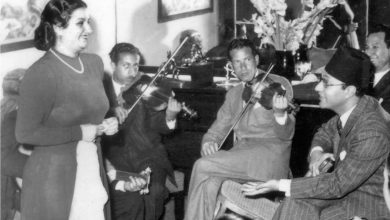
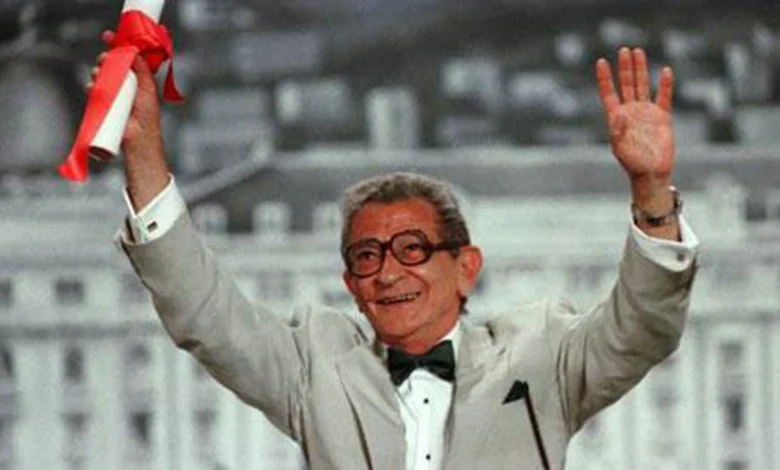
In his centennial year, the cinematic presence of Youssef Chahine remains a subject of celebration, debate, and critique. He was not merely a director, but a complex artistic phenomenon: a fusion of visionary genius and controlling authority, shaped by the unfulfilled ambition of an actor who never fully realised his dream.

The centenary grants us an opportunity to reflect on his entire journey, to understand how his beginnings in acting and his shift to directing shaped a unique cinematic project. Celebrating his centenary is not just a historical commemoration, but an entry point to understanding the internal conflicts that gave birth to Youssef Chahine’s cinema: a cinema that does not transcend his self but makes his contradictions its primary material.

The Suppressed Actor: A Persistent Shadow Within Chahine

When Youssef Chahine attended the Pasadena Playhouse in California, his primary dream was not to direct, but to act. This is how he presents his dramatic persona, Yahya Shukri Murad, in his semi-autobiographical film “Alexandria… Why?”: an Alexandrian boy dreaming of facing the world, not standing behind it, seeking glory on stage and in front of the camera. Yet this dream remained unfulfilled, not because Chahine lacked talent, but because, as later became apparent, he could not bear the idea of failure or mediocrity as an actor.

His acting studies were a formative moment that shaped his subsequent relationship with cinema, the body, and power. In acting school, where a performer is measured by their ability for presence and exposure, Chahine collided early with an obsession that never left him: what if he was not exceptional?

Chahine did not see his acting dream through to the end. He was drawn to directing not as a parallel profession, but as a higher position: the position of vision, control, and command over the world. In directing, the body is not directly tested; the voice alone is not judged; the image is managed from above. There, Chahine found his refuge.

The Director as Autocrat

From the beginning, he did not hide his dictatorial nature; he acknowledged it as an artistic necessity. He believed a film could only turn out well if everyone submitted to a single vision: his own. This authority was not merely technical; it was psychological and aesthetic. He exercised authority over the body, emotion, the limits of expression, and even over the actor’s own imagination.

Multiple critical readings suggest that Youssef Chahine’s acting in his own films, except a few roles, most notably Qinawi in “Cairo Station,” has been interpreted as a self-referential act linked to his position as a director. This reflects the problematic nature of his presence as an actor within his artistic project. Chahine does not embody a role as much as he proclaims himself; he does not disappear into a character as much as he imposes his presence upon it. Thus, his acting sometimes seemed subject to reservation, not because it lacks awareness, but because he stands outside the rules of the game he chose to referee, not play.

This problem is directly reflected in his relationship with actors. Many who worked with him spoke of the “Chahine School” of acting, not as a style, but as a strict regulatory system rejecting any improvisation not serving the overall vision. In Chahine’s cinema, the actor is not an independent self, but a medium for realising a pre-existing mental image. Talent is a necessary condition, but insufficient; what matters more is the willingness to submit.

Chahine as Seen by Director and Acting Coach Hassan al-Geretly

Hassan al-Geretly, Youssef Chahine’s assistant in screenplay, directing, and actor training, shares his perspective: “In my opinion, he is a distinguished character actor, capable of portraying exceptional roles with strong characterisation, not necessarily ordinary, realistic roles. So, he was certainly far better in the role of Qinawi in Cairo Station compared to his role in Dawn of a New Day, which was closer to his ordinary persona and social class.”

He continues: “The role of Qinawi is the one that remains in memory because it is closer to the American school to which Chahine was close: Elia Kazan as a model, and the Actor’s Studio stemming from the Stanislavski method. But perhaps, for his acting talent to fully manifest, he needed a skilled director. Yet, he did not take on major roles except through his own films, so we never truly discovered the extent of his abilities as an actor.”

A Very Personal World

Al-Geretly adds: “Youssef Chahine’s world in his films is very personal, and therefore, when we measure the events of this world, perhaps we need to use its internal proportions and its own logic. In some films, certain actors managed to merge with this world, especially in works where they collaborated on the screenplay with great writers, like Alexandria… Why? and An Egyptian Story.”

Regarding accusations that Chahine made actors speak in his own manner, al-Geretly says: “That might happen, not because he imposes a specific performance style on them, but because when he solely writes the dialogue, he writes dialogue that resembles what he himself hears. He also imposes a specific pace in performance that eliminates actors’ personal or classic mannerisms, which is very healthy for acting. Meanwhile, with highly talented actors like Mohsen Mohieddin, Mahmoud al-Meligui, and Hoda Sultan, Chahine did not dictate a specific performance to them.”

He concludes by saying: “In his relationship with Mohsen, perhaps he saw him as a form of compensation; Mohsen is a fulfilled actor, he is the son he never had, the actor he never was. He represents Chahine’s hopes, so he identified with him as if reliving his own life on screen through him.”

The Conflict Between Vision and Acting

In his autobiographical quadrilogy, especially “Alexandria Again and Forever,” Chahine puts this model in the dock. He does not merely narrate his story; he puts his own self on public trial: as a dictatorial director, and as a suppressed actor. The crisis of creation intersects with the crisis of politics through the filmmakers’ syndicate sit-in against a law imposing a specific person as its head without rotation. Parallel to this is the crisis of “Yahya,” the director who cannot grant others their full independence. It is as if the film says dictatorship is not only a political system, but a psychological structure that infiltrates creative relationships.

This crisis reaches its peak through the relationship between Yahya and the actor he sees as his image on screen. Chahine says: “When he played my role, I got confused… I no longer knew who I was and who he was… Maybe he got confused, too.” Here, the relationship ceases to be professional and transforms into a quasi-divine paternal relationship. Yahya sees himself not only as a father but as a creator. He grants the other the right to exist only as much as they reflect him, as if appointing himself a god controlling the fate of his son, just as he controls the fate of his film characters.

Chahine Does Not Worship Mohsen

The relationship takes on a quasi-theological dimension. Chahine does not worship Mohsen Mohieddin; he worships his own imagined image of himself through Mohsen. It resembles a Sufi or Christian conception of transfiguration: the Father, the Son, and the distance between vision and acting as the “Holy Spirit.”

Mohsen portrays the character “Yahya” again in “An Egyptian Story,” then performs other roles under Chahine’s direction before the crisis explodes. According to Mohsen, in “The Sixth Day,” Chahine tried to make him perform the role using Chahine’s own performance as Qinawi in “Cairo Station.”

After the film, Mohsen did not receive the acting award he dreamed of. And in “Alexandria Again and Forever,” Chahine expresses this loss through Amr’s solo dance to “Faat el-Me’aad” (The Time Has Passed): a dance of loss and separation.

More Than Just a Role

In this context, the dream of “Hamlet” becomes more than just an unperformed role. Hamlet represents the image of the ideal self: the great actor, the conflicted one, capable of carrying tragedy fully. But Chahine did not dare undergo this test himself. Instead of “pulling the trigger,” he kept putting others in the line of fire, delegating them to portray his postponed passion. The same applies to characters like Ibn Rushd (Averroes), whom he wished to portray. The character carried a multiplied symbolic meaning: intellect, freedom, and a clash with authority.

The actor’s rebellion (Amr/Mohsen) against this fate, and his refusal to be a mirror and not a self, turns in “Alexandria Again and Forever” into a moment of shattering the myth. The “Alexander” dies, the illusions of divinity are buried, and a pivotal sentence is uttered: “Everyone is free in themselves… We have no right to make decisions on behalf of anyone.” Here, Chahine does not declare his complete liberation, but he acknowledges the price of power: isolation, broken relationships, and the draining of the self. It is as if Chahine finally acknowledges his sin: turning talent into a statue.

The Image of the Conflicted Man

Even the image of the man in Chahine’s cinema can be read within this framework, from Mohsen Mohieddin to Hani Salama. Chahine reproduces the same model with different features: a dreamy, sensitive, playful, anxious young man, with soft beauty, carrying a mix of vitality and fragility. It is as if he is searching for an alternative body through which to achieve what he could not achieve himself. The man here is not a traditional star, but a mirror of anxiety, an image of a self that forms but never completes. He searches for his lost self in the faces of others.

A Cinema Born from Conflict

In the end, Youssef Chahine appears as a director who built his glory from control. Yet, he always carried within him a wounded actor, whom he did not completely suppress, but hid. Then he tried to liberate him through others, or through his problematic presence in front of the camera. And from this conflict, a great, conflicted, and honest cinema was born: a cinema that did not claim innocence, but made its creator’s contradictions its fundamental material.

Youssef Chahine, the dictatorial director and the suppressed actor, this is not a moral label, but a key to reading an entire artistic project. It was shaped by an unrealised dream, a power that tried to compensate for it, and an unresolved conflict that remains alive on screen, even a century after his birth.

Related Articles

Back to top button
BabMasr