Potato Weddings: How Egypt’s Harvest Season Fuels Marriage Celebrations in Rural Minya
Ancient agricultural traditions meet modern life as farmers in Al-Barjaya village celebrate a harvest festival that determines wedding schedules and shapes community prosperity
In the potato fields of Al-Barjaya village, located in northern Minya, a unique cultural phenomenon unfolds each year when harvest season arrives. The fields pulse with laughter, songs, and celebrations as farmers gather from dawn to dusk to harvest potatoes in what locals call “Afrah al-Batates” or “Potato Weddings,” a harvest festival that has become deeply intertwined with the community’s social fabric and marriage customs.
When Harvest Season Determines Wedding Season
Mohamed Abdel Qader, a farmer from Al-Barjaya village, explains the deep connection between potato harvesting and social celebrations. “The potato harvest season has become linked to social occasions in the village, particularly weddings and marriage preparations, which begin with the winter season,” he says.
As the harvest commences, housewives start preparing for weddings and purchasing necessary items. Wedding celebrations follow one after another, ululations echo through homes, and an atmosphere of joy spreads throughout the village. The season represents prosperity and livelihood for farmers, especially after developing new high-yield varieties that better withstand environmental conditions.
This agricultural calendar dictating social events reflects a pattern common in rural communities worldwide, where economic prosperity from harvest directly enables major life celebrations and investments.
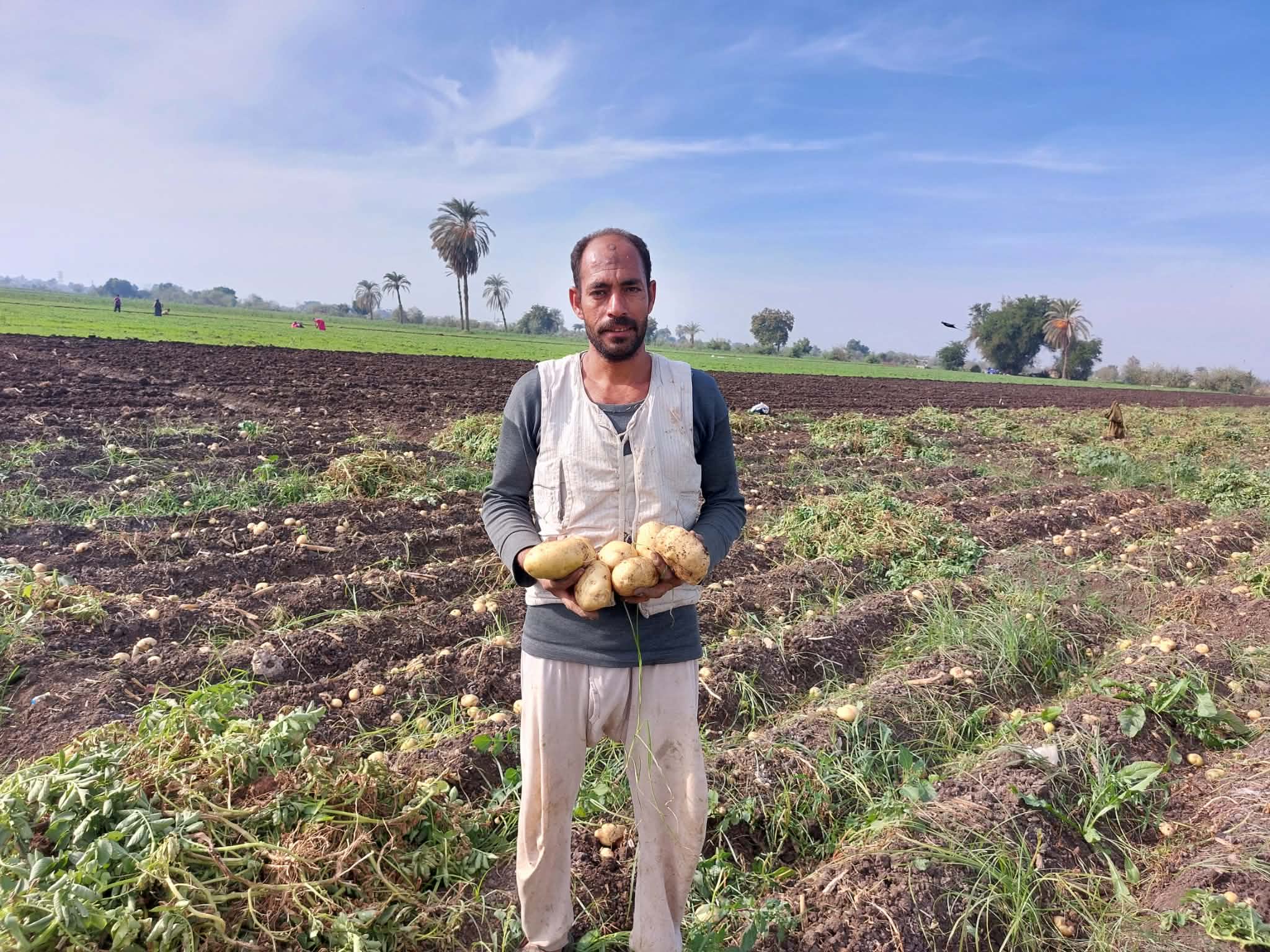
Dawn to Dusk: The Harvest Ritual
Ibrahim Gamal, another local farmer, describes the emotional significance of harvest time. “We feel great joy during the harvest season because it’s the season of abundance we wait for every year. The fields fill with golden yellow color. We come to the fields before sunrise to harvest the crop and hold ‘Potato Weddings,’ celebrating this beloved crop valued for its nutritional benefits and ability to thrive in our soil.”
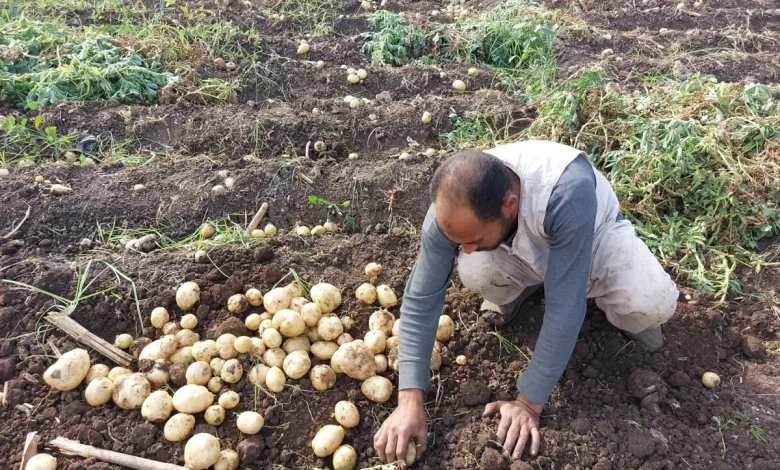
The harvest process follows a precise choreography developed over generations. Workers gather immediately after the dawn prayer (Fajr). Ploughs expose the crop on the soil surface, and workers begin uprooting potatoes, collecting them, and packing them into boxes or sacks. The produce is then loaded onto transport vehicles for marketing, with overwhelming joy visible on workers’ faces as they gather the harvest.
The Science Behind the Celebration
Saqr Khaled Mohamed, a village farmer, provides insight into the agricultural specifics. “The harvest is excellent, and God has blessed us. The potato planting period exceeds 140 days until maturity and market readiness. The harvest season is the farmer’s celebration and the result of their year-long labour.”
Current winter potatoes divide into two categories: frying potatoes and cooking potatoes. Al-Barjaya village produces diverse varieties, including Safiya, Arizona, and Cara, making it one of Egypt’s most famous potato-growing regions.
Yield per feddan (approximately 1.04 acres) varies depending on the farmer’s care of the crop, with average production reaching 9 tons or more. Each feddan requires 2 tons of seed potatoes for planting, plus fertilization, irrigation, and maintaining soil cleanliness. Modern irrigation methods have contributed to increased productivity, bringing Egyptian farming practices in line with global agricultural innovations.
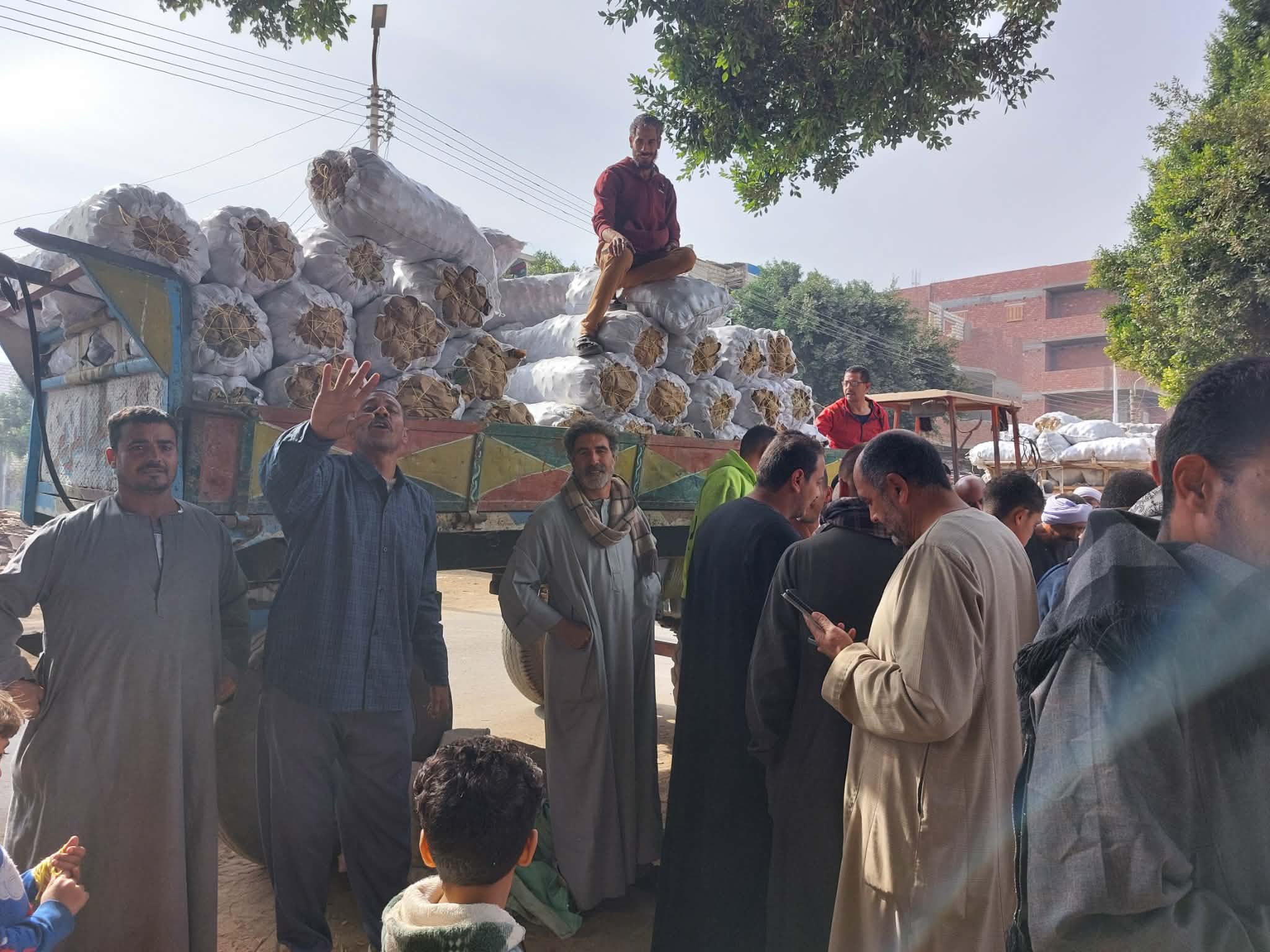
Community Labor and Economic Impact
Abdullah Hussein, one of the farmers, notes the communal nature of harvest. “Dozens of family members and neighbors come to help with the harvest. The fields flourish with the smiles, laughter, and celebrations of farmers.”
After harvesting, potatoes are loaded onto transport vehicles and move to stations and cold storage facilities, where sorting and storage processes begin in preparation for marketing or sending to factories. Some varieties are specifically designated for potato chip manufacturing and cooking purposes.
The harvest provides hundreds of job opportunities in the village, making it virtually unemployment-free. Work diversifies among loading, unloading, harvesting, and sorting, with women and children participating to earn income during this season of abundance. This economic model demonstrates how agricultural communities create circular economies that support entire populations during peak seasons.
A Wedding Funded by Potatoes
On the edge of the fields, farmers and village residents gather to celebrate their friend Mustafa Hamed, who is about to get married after waiting for the potato season to prepare for his wedding. “I was waiting for this day to complete the wedding requirements and prepare the marital apartment,” Mustafa says.
Minya: Egypt’s Potato Powerhouse
Dr Ibrahim Husseini Darwish, an agricultural expert, confirms Minya Governorate’s strategic importance in Egyptian agriculture. Minya Governorate is one of the largest governorates in the Republic for potato cultivation, especially the winter crop, which represents 60% of production volume, particularly in Al-Barjaya village. Harvesting extends from late November until late December. The governorate plants approximately 35,000 feddans of potatoes in the districts of Minya, Samalut, and Matay.”
Al-Barjaya remains the most famous for cultivating this crop. Minya also excels in growing strategic crops such as wheat, corn, onions, and garlic, with a large portion exported to local and foreign markets. This agricultural diversity positions Minya as a critical food security asset for Egypt’s 100 million population.
Agricultural Expertise and Challenges
Darwish concludes by emphasising the delicate nature of potato cultivation. Potatoes are sensitive crops that must be carefully tended throughout the planting period to avoid rot. Ridge planting is preferred. The winter crop is the most important for production.”
This expertise reflects centuries of agricultural knowledge adapted to Egypt’s Nile Valley climate, combining traditional farming wisdom with modern agricultural science to optimise yields in an increasingly challenging global food landscape
The “Potato Weddings” of Al-Barjaya represent more than agricultural success. They embody the continuation of rural Egyptian traditions where community, economy, and celebration intertwine. The practice of timing weddings to the harvest season ensures that families can afford marriage expenses while the community shares in collective prosperity.
This phenomenon offers insights into how agricultural communities worldwide maintain social cohesion through shared economic rhythms. From harvest festivals in rural India to wine harvest celebrations in France, communities have long structured social life around agricultural calendars..