Arab Umm Kulthum vs Egyptian Abdel Wahab: Two Visions of Cultural Identity on Screen
How Egypt’s two greatest musical stars embodied opposing visions of modernity through their 1930s and 1940s films, one embracing Arab heritage while the other looked westward
In previous writings about Umm Kulthum’s films, I used the phrase “Umm Kulthum’s cinema” and distinguished between the six films starring the Star of the East, categorising them as “city films” and “desert films.” I briefly noted that city films, which take place in the modern city, often contrast the European-style city with the traditional alley, or between rural and urban settings. These are films that support the discourse of modern Egyptian cultural identity, embodying it in the buildings and institutions of the modern city and the professions practised by city dwellers. Meanwhile, desert films are works that support an Arab-Egyptian identity discourse, expressing itself using orientalist conventions and clichés about the desert, horses, and tents, as visual embodiments of the idea of cultural Arabness.
In what follows, I examine Umm Kulthum’s character in films of cinematic Arabness in light of the contrast between her cinematic persona and its interaction with cultural and social reality, and the cinematic character of her musical and cinematic rival, the musician Mohamed Abdel Wahab. I see the sociocultural effectiveness of the discourse of both stars, Umm Kulthum and Abdel Wahab, in supporting society’s conception of Egyptian identity, through each one’s screen presence, placing Abdel Wahab in a position almost opposite to Umm Kulthum’s cinematic presence.
The Non-Kulthumi Abdel Wahab
The distinctiveness of Umm Kulthum’s choice of films becomes clear on cultural and political levels when compared with musician Mohamed Abdel Wahab’s choice of atmospheres for the seven films he starred in during an era contemporary to Umm Kulthum’s cinema in the 1930s and 1940s. All the films in which Abdel Wahab appeared belong to city films, indeed focusing on the superiority of the European-style city and its upscale neighbourhoods, or distinguishing the lifestyle embodied by heroes in the city, even if they were of rural origins.
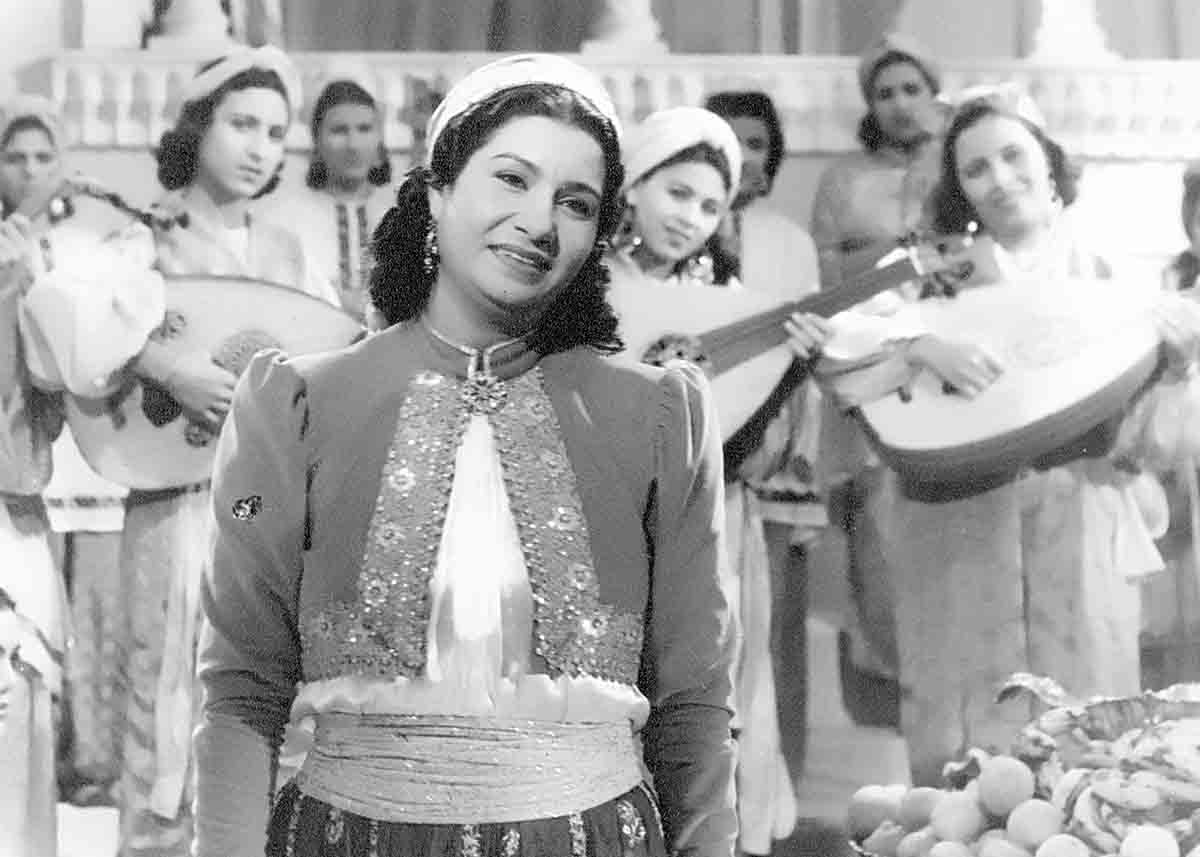
Even the film “Love Forbidden”, starring the great musician, part of which takes place in a rural atmosphere, emphasizes that the social ideal is in Cairo. This is a choice Abdel Wahab continued to affirm through the characters he presented on screen, as well as what I discern from his music and his discourse in the press and media throughout his life. The countryside in the film “Long Live Love” is the estate confirming the wealth of heroes residing in Cairo, based on the family’s agricultural fortune. Likewise, the countryside in “Tears of Love” is the secret of the hero, Mohamed Abdel Wahab’s wealth.
Abdel Wahab’s films are therefore city films, supporting the idea of Egyptian modernity as based on modernisation in the European style. Meanwhile, Umm Kulthum’s films fluctuate between that discourse supporting Egyptian national modernity, which is the discourse present in three of her films (“Anthem of Hope,” “Aida,” and “Fatima”), and the discourse of cultural Arabness that places Egyptian culture and its history in a broad regional framework with ancient roots dating back to the Middle Ages, especially in moments of Umayyad glory in the film “Salama” and the time of Abbasid splendor in the film “Dananir,” in addition to her first film “Wedad” whose historical location is unclear, though critical discourse indicates the film’s time is the Mamluk era.
That is, Umm Kulthum, with her strong presence in desert films supports the discourse of cultural Arabness, considering the desert a stereotypical sign indicating Arabness, while Abdel Wahab almost completely distances himself from that discourse, underlining that the idea of modern Egypt as being independent from the Arab region, embodying the modern European model.
The Lost Moment of Qays
Abdel Wahab came closest to embracing traditional Arab imagery in the “Majnun Layla” operetta from “Happy Day” (1939), which he composed and sang as a duet with Asmahan. In the film, his modern, European-dressed character attends a theatrical performance of Ahmed Shawqi’s play “Majnun Layla” with his beloved Samiha Samih. He then imagines himself as Qays, the legendary lover, appearing in Arab costume opposite Amina El Sherif (voiced by Asmahan) as Layla.
This ten-minute sequence served multiple purposes. It showcased Abdel Wahab’s compositional talents while metaphorically expressing his character’s passionate love. More significantly, it created visual continuity between Umayyad glory and modern Egyptian royal splendor under young King Farouk, who had ascended the throne four years earlier. The operetta connected past and present through Shawqi’s 1931 verses, transforming seventh-century heritage into living 1940s culture.
Yet Abdel Wahab disliked his appearance in Bedouin costume and makeup. He demanded the scene be reshot with actor Ahmed Allam performing visually while Abdel Wahab provided only the voice. This decision eliminated the sole moment when Abdel Wahab might have visually embodied Arab heritage on screen, paralleling Shawqi’s own cultural project of anchoring Egyptian modernity in the Arab Muslim golden age. The final film preserved the metaphor but kept Abdel Wahab exclusively in modern Western dress.
Freedom in Chains: Umm Kulthum’s Desert Heroines
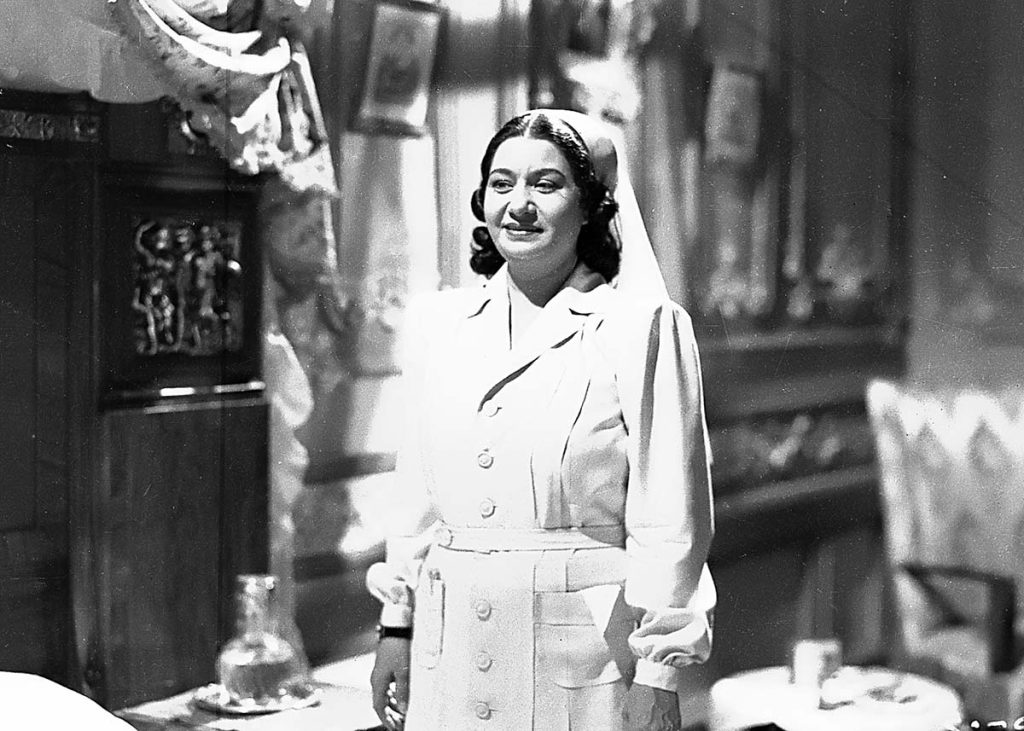
In her “Arab” desert films supporting ancient Muslim roots for Egyptian modernity, Umm Kulthum always played a slave girl. The characters Wedad, Dananir, and Salama were all singing slave girls, a role she maintained from her 1936 debut “Wedad” through her final desert film “Salama” in 1945.
Technically, Dananir was free in her father’s desert camps and chose to accompany Jafar al-Barmaki to Baghdad. Yet in power relations and social status, she remained at her “master’s” mercy. Her palace position depended on entering the harem as a singer, her fate subject first to Minister Jafar’s will, then to Caliph Harun al-Rashid after Jafar’s execution.
The contradiction cuts deep. How could cinema, modernity’s technological crown jewel, present Umm Kulthum as an Umayyad or Abbasid slave girl in the 1940s while she embodied the liberated “new woman” in real life? This paradox mirrors the work of contemporary intellectuals like Haykal, al-Aqqad, and Taha Hussein, who rewrote Islamic history to align with twentieth-century values. Just as these Nahda (Arab Renaissance) writers adapted early Islamic narratives to resonate with contemporary values, Umm Kulthum’s slave girl characters displayed such strength, freedom, and independence that viewers overlooked their legal bondage.
The slave girl’s position became the unspoken contradiction in these films. Her characters exercised modern freedoms (choosing partners, pursuing education) while their legal status remained servitude. Cinema in the 1930s and 1940s attempted moral accommodation, balancing liberation discourse against conservative social forces. Thus, Umm Kulthum’s slave girls wielded power over men through intelligence and voice, even while structurally dependent.
The films suggest women’s advancement through education, equating the slave girl’s palace service with modern institutions. Yet both Umm Kulthum and Abdel Wahab’s characters ultimately advance through marriage to wealthy partners, hardly a revolutionary model.
Tragic Endings and Happy Futures
The desert films’ endings reveal a darker pattern. Two of Umm Kulthum’s Arab films (“Dananir” and “Salama”) conclude with death or separation, while all her modern Cairo-set films end happily in marriage. Abdel Wahab’s pattern differs: five of seven films end happily, with only “The White Rose” and “Love Forbidden” (both pre-war) concluding sadly.
This contrast suggests the Arab past carries sadness, not nostalgia. In “Dananir,” the heroine’s advancement ends with her master’s death. In “Salama,” she advances socially but loses love. “Wedad” offers only reunion with her master after life’s ruin, binding wounds rather than celebrating triumph. The desert films, produced during World War II (1940 and 1945), show their heroines’ beloveds dying in political or military conflict, as if ancient glory remains incomplete without grief.
These tragic endings carry a warning: advancement under authority’s protection leads to ruin. The films claim to portray a renaissance while revealing that women’s progress remained mortgaged to male protection, whether as literal slave girls or emotional dependents.
Adaptation and Cinematic Destiny
Literary sources reinforced these contrasting identities. Abdel Wahab adapted Western-influenced works: al-Manfaluti’s “Magdolin” (itself adapted from French novelist Alphonse Karr) and Tawfiq al-Hakim’s modern comedy “A Bullet in the Heart.” Umm Kulthum drew from medieval Arabic heritage: the story of slave girl Salama from Abu al-Faraj al-Isfahani’s “Al-Aghani,” filtered through conservative writer Ali Bakathir’s novel.
Even adaptation choices revealed divergent visions. Abdel Wahab anchored Egyptian identity in Western modernity; Umm Kulthum rooted it in Arab medieval heritage. The sole exception proves the rule. In “Happy Day,” Abdel Wahab incorporated Ahmed Shawqi’s “Majnun Layla,” briefly connecting to Arab heritage. Yet he hated his appearance in Bedouin costume and demanded the scene be reshot with actor Ahmed Allam, providing only voice-over. He remained visually in Western dress even while aurally invoking the Umayyad golden age through complex modern technology.
Ironically, this voice-over marked Abdel Wahab’s only collaboration with Asmahan, Umm Kulthum’s potential rival. But his competition with Umm Kulthum endured across theatres, records, and screens. In cinema, they embodied opposing cultural discourses: Abdel Wahab’s elitist, Westernising national modernisation versus Umm Kulthum’s negotiation between modern aspiration and Arab heritage. Her city films (“Aida,” “Fatima”) acknowledged class mobility while honouring rural or popular origins. Her desert films insisted that contemporary culture required grounding in the Arab Muslim past, even if that past brought only melancholy.