Palestine and Native Americans: How Artists from East and West Express Peace in Luxor Mural
International collaborative artwork in Upper Egypt unites 20 artists from diverse cultures to create powerful message of solidarity and coexistence
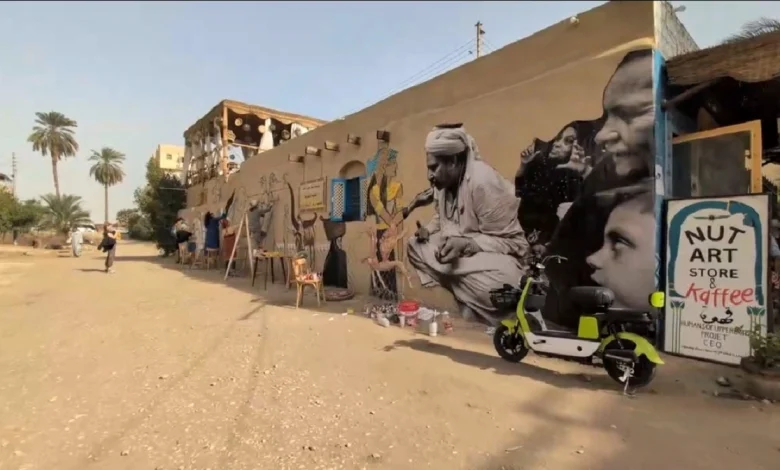
In the village of Al-Bayirat, west of Luxor, approximately 20 artists from East and West gathered, bringing diverse artistic traditions and cultural backgrounds, in an attempt to embody the concept of peace through their brushes. The result is a collaborative mural bearing each artist’s unique imprint, where every participant expressed peace from their own cultural perspective and worldview.
Parts of the mural symbolised peace through the traditional dove carrying an olive branch, while others embodied it through Native American cultural imagery. Others painted symbols of the Palestinian struggle.
A Philosophical Timeline
The mural reflects a precise chronological and philosophical sequence, beginning with Hathor, the ancient Egyptian goddess of love, beauty, and peace. From her figure emerges a group of characters walking in one direction, signifying the unity of human destiny.
At the heart of this procession stands a woman wearing the Palestinian keffiyeh scarf, serving as a symbol of humanitarian causes and justice. The progression continues to an Egyptian woman representing identity and homeland. The mural concludes with a majestic depiction of the goddess Isis feeding a small child.
Embodying Peace: From California to Luxor
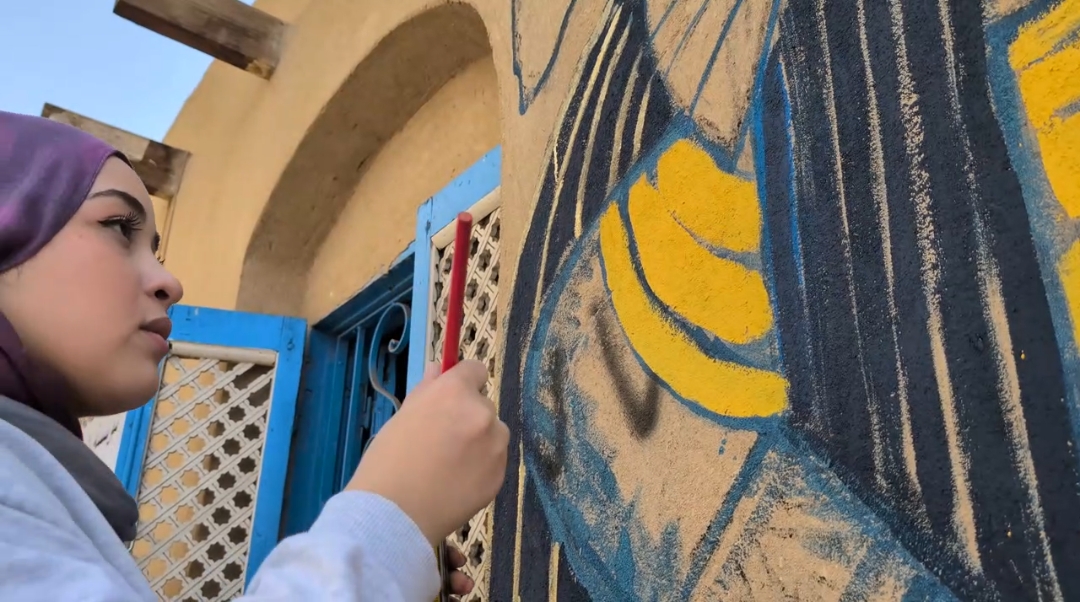
At the Art Hub centre, where the Bashar Al-Saeed Foundation organised this artistic event, several visual artists participated, including American artist Kay from California. She appeared enthusiastic as she stood amid the mural crowded with figures.
“Instead of just talking about peace, we asked ourselves: how do we live it and show it?” Kay told Bab Masr.
She expressed her happiness at participating in the mural, calling it an “honourable moment.” She added a drawing of the eagle as a symbol of the United States, but connected it to Native American heritage to remind the world of the land’s roots and the stories of its original inhabitants.
Hawari’s Vision: Art as a Universal Language Without Class Barriers
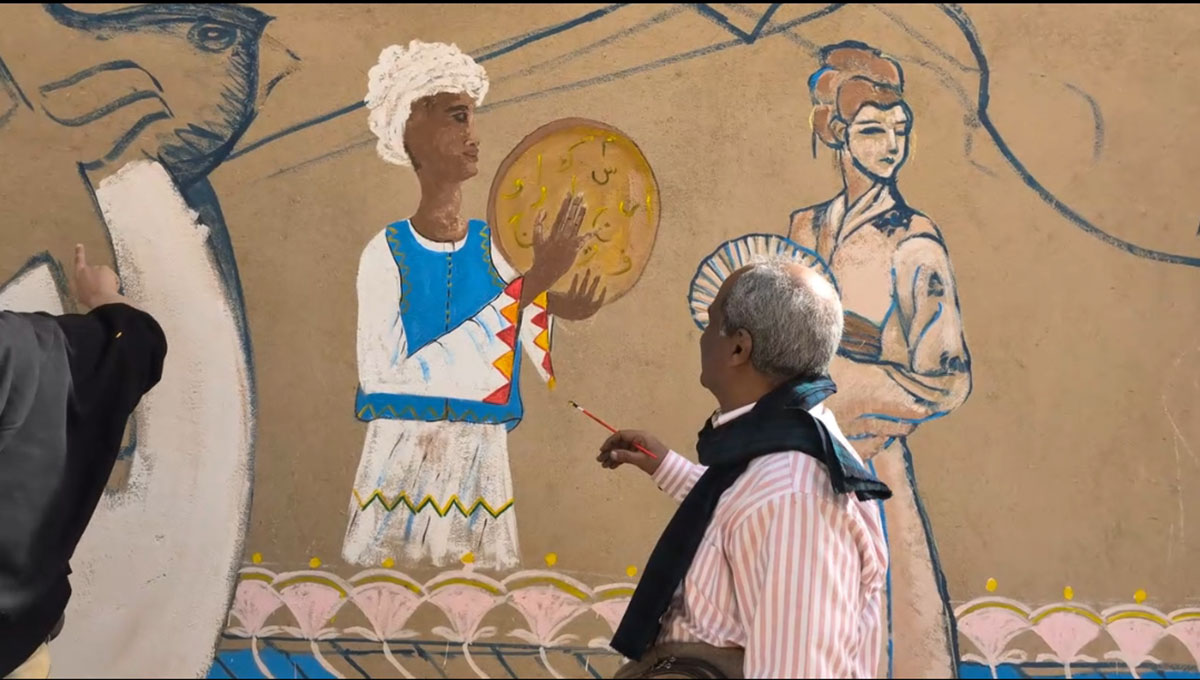
Behind this artistic project, artist Mahmoud Hawari, the idea’s originator and project organiser, told Bab Masr that the goal was to involve more than 20 hands from different countries in a single artwork. This approach ensures that every foreign artist feels represented in this painting, emphasising that art is a universal language that knows no class divisions or racism.
Hawari explains that the team designed characters representing different continents. Native Americans represent America, alongside Japanese, Chinese, and African figures. He notes that the turnout was remarkable, with French, American, and Nubian artists placing their signatures side by side, transforming the wall into a global registry of brotherhood and love.
Humans of Upper Egypt
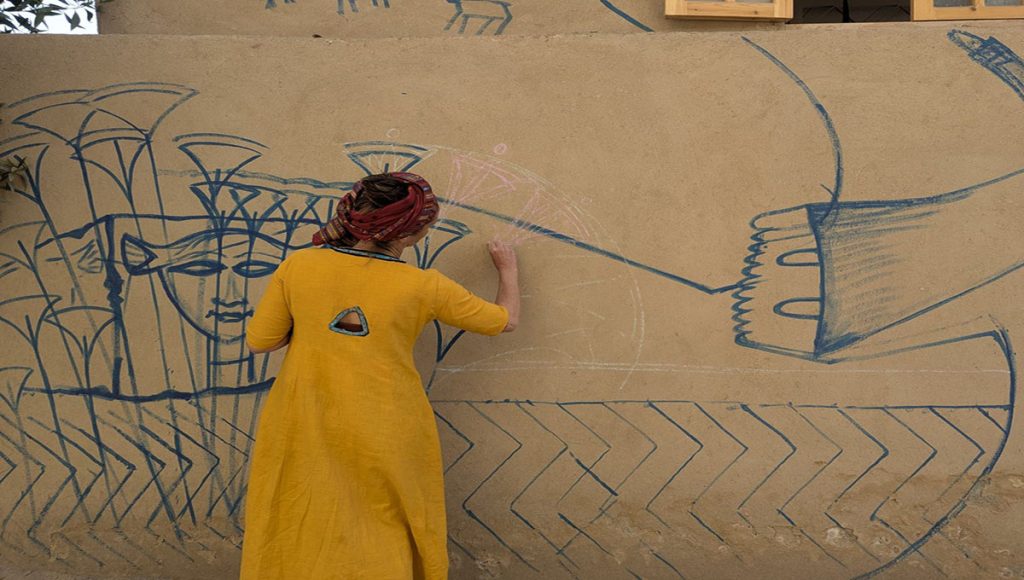
The project maintained strong academic connections. Maryam Al-Gharbawi, a student at the Faculty of Fine Arts in Luxor, participated as part of the “Humans of Upper Egypt” initiative. Maryam explained that the work took approximately four hours to complete the first half.
Maryam added that the Egyptian section of the mural carries a clear imprint from Egyptian artists who were keen to connect past and present. She adds that the mural calls for coexistence by bringing together cultures that have suffered displacement or injustice, such as Palestinians and Native Americans, placing them all within a single artistic frame.
Democracy of Art
American artist Jacqueline Ganzevez, who participated in the work, focused on the concept of “democracy of art” in this project. The Art Hub centre opened its doors from early morning to every passerby. The opportunity was not limited to professionals; anyone passing by the location could pick up a brush and add color.
She explained that she participated in drawing the eagle because it symbolises strength and heritage, not just a “dove.” She pointed out that the mural’s true beauty lies in the simplicity of participation, representing an open invitation to peace that begins with a simple stroke of color on a wall in Upper Egypt and carries its message to the entire world.
A Living Testament to Artistic Solidarity
The Peace Mural project in Luxor demonstrates how collaborative art can transcend political divisions and cultural barriers. By bringing together artists from multiple continents and backgrounds, the initiative created not just a visual artwork but a living example of peaceful coexistence.
The mural’s journey from concept to completion, with contributions from professional artists, students, and passersby alike, illustrates the democratic and inclusive nature of true artistic expression. Each brushstroke, whether applied by an American painter, an Egyptian student, or a local resident, contributes equally to the final message of unity and peace.