Al-Qusayr Maritime Pier: Egypt’s Oldest Commercial Wharf Faces Collapse Amid Official Neglect
Historic Red Sea port structure from 1834 deteriorates as residents attempt amateur restoration
The maritime pier at Al-Qusayr, Egypt’s oldest commercial wharf, is facing severe deterioration due to decades of neglect and wave damage, threatening one of the city’s most significant historical landmarks with destruction.
With no official restoration efforts underway, residents have taken matters into their own hands, attempting repairs that experts warn may inadvertently damage the structure’s historical integrity.
A Trading Hub’s Rise and Fall
Al-Qusayr port, located on Egypt’s Red Sea coast, once bustled with ships and steamers arriving from Africa and Asia carrying commercial goods, and departing with pilgrims bound for the Arabian Peninsula. The port also witnessed active military operations spanning approximately 20 years during the 19th century.
Today, the historic pier stands as a crumbling reminder of Egypt’s maritime heritage, caught between government indifference and well-intentioned but potentially harmful community interventions.
Origins of the Al-Qusayr Pier
The construction of Al-Qusayr’s maritime wharf dates back to Egypt’s modernisation era under Muhammad Ali Pasha. According to Dr Taha Hussein Al-Jawahiri, author of “On the Heritage of Al-Qusayr,” the pier’s story began in the Islamic month of Dhu al-Hijjah 1250 AH (corresponding to 1834 CE).
Muhammad Ali Pasha issued a decree to Hussein Agha, director of half of Upper Egypt, ordering the construction of a pier for Al-Qusayr port. The directive specified that the wharf should be 150 cubits long, modelled after the Ras El Tin pier in Alexandria, and built with partial expenses. Given Al-Qusayr’s small size, the ruler waived the requirement for a detailed survey.
The construction materials (timber and necessary equipment) were to be sourced from Qena, with provisions to request them from the Council if local supplies proved insufficient.
Construction Costs and Design Compromises
Historical documents reveal that the proposed budget for building the pier was approximately 746 money bags, a substantial sum for the era. To reduce expenses, Muhammad Ali ordered the incorporation of timber rather than constructing the entire structure from stone.
The final design represented a hybrid approach: combining sea-resistant wood with stone masonry, creating a structure that could withstand saltwater exposure while remaining cost-effective.
The Meaning Behind “Al-Iskalah”
The pier’s local name carries linguistic significance. Researcher Mahmoud Abdel Aal, in his thesis “The City of Al-Qusayr and Its Remaining Architectural Monuments from the Ottoman Conquest to the End of the Nineteenth Century,” explains that residents call this structure “Al-Saqalah” (the scaffolding).
This term derives from the Turkish word “İskelesi,” which itself originated from the Italian “scala.” The Turkish language adopted it as “iskele,” referring to a series of wooden planks fixed horizontally on buildings for workers to stand on—essentially scaffolding in common Arabic usage.
Technical Specifications of the Historic Pier
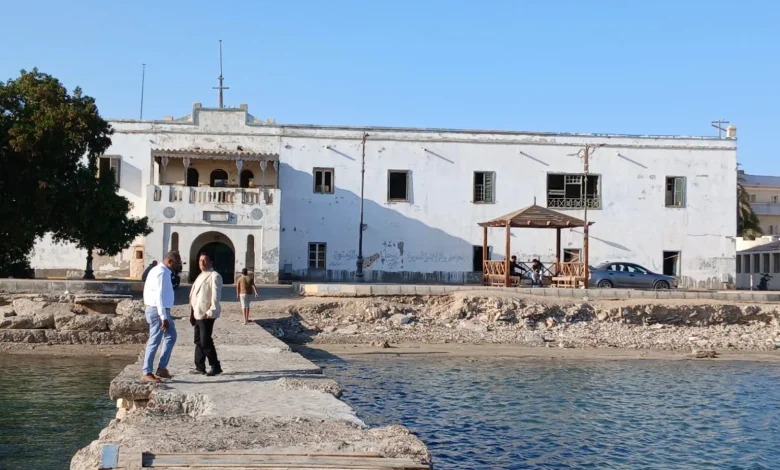
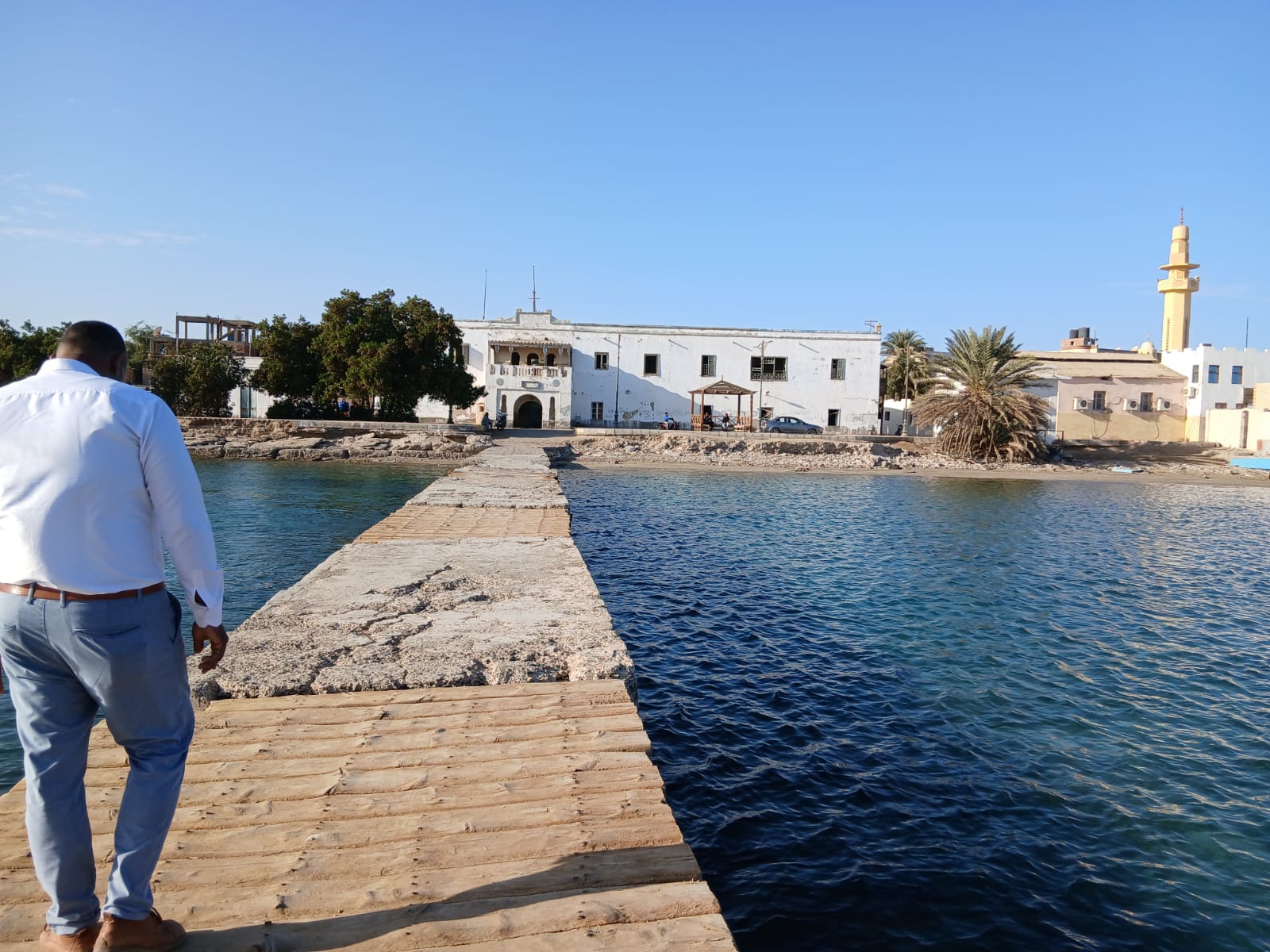
Dr Layla Abdel Latif Ahmed provides detailed measurements in her doctoral dissertation, “Administration in Egypt in the Ottoman Era.” The pier extends into a small bay open from the southeastern side, directly in front of the old police station building (Al-Qusayr Diwan), formerly known as the Government Palace.
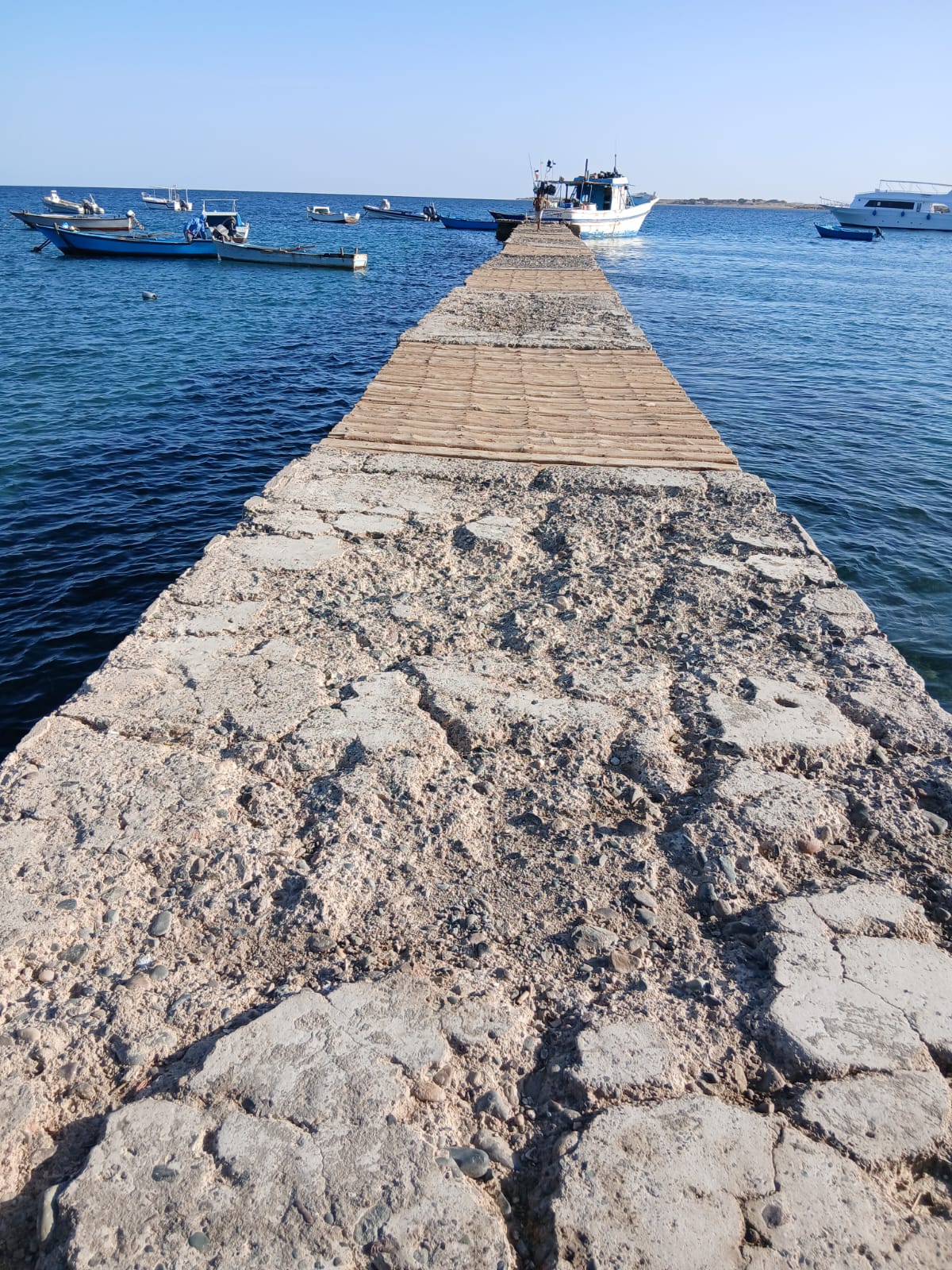
The pier’s key dimensions include a total length of 117 meters and a width of 2.7 meters. The terminal platform measures 5.4 meters long by 3.9 meters wide, and features a descending stairway with seven steps leading to the seabed.
The structure comprises 19 rectangular sections divided into two types: 11 stone sections (each 6.1 meters long) and 8 wooden sections (each 4.6 meters long). These sections rest on stone and cement blocks submerged in the seabed.
Strategic Importance During the Ottoman Era
Al-Qusayr port held tremendous strategic and economic significance during Ottoman rule. Kamal El-Din Hussein, in his book “Know Your Country: A Brief Historical Guide to the City of Al-Qusayr,” highlights the port’s critical role in regional trade and religious pilgrimage.
The port served as the departure point for provisions (al-mira) sent to the Two Holy Mosques and sustenance for the people of the Hijaz region. It welcomed ships from Arabian Peninsula ports laden with goods from India, the Far East, and Africa, including various spices, perfumes, timber, aromatic woods, textiles, and other commodities.
Notably, Al-Qusayr port held a monopoly as the sole Egyptian port receiving coffee shipments from Yemen. This distinction continued even after the Suez Canal opened on November 17, 1869.
Early Restoration Efforts
During the reign of Khedive Said Pasha, officials recognized the pier’s deteriorating condition and ordered restoration work. The khedive mandated the installation of new wooden planks, reinforcement of the structure, and removal of damaged sections to resume operations. An official certificate documenting this work was issued on the 22nd of Sha’ban 1273 AH.
A subsequent certificate dated 27 Dhu al-Qi’dah 1276 AH detailed the costs of iron, timber, and labor for these repairs.
However, neglect returned after the Suez Canal’s inauguration. Operations at Al-Qusayr ceased, and the wooden components deteriorated rapidly due to high salinity and humidity.
The Last Official Restoration
According to Al-Jawahiri, the only comprehensive official restoration occurred during Khedive Ismail’s reign. Workers reinforced the pier by installing doum palm wood planks, documented in a legal certificate from the court dated 12 Dhu al-Qi’dah 1283 AH (corresponding to 1867 CE).
This period marked a turning point for Al-Qusayr. The city of Suez began eclipsing Al-Qusayr as trade and pilgrimage routes shifted northward. The port’s importance declined dramatically, leading to increased neglect. Sections collapsed under wave action and tidal forces, and shallow waters prevented many ships from docking.
Merchants’ Plea for Intervention (1879)
In 1879, prominent merchants from Al-Qusayr attempted to address the crisis by petitioning the Governor-General of the Red Sea Coast, Mr Reda. They emphasized the urgent need to restore the pier to its original condition to facilitate commerce.
The merchants explained that the existing wooden pier could no longer adequately handle cargo loading and unloading from vessels. Originally extending 80 meters into the sea to depths suitable for ship anchorage, only 23 meters remained functional due to damage from waves and tidal erosion.
In their memorandum, the merchants proposed restoring the pier to its original state using timber stored at the governorate’s headquarters, reconstructing it to its full 80-meter length, and rebuilding the customs wharf to its former specifications.
Recent Amateur Restoration Attempts
Dr Taha Al-Jawahiri reports that in mid-December 2025, a group of Al-Qusayr residents undertook a primitive and uncoordinated restoration attempt. While their intentions were commendable and reflected ga enuine desire to preserve their heritage, experts consider this intervention damaging to the monument’s historical value.
Al-Jawahiri emphasises that this represents a significant error, as no restoration experts or specialists were consulted regarding appropriate wood types, stone materials, or proper techniques. This oversight risks erasing the monument’s distinguishing features and compromising its original identity.
However, he stresses that residents cannot be held responsible. Instead, accountability lies with relevant authorities, particularly the Urban Coordination Agency of the Red Sea Governorate, which has included the entire area in its plans but only on paper thus far.
A Cry for Help Amid Danger
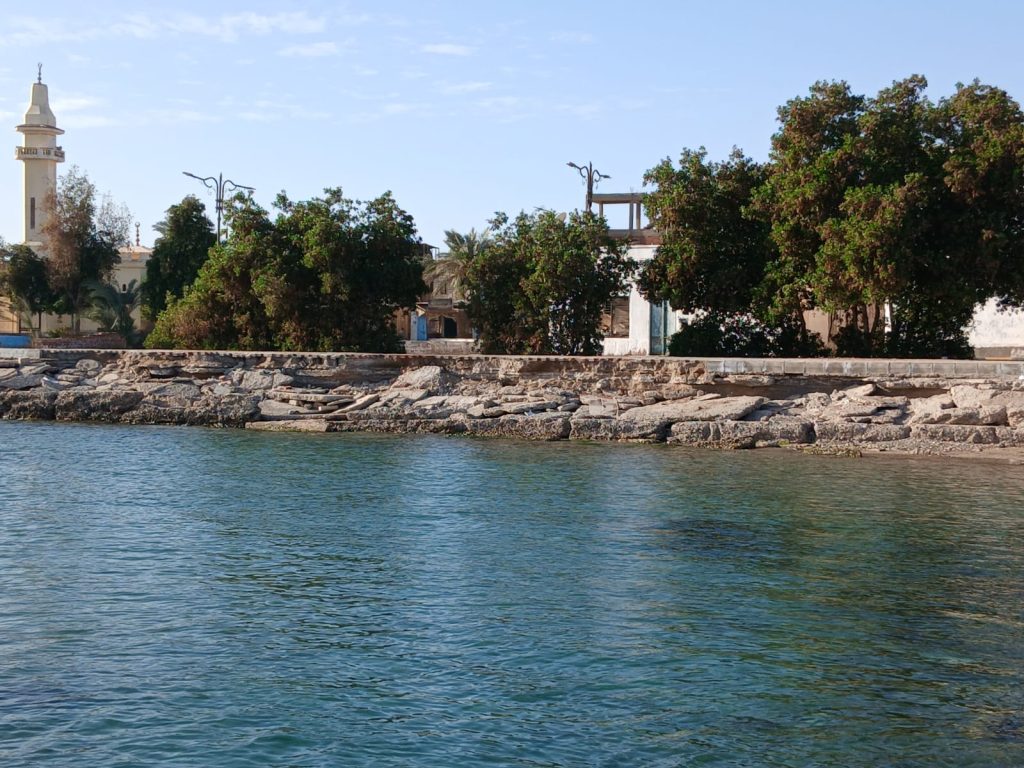
The residents’ restoration efforts came after large sections of the pier collapsed, making their passage to small boats and feluccas increasingly dangerous. These amateur repairs represent merely a temporary solution to the ongoing deterioration affecting not just the pier, but the entire historic waterfront area of Al-Qusayr.
Urgent Call for Professional Intervention
The Al-Qusayr maritime pier stands at a critical juncture. Without immediate professional restoration guided by archaeological and engineering experts, Egypt risks losing an irreplaceable piece of its Red Sea maritime heritage,a structure that witnessed centuries of trade, pilgrimage, and cultural exchange between Africa, Asia, and the Arab world.
The question remains: Will official authorities act before this 190-year-old monument disappears beneath the waves forever?