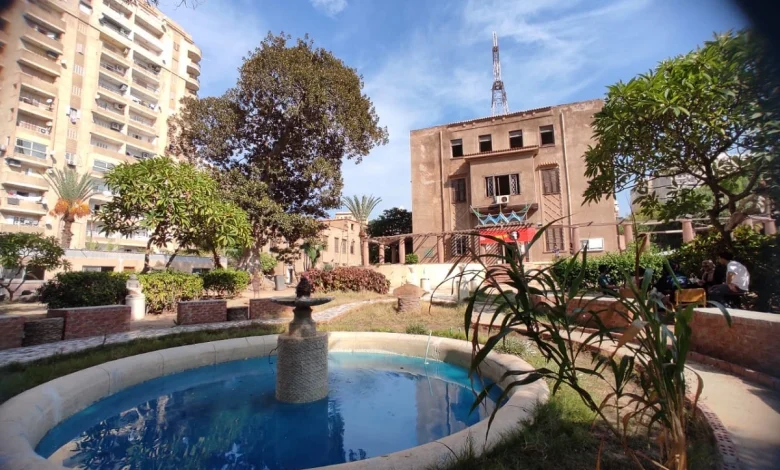
Prince Omar Tosson Palace Alexandria: Historic Royal Residence Faces Urgent Restoration Crisis
Students and faculty of Alexandria University fight to preserve the deteriorating Royal Palace amid a Heritage crisis.
A historic royal palace in Alexandria, Egypt, is crumbling despite its architectural significance and active use as a university building. The Prince Omar Tosson Palace in Bacos, a stunning example of Art Deco architecture from the early 1900s, desperately needs restoration funding to preserve this irreplaceable piece of Egyptian heritage.
Located in the Bacos district of eastern Alexandria, the palace now serves as headquarters for the Decor Department of Alexandria University’s Faculty of Fine Arts. Students and professors are working to preserve the building’s historic legacy while utilising it as an educational facility; however, deteriorating conditions and a lack of maintenance funding threaten the survival of this architectural treasure.
Historic Alexandria Palace: Prince Omar Tosson’s Royal Estate
The Prince Omar Tosson Palace in Alexandria served as the primary residence for one of Egypt’s most influential royal family members. Prince Omar Tosson belonged to the Muhammad Ali dynasty that ruled Egypt from 1805 to 1952. Today, this palace is the only surviving property from his extensive real estate holdings in Alexandria that remains in relatively good condition.
The original palace estate was vast, featuring expansive gardens and multiple buildings with distinctive classical architectural ornaments and decorative details. Over the decades since Prince Omar Tosson’s death in 1944, portions of the palace property were subdivided for different purposes. One section of the palace grounds became the site of Alexandria’s Radio and Television building. Another portion was donated by Prince Omar Tosson himself to establish Saint Anthony Catholic Monastery. A third area was given to the charitable organization “Al-Urwa Al-Wuthqa,” which later became Al-Rawda School. These divisions demonstrate the immense scale and grandeur of the original palace complex during the prince’s lifetime.
Alexandria University Takes Over Royal Palace
After the end of the Egyptian monarchy in 1952, the Prince Omar Tosson Palace transitioned to Alexandria University ownership. The historic building initially served as the Faculty of Nursing headquarters before the department relocated to the Smouha neighbourhood of Alexandria.
As student enrollment increased in the Decor Department of the Faculty of Fine Arts, university administrators allocated the palace as the department’s dedicated headquarters around 2005. The palace was initially shared with the Mural Painting Department before that program moved to another building. Since then, the Prince Omar Tosson Palace has been the exclusive home of the Decor Department.
Dr. Hanan Sobhy, Professor and Head of the Decor Department at Alexandria University, describes the shocking condition of the palace when her department first took possession. “We received the palace abandoned and in a pitiful state. The garden was overgrown with tall weeds and inhabited by reptiles. Insects and rodents infested the building. We made tremendous efforts to clean the garden and prepare the palace for use as classrooms and offices.”
Today, the historic building functions as educational classrooms and administrative offices for the Decor Department, which specialises in Interior Architecture and Expressive Arts. Although no personal belongings or furniture of Prince Omar Tosson remained when Alexandria University acquired the property, faculty members have made preserving the building’s original architectural character a top priority.
Dr Sobhy emphasises the educational and cultural value of studying in a historic palace. “The palace’s prime location and surrounding trees provide a special aesthetic atmosphere and offer students, especially those from outside Alexandria, an invaluable opportunity to learn about the city’s rich architectural heritage and history.”
Art Deco Architecture in Alexandria: Jean Nikolaïdis Design
The Prince Omar Tosson Palace showcases exceptional Art Deco architecture designed by Jean Nikolaïdis, one of the most renowned architects working in early 20th-century Egypt. Art Deco, an influential design style that flourished internationally between World War I and World War II, combines luxury and elegance through clean geometric lines, symmetrical patterns, and ornate decorative details.
Architect Magdy Saba, a specialist in Alexandrian architectural heritage and historic preservation, notes that the palace’s conversion from royal residence to educational facility has caused significant damage to its historic character. “The palace’s multiple uses over the years, along with increasing student numbers and the need for additional service facilities and classrooms, led to unplanned modifications and alterations. These changes appear random and inconsistent with the building’s heritage value and architectural integrity.”
Saba advocates for developing a comprehensive restoration and preservation plan through Alexandria University’s Faculty of Engineering. Such a professionally designed plan would carefully preserve original architectural elements and historic details while thoughtfully accommodating modern educational requirements and safety standards.
Palace Restoration Crisis: Urgent Preservation Needed
According to Dr Sobhy, the Prince Omar Tosson Palace now requires immediate maintenance and extensive restoration work to ensure its survival for future generations of students and visitors. The building’s urgent preservation needs include restoration of deteriorating interior spaces and ornamental details to their original historic condition, repair and reconstruction of damaged boundary fences and walls, comprehensive rehabilitation of the palace gardens and landscaping, and structural reinforcement where needed to ensure safety and stability.
The Decor Department has repeatedly submitted formal requests for intervention from Alexandria University’s engineering committee and maintenance division. An official inspection was conducted approximately a year ago, with engineers identifying all necessary restoration work and reporting their findings to the college’s vice dean for environmental affairs and facilities management. However, no restoration work or repairs have begun despite these documented efforts and urgent recommendations.
“The Decor Department faculty members and staff are doing everything in their power to preserve this historic place,” Dr. Sobhy explains. “But proper restoration of a heritage building like the Prince Omar Tosson Palace requires significant financial resources and official authorisation that are beyond our departmental capacity.”
Inside the Historic Alexandria Palace
The Prince Omar Tosson Palace consists of three levels, each with distinct historic functions now adapted for educational use. The ground floor contains three classrooms for teaching Interior Architecture and Expressive Arts, the department head’s office, the department council meeting hall, and the administrative secretariat offices. The first floor, originally designed as private residential chambers and living quarters for Prince Omar Tosson and his royal family members, has been repurposed as faculty offices and workspace. The upper floor, which historical evidence suggests was likely once servant quarters and staff housing during the palace’s residential era, is currently allocated to the Expressive Arts division of the Decor Department.
Dr Sobhy expresses frustration about the lack of historical documentation and archival photographs of the palace. “To this day, I have not seen clear photographs showing the building’s original form and interior design. This makes authentic preservation and restoration extremely challenging. Understanding our architectural history would greatly enrich students’ arts education and train their eyes to appreciate refined architectural aesthetics and Egyptian heritage.”
Prince Omar Tosson: Egyptian Royal and Heritage Patron
Prince Omar Tosson was born in Alexandria in 1872 into the prestigious Muhammad Ali dynasty, the Albanian-origin royal family that governed Egypt for nearly 150 years. Born and raised in Alexandria, Prince Omar Tosson completed his formal education in Switzerland and travelled extensively throughout Europe, becoming fluent in multiple languages, including Arabic, Turkish, French, and English.
Upon returning to Egypt as a young man, Prince Omar Tosson took responsibility for managing his family’s extensive agricultural estates and landholdings. He also developed a passionate interest in Egyptian archaeology and antiquities preservation. Throughout his life, Prince Omar Tosson became renowned for his charitable work and social welfare initiatives throughout Alexandria and Egypt.
The prince’s strong commitment to preserving Egyptian heritage and maintaining historic family properties made his name synonymous with several Alexandria landmarks and neighbourhoods. His legacy remains visible today in areas like Abu Qir, a historic coastal area, Fouad Street, now a major commercial thoroughfare in downtown Alexandria, and Al-Mahmoudiyah Road, a key arterial route connecting Alexandria to other Egyptian cities.
Prince Omar Tosson died in 1944 at age 72 inside his beloved Bacos palace. His funeral reflected his prominence in Egyptian society, with the funeral procession travelling by train from the palace to Misr Station, Alexandria’s main railway terminal, then continuing to his burial site beside the tomb of Prophet Daniel in the Muhammad Ali royal family cemetery. The royal family tombs were later relocated to Cairo following the 1952 Egyptian revolution that ended the monarchy and established the modern republic.
Egyptian Heritage Preservation Challenges
The deteriorating condition of the Prince Omar Tosson Palace reflects broader challenges facing historic preservation and heritage conservation throughout Egypt. Rapid urbanisation, limited government conservation funding, and competing development priorities threaten numerous heritage sites and historic buildings across Egyptian cities. As one of Alexandria’s few remaining royal palaces and residences from the Muhammad Ali dynasty era, the Prince Omar Tosson Palace represents an irreplaceable architectural and cultural link to Egypt’s modern history.
The palace’s current use as an active educational facility at Alexandria University offers hope that students, faculty, and heritage advocates will continue fighting for its preservation and restoration. However, without substantial institutional support, dedicated preservation funding, and coordinated restoration efforts, this Art Deco architectural masterpiece may not survive intact for future generations to study, appreciate, and learn from.
Alexandria University administrators and Egyptian heritage preservation authorities have been formally notified of the palace’s deteriorating condition and urgent restoration needs. The outcome of these preservation efforts will ultimately determine whether this historic Art Deco palace receives the professional conservation care it deserves or tragically joins the growing list of lost Egyptian heritage sites and demolished historic buildings.