Assiut’s Urban Heritage Crisis: Egyptian City Loses Identity Amid Demolition and Neglect
A promised urban coordination committee remains inactive while historic buildings fall and architectural chaos spreads across one of Egypt’s oldest governorates
Historic Egyptian City Faces Identity Crisis
In Assiut, one of Egypt’s largest and most historically significant governorates, located in Upper Egypt along the Nile River, a troubling pattern has emerged: despite presidential directives requiring all Egyptian governorates to establish visual identity committees to preserve architectural heritage, the city’s promised Urban Coordination Committee exists only on paper.
The committee was formed years ago through collaboration between the governorate administration and Assiut University, bringing together academics and specialists in architecture, arts, and urban planning. Yet it has never functioned as intended, while the cityscape continues to deteriorate through uncontrolled demolitions, random construction, and the loss of irreplaceable heritage buildings.
The Committee That Never Worked
According to Dr. Wagdy Nakhla, former dean of the Faculty of Specific Education at Assiut University and committee member, the Visual Identity and Urban Coordination Committee was established during the tenure of former Governor Gamal Nour El-Din. The committee included representatives from multiple academic faculties, Specific Education, Fine Arts, and Engineering, with an ambitious mandate.
“We were tasked with preparing comprehensive guidelines for visual identity that aligned with the governorate’s cultural and historical values,” Dr Nakhla told Bab Misr. “We had tremendous enthusiasm to develop Assiut’s public squares and transform them into spaces worthy of a major governorate in the heart of Egypt.”
The committee designed a logo and developed plans for coordinating advertisements, building colours, and urban design elements across the city.

Sudden Silence After Leadership Change
However, after the former governor’s departure, the committee effectively ceased to exist.
“We don’t know what happened,” Dr Nakhla explained. “No one has summoned us to begin actual work. No meetings have been held, and we’ve received no official assignments since then, this has been the situation for years now.”
Other committee members include Dr Khaled Salah, former dean of the Faculty of Fine Arts and current dean of the Faculty of Engineering; Dr Mahmoud Abdel-Alim; and Mohamed Adawi, representing environmental concerns.
Symbols of Heritage Lost
The Dove Square Demolition
One of the most striking examples of the committee’s absence occurred at Al-Hamama Square (Dove Square), where a prominent sculpture was demolished without consultation with the very experts appointed to prevent such incidents.
“We were all shocked by the demolition of the Dove Square without clear justification,” said Dr Nakhla. “Even if there was an issue with its location on Al-Hilali Street, the sculpture could have been relocated rather than completely removed.”
Dr Mansour Al-Mansi, Professor of Sculpture and former dean of the Faculties of Fine Arts and Specific Education at Assiut University, designed the dove statue to symbolise peace, drawing inspiration from the historical journey of the Holy Family through Assiut, a significant event in Christian tradition when Mary, Joseph, and infant Jesus sought refuge in Egypt.
Dr Al-Mansi refuted claims by some officials that the statue created traffic problems. “During the design process, we specifically accounted for the location and traffic flow on Al-Hilali Street,” he told Bab Misr. He questioned why technical committees from the Faculties of Fine Arts and Engineering were bypassed in the demolition decision, despite the governorate’s stated commitment to visual identity standards.
“This incident represents an insult to art and culture,” Dr Al-Mansi said, “especially at a time when Egypt celebrates its civilizational heritage and soft power internationally.”
Historic Buildings Demolished
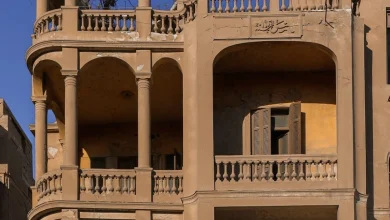
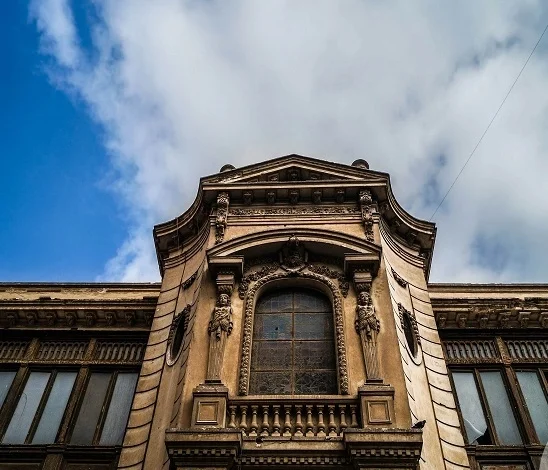
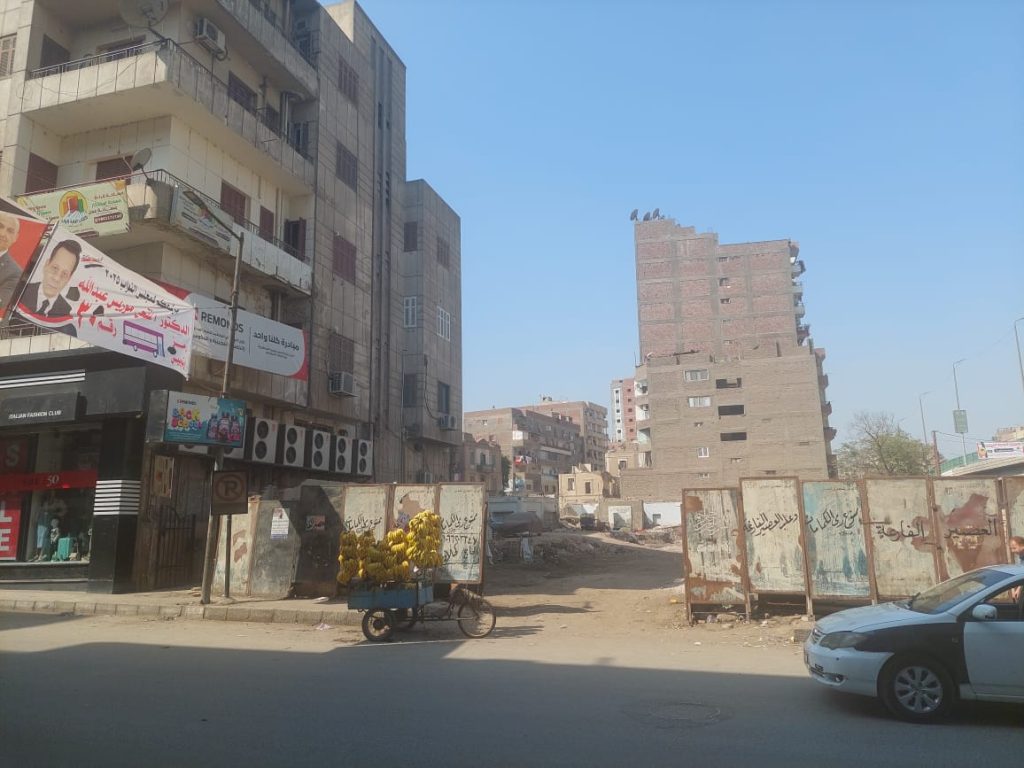
Beyond public sculptures, Assiut has witnessed the demolition of numerous heritage buildings with distinctive architectural character. The 400-year-old Al-Yousefi Mosque was demolished, shocking residents and heritage advocates, while Bishara Pasha Palace, once among the most beautiful heritage palaces in central Assiut, was removed by bulldozers to make way for modern development. Mikhail Louka Zik Palace was delisted from official antiquities protection in 2021, clearing the path for its demolition, and the Assiut Renaissance Cinema has been replaced by residential towers, erasing another piece of the city’s cultural memory. Alexander Pasha Palace and Abou Waddon Palace both face uncertain futures, with preservation advocates concerned they may be next on the demolition list.
Ahmed Sayed, a 50-year-old employee in Assiut’s culture sector, expressed the frustration many residents feel: “Countries are searching desperately for any trace of their history, and here we are demolishing buildings that witnessed historical eras that can never be replaced. It’s continuous falsification of Assiut’s heritage and history—randomness and chaos in the heart of an ancient city.”
Urban Chaos and Visual Pollution
Uncontrolled Kiosk Proliferation
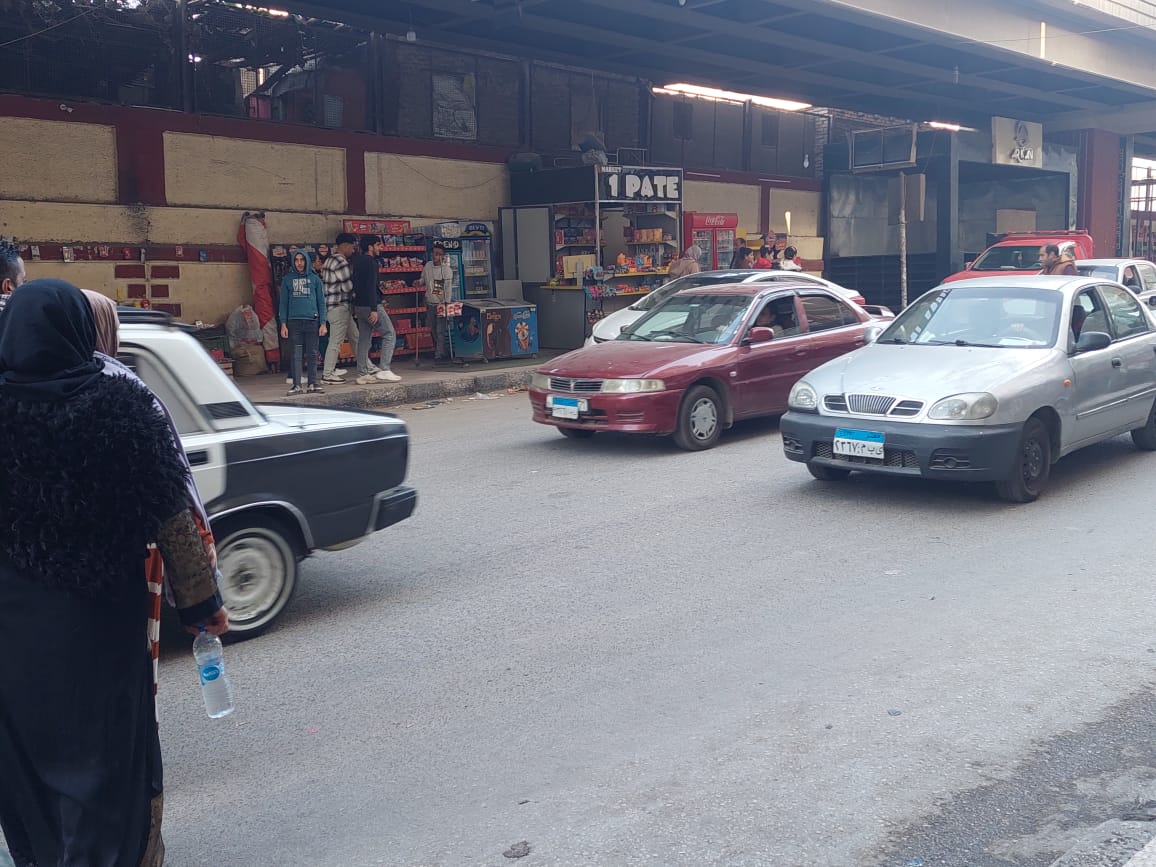
The absence of urban oversight extends beyond heritage demolition to everyday urban management. Random kiosks, small commercial structures, have proliferated throughout vital areas of Assiut without planning oversight or aesthetic consideration.
Mohamed Yehia, 48, an employee at Egypt’s Ministry of Education, described the problem: “Assiut has become filled with randomly placed kiosks in vital locations. Each kiosk not only occupies its own space but also encroaches on surrounding street areas with merchandise, chairs, and barriers. This obstructs movement for both pedestrians and vehicles.”
“The streets have been disfigured, and the city has come to resemble an informal settlement, especially recently,” Yehia continued. “There’s no organisation, no unified design standards, and no one held accountable for what’s happening.”
An effective urban coordination office could regulate kiosk placement, determine appropriate sizes, and establish unified designs that balance commercial needs with urban aesthetics.
Inconsistent Public Spaces
Citizens report confusion and frustration as public squares are removed or redesigned without explanation or apparent planning logic.
“Now and then we find a square removed or its appearance changed without understanding why,” said Ahmed Sayed. “There’s no clear vision or coordination.”
The Broader Context: Egypt’s Urban Development Challenges
Presidential Directives vs. Local Implementation
Egypt’s national government has issued clear directives requiring all governorates to establish visual identity committees and preserve architectural heritage. This reflects broader national initiatives to balance modernisation with cultural preservation across the country.
However, the Assiut case illustrates the gap that can exist between national policy and local implementation, particularly when administrative leadership changes occur.
Asmaa Ali, a 42-year-old employee, noted the contrast: “At a time when other governorates have succeeded in activating urban coordination offices and establishing clear guidelines for urban form, Assiut still lacks such an entity, despite having a previously announced committee with complete specialisations and expertise, under the direct supervision of the Ministry of Local Development.”
Economic Pressures and Heritage
Ahmed Mostafa, Director of the Technical Office of the Central Administration for Media of North and Central Upper Egypt, pointed to speculation about economic motivations behind heritage demolitions.
“There’s talk of a ‘profiteering mafia’ with immense capability to turn history, art, and beauty into rubble, replaced by residential towers generating billions,” Mostafa said, noting that apartment prices in central Assiut can exceed ten million Egyptian pounds (approximately $200,000 USD). “Heritage stone becomes merely an obstacle to boundless greed.”
He emphasised that the problem extends beyond individual demolitions to “overwhelming official silence” from successive governments and parliamentary councils. “If they truly realised the danger of this demolition on identity, belonging, culture, and beauty, they would have addressed bureaucracy problems, strengthened enforcement agencies, reformed flawed laws, established deterrent regulations, and created real incentives to preserve heritage.”
The True Cost of Urban Neglect
Multiple Dimensions of Loss
The consequences of Assiut’s urban coordination failure extend across multiple dimensions. The erasure of historic buildings and distinctive architecture removes the physical markers of local history and identity that connect residents to their community’s past, creating a profound loss of cultural identity. Meanwhile, the destruction of architectural standards and beautiful public spaces diminishes the quality of life and civic pride through aesthetic degradation.
The economic impact is substantial, as heritage tourism potential remains undeveloped while the city’s attractiveness for visitors and investment declines. Ahmed Mostafa noted that billions of pounds in tourism potential are wasted through the destruction of heritage assets. Public health and well-being also suffer, as Dr Safaa Kamel, former director of Assiut Culture Palace, emphasised that visual chaos and lack of green spaces with fountains and sculptures affect residents’ psychological well-being. Mostafa added that society pays high costs in healthcare “to treat diseases of pollution, congestion, and noise, accompanied by declining productivity and weakening creativity in a society deprived of surrounding beauty and inner tranquillity.”
Dr. Al-Mansi noted the negative educational impact on art students and the cultural audience throughout Upper Egypt when artistic works are arbitrarily removed, demonstrating how the crisis affects future generations of artists and cultural practitioners.
Unanswered Questions and Official Silence
Critical questions remain unaddressed as the city’s heritage continues to deteriorate. Citizens and committee members alike wonder why the Urban Coordination Committee wasn’t activated after the change in gubernatorial leadership, and whether it was formally frozen or simply ignored without an official decision. The vacuum raises pressing concerns about who currently reviews major urban decisions within the city, and why ready-to-work academic experts with specialised knowledge have not been utilised despite their availability and willingness to serve. Perhaps most troubling is the absence of any clear accountability mechanism for demolition decisions that erase irreplaceable pieces of the city’s history.
Bab Misr contacted officials at the Assiut Governor’s office to inquire about the committee’s inactive status, but received no response by publication time.
Calls for Action and Restoration
Heritage advocates and committee members have expressed willingness to serve if called upon.
“As a sculptor with works displayed in Assiut city squares, I stand ready to serve the governorate and its university in any capacity that contributes to restoring the visual identity of the governorate,” said Dr Al-Mansi.
Dr Safaa Kamel stressed the need for comprehensive improvement: “The governorate must develop entrance arches and gateways that currently lack beauty, add statues and fountains consistent with the city’s visual identity, and preserve artworks using suitable materials that respect aesthetic vision and prevent disfigurement.”