Daoud Abdel Sayed: Ranking the Films of Egyptian Cinema’s Philosophical Auteur
How Daoud Abdel Sayed balanced philosophical depth with popular appeal across a four-decade career.
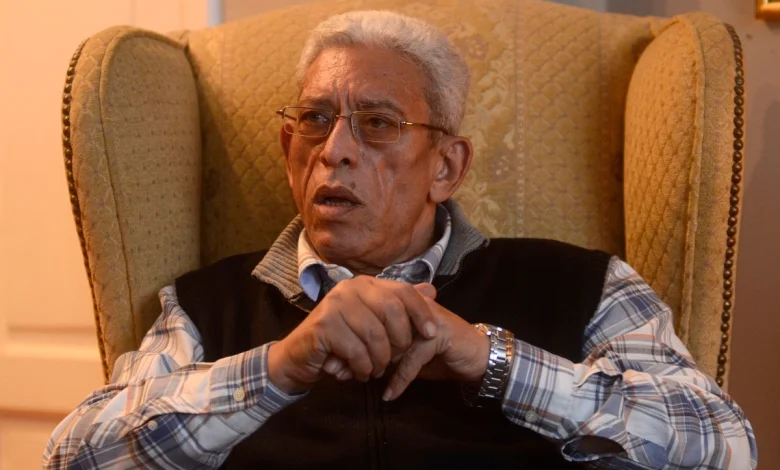
The late Egyptian director Daoud Abdel Sayed left behind a small but influential body of work that stands apart in Egyptian cinema for its philosophical depth, poetic style, and willingness to challenge conventions. Though he made only ten narrative films over four decades, each bears his distinctive artistic signature, blending social realism with surrealist elements and infusing popular genres with literary sensibility.
Abdel Sayed (1946-2020) was part of a generation of Egyptian filmmakers who emerged in the 1970s and 80s, bringing European arthouse influences to a film industry dominated by commercial melodramas and comedies. His work often explored themes of alienation, state oppression, and the struggle for dignity in modern Egyptian society, drawing comparisons to Kafka and European auteurs while remaining distinctly Egyptian in character.
Here is a ranking of his major works, from strongest to weakest, based on artistic mastery, poetic energy, intellectual clarity, and harmony of elements.
1. Al-Kit Kat (1991)
This adaptation of novelist Ibrahim Aslan’s “The Heron” represents Abdel Sayed at his best, balancing artistic ambition with popular appeal. The film follows Sheikh Hosny (Mahmoud Abdel Aziz), a charismatic con man navigating life in a poor Cairo neighbourhood called Kit Kat during the Gulf War era.
Originally titled “Naked in the Crowd,” the film was renamed after censorship objections, one of the rare cases where censorship actually improved a work. The new title was less heavy-handed and more commercially viable.
The film excels through a masterful literary adaptation that captures the novel’s poetic transparency despite its spare, journalistic prose. Mahmoud Abdel Aziz delivers a magnetic performance as Sheikh Hosny, anchoring the film and making it Abdel Sayed’s highest-grossing work. Composer Ragih Daoud, whom Abdel Sayed introduced to cinema, created an otherworldly score that elevates the film beyond typical Egyptian cinema music with its spiritual, soft quality. Production designer Ansi Abou Seif recreated an entire Cairo neighborhood in a studio with such authenticity it’s difficult to distinguish from reality.
The film succeeds by adding comedy and the popular song “Dergen Dergen” to lighten the source material’s gravity, making philosophical themes accessible without sacrificing depth. It remains the most complete realisation of Abdel Sayed’s artistic vision.
2. Land of Fear (2000)
As a director, this is Abdel Sayed’s most creative work, and as an auteur, his most original. The film tells the story of a police informant sent to infiltrate a criminal underworld who gradually loses his sense of identity and purpose when his handlers abandon him.
Abdel Sayed synthesised multiple influences into the film’s layered concept. He drew from the idea of a forgotten secret agent (echoing real Egyptian spy Rifaat El-Gamal’s story), the FBI infiltration drama “Donnie Brasco” (1997), and the biblical metaphor of expulsion from Paradise. The result is a work that operates simultaneously as a gangster film, Egyptian neo-realist drama, and Kafkaesque philosophical parable.
The film combines American crime genre conventions with Egyptian social realism, adding a contemplative literary mood through narration and slow camera movements, plus surrealist touches previously explored in “The Search for Sayed Marzouk.” This synthesis of contradictory elements reveals Abdel Sayed’s ability to create a unique cinematic language. Ideas, dramatic lines, and images intertwine in a single braid difficult to unravel, where you cannot examine one feature without considering the others.
3. The Search for Sayed Marzouk (1991)
Though not Abdel Sayed’s most popular film, and one he later distanced himself from while citing flaws, “Sayed Marzouk” remains his most purely Kafkaesque work and most expressive of his distinctive worldview.
The film follows a man who becomes trapped in a nightmarish bureaucratic and security apparatus after a case of mistaken identity. While inspired by Martin Scorsese’s “After Hours” (1985), Abdel Sayed grounds it in Egyptian reality, specifically the corrupt businessmen who emerged during Sadat’s Infitah (Open Door economic policy) of the 1970s and the oppressive security state that followed.
The idea came from a news story about a leftist journalist at Sabah El-Kheir magazine who read about his own arrest warrant in the newspaper, went to surrender, was handcuffed to a chair by police, then forgotten and left free to leave or stay as he pleased. This absurdist reality became the film’s foundation.
Though torn between surrealism and realism in its execution, the film retains its appeal and impact through its bold difference and enduring ability to provoke thought.
4. Messages from the Sea (2010)
The simplest and most emotionally tender of Abdel Sayed’s works, this film could have been written by popular Egyptian novelist Ihsan Abdel Quddous or directed by mainstream filmmaker Atef El-Tayeb, yet it merges seamlessly with Abdel Sayed’s distinctive style.
The film explores love surrounded by greed and corruption, a theme Abdel Sayed tackled in other works, but here rendered more purely romantic. It’s essentially a love story set in Alexandria, celebrating the city while mourning its decline. Love here is stronger and more encompassing, and hatred is narrower, almost confined to the worship of money represented by both the apartment owner where protagonist Yahya lives and the wealthy man protagonist Nora lives with.
The film echoes Greek-Egyptian poet Constantine Cavafy’s passion for places and nostalgia, and Lawrence Durrell’s “Alexandria Quartet” in its multiple characters and voices. Like both writers, Abdel Sayed treats love as a sacred transgression in a profaned world, where only money is truly worshipped. It serves as an elegy for Alexandria, reminiscent of Cavafy’s poems about the city.
5. Land of Dreams (1993)
Abdel Sayed’s only film centred on a female protagonist and the only one based on another writer’s screenplay (by Hani Fawzi). The film stars Egyptian cinema legend Faten Hamama as Nargis, a woman who embarks on a surreal daylong journey that transforms her from fearful to self-aware.
Like “Sayed Marzouk,” the film uses a single-day journey structure. Fawzi’s original screenplay likely focused on family dynamics and Egypt’s Coptic Christian community facing emigration pressures, but Abdel Sayed imbued it with broader philosophical and psychological dimensions, making the journey more universal.
The film focuses on two main characters, giving stars Faten Hamama and Yahya El-Fakharani space for improvisation and ensemble acting as equals. It features a gentle comedic tone rare in Abdel Sayed’s work. As usual, scenes transcending reality and Ragih Daoud’s music contribute to imparting spiritual depth to the film.
Though it underperformed commercially upon release, “Land of Dreams” has become one of Abdel Sayed’s most popular and watched films over time.
6.Al-Sa’alik (The Vagabonds, 1985)
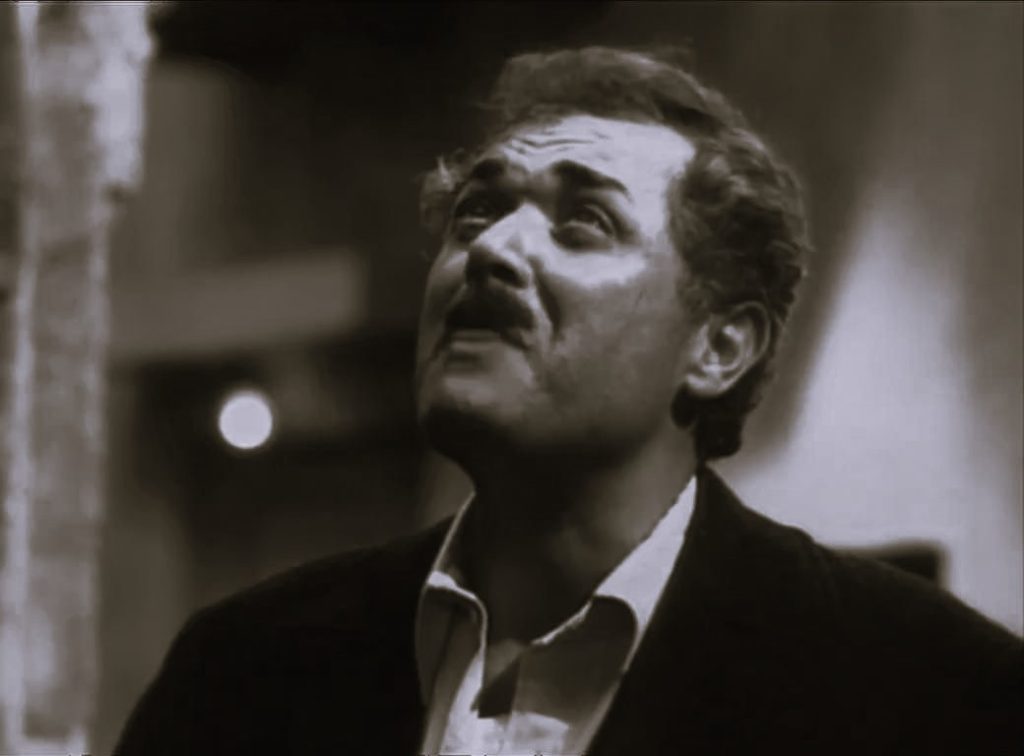
Abdel Sayed’s debut narrative film served as his calling card to Egyptian cinema. It tells a familiar story, two friends rise through the criminal underworld, then become enemies, with one ultimately eliminating the other. previously seen in the French film “Borsalino” (1970) starring Alain Delon and Jean-Paul Belmondo, and later repeated in the Egyptian comedy “Salam ya Sahbi” (1987).
What sets it apart is Abdel Sayed’s philosophical perspective, contemplative rhythm, and bold presentation of sexual relationships, which added human depth. However, these qualities also prevented it from attracting action-oriented Egyptian audiences in the mid-1980s who expected faster pacing and clearer genre conventions.
7. The Testament of a Wise Man in Village Affairs and Education (1976)
Classified as a documentary but actually a hybrid work that transcends genre boundaries. The film shows educational life in a poor Egyptian village and state “achievements” in building schools and combating illiteracy, but the narrator’s voice belongs to a fictional village elder who opposes education because it might lead citizens to think and rebel against political, religious, and tribal authorities.
This concept demolishes the “propaganda documentary” form, making viewers contemplate what lies behind official narratives. The image is documentary, monitoring reality, but the commentary is narrative and purely fictional. It’s remarkably ahead of its time and reveals Abdel Sayed’s contempt for official lies and his commitment to truth-telling through indirect, sophisticated means to evade censorship.
The film contains the seed of the bitter sarcasm found throughout his later work, particularly “Citizen, Detective, and Thief.” This is one of Abdel Sayed’s smartest works.
8. A Citizen, A Detective, and A Thief (2001)
A problematic but fascinating work that lacks homogeneity between its components. The concept brilliantly synthesised literary works like Milan Kundera’s “The Unbearable Lightness of Being” and Gabriel García Márquez’s “One Hundred Years of Solitude” with popular carnival arts and political satire of Egypt’s post-Infitah society extending into the new millennium.
Production circumstances led to adding crowd-pleasing elements, including controversial singer Shaaban Abdel Rahim, who gained fame with politically charged pop songs like “I Hate Israel” and “I Love Amr Moussa.” Abdel Rahim became, for reasons too complex to explain here, the singer of intellectuals and politicians during that period. This approach succeeded commercially but compromised the film’s artistic integrity. The film sells the same vulgarity it critiques, represented by the character of the thief.
Some might think audience dancing in screening halls was a response to the film’s ideas, but the opposite may be true: that audiences celebrated the artistic vulgarity and sympathised with the moral hypocrisy represented by “the thief.” Despite flaws in its execution the core idea and story remain among Abdel Sayed’s most mature conceptually.
9. Extraordinary Abilities (2015)
Abdel Sayed’s penultimate film contains all his signature elements: semi-surreal worlds, love suspended between sensuality and spirituality, conflict between religious rigidity and liberation, security state surveillance, Alexandria setting, Fellini-esque carnival atmospheres, narrator’s voice, and references to magic and Sufism. All of Daoud Abdel Sayed is present here in his characters and the world they inhabit.
However, the mixture lacks chemistry and clarity. Despite attempts to connect with ordinary people through zar (exorcism) and chanting sessions, the film remains distant. The protagonist, and the film itself, cannot escape the observer’s position or replace drama with monologues. This concoction is weighed down by ambiguity.
10. The Thief of Joy (1994)
Intended as a follow-up to “Al-Kit Kat,” adapting 1960s writer Khairy Shalaby’s story about poor people scheming through life, but the results fell far short. This is Abdel Sayed’s least characteristic film.
Though it contains some good moments and scenes, it’s weighed down by verbal filler, unnecessary songs, and sentimentalised depictions of poverty. Production pressures and the desire to replicate “Al-Kit Kat’s” commercial success apparently compromised the artistic vision and spoiled the mixture.
Understanding Daoud Abdel Sayed’s Legacy
Abdel Sayed’s work represents a road not fully travelled in Egyptian cinema, one that prioritised artistic integrity and philosophical depth over commercial formulas. His best films demonstrate that popular Egyptian cinema could incorporate international arthouse sensibilities while remaining accessible and distinctly local.
His collaborations with composer Ragih Daoud and set designer Onsi Abou Seif established new standards for Egyptian film music and production design. His literary adaptations showed respect for source material while transforming it into purely cinematic language. Since Abdel Sayed preferred to build his entire world inside studios rather than shooting in real streets and locations, the challenge his collaborators undertook was creating equivalents that suggested real places while simultaneously realising the director’s distinctive vision and style.
In an industry that produced hundreds of formulaic films annually, Abdel Sayed’s ten narrative works stand as proof that Egyptian cinema could aspire to both artistic excellence and popular appeal, even if that balance remained elusive in several attempts.
Daoud Abdel Sayed’s major films include: The Land (1969), The Vagabonds (1985), Sardines (1986), Land of Fear (1999), Citizen, Informer and Thief (2001), Messages from the Sea (2010), and Extraordinary Abilities (1992). His work combined philosophical depth with accessible storytelling, making him one of Egypt’s most respected auteur filmmakers. He passed away on 27 December 2025.