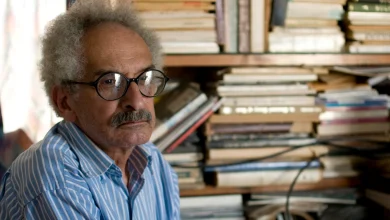
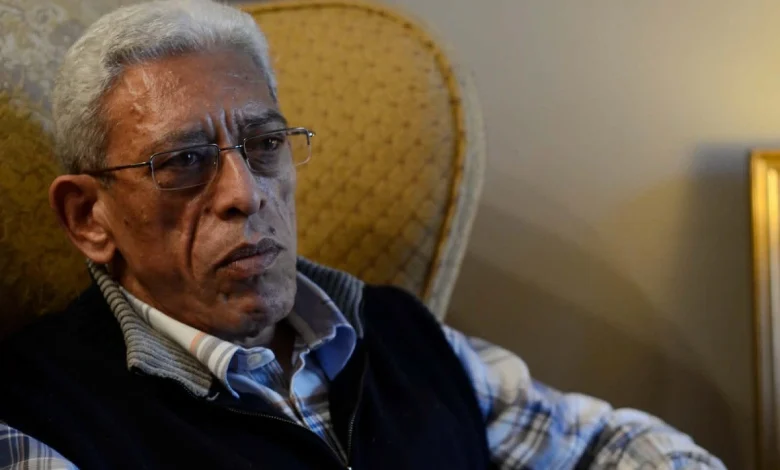
Daoud Abdel Sayed (1946-2025): Egyptian Film Director Who Taught Me to Love Wisdom, Stories, and Life
A Personal Eulogy for the Auteur Filmmaker Behind ‘Land of Fear’ and ‘Messages from the Sea’
By Yahya Khalifa
When I read the news of director Daoud Abdel Sayed’s death, I was drowsing between noon and afternoon prayers, exhausted. I thought it was a nightmare. I read the obituary on a friend’s page and re-sent it to her in disbelief. When I woke, I found her reply, equally astonished: “Is this for real?” Only then did I begin to comprehend the tragedy and share with her my profound grief.
The Sage Who Gave Me His Wisdom Through Cinematic Tales
Daoud Abdel Sayed (1946-2025) was one of Egypt’s most distinctive auteur filmmakers, known for philosophical dramas that challenged audiences intellectually while remaining emotionally engaging. He was my favourite director, though I never met him in person. I found connections between us that shaped my sensibility. I saw myself as “Yahya”, the recurring protagonist in his films. I found him posing the philosophical questions that preoccupied me. Perhaps the poetry of those films pushed me to become a poet later myself, dedicating a poem to him in my first collection, A Hero from a Metaphor.
He revived in me the dream of becoming a filmmaker. I told myself: I want to make films that leave people with those same feelings and raise those same questions. But I, Yahya, with my poetic nature, couldn’t survive in that harsh industry. I worked in journalism instead and was overjoyed when I heard him say he had once imagined working as a journalist before cinema consumed him. He was present when I won my first critical essay award,for an article about his film Extraordinary Abilities.
A Director Searching for Himself in Existence
Daoud Abdel Sayed began his career after graduating from the Higher Institute of Cinema in Cairo in 1967, producing documentary films that showcased his directorial capabilities. He made three early works: The Testament of a Wise Man in Village Affairs, Working in the Field, and About People, Prophets, and Artists.
What connects these films is their relationship to rural Egypt. The latter two document the lives and philosophies of visual artists who influenced Daoud: Hassan Soliman and Rateb Seddik. These films explore the relationship between humanity, creativity, and reality,a continuous inquiry present in all of Daoud’s subsequent narrative films, along with questions about the meaning of human existence: Is man merely a being moving through the world, or a creator in his own unique way?
Daoud presents these films through his subjective vision as a director seeking to discover the artist-thinker’s world. He becomes the narrator who tells us the story, pausing at certain moments to comment with his own voice,not to explain, but to offer his understanding or pose questions.
What preoccupied Abdel Sayed in studying great artists was not showcasing their works, but discovering his personal vision in relation to the larger world,his human and philosophical outlook, and soaring with the artist into the atmosphere of his world to learn, discover, and understand how he could translate himself into cinema. Daoud belonged to that rare category of filmmakers known as “auteur directors”, visionaries who write their own films and express their view of the world, rather than merely adopting a political stance dressed in false objectivity.
Searching for Myself in Daoud’s Biography
For these same reasons, I wanted to make a film about him,to discover myself as a director while discovering his world. To discover Yahya as a protagonist in different stages of his films. And to discover Yahya, who is me, who perhaps became the protagonist who moved from imagination to reality, rebelling against being a passive object to become an active subject, a director instead of a character within a film. Before that idea took shape, I wished I could work as an assistant on Daoud’s next film. But the news of his retirement in 2022 came as a shock, as if the world was saying that the era of Yahya is over, that the era of pleasure has vanished.
What fundamentally attracts me to films is the story, which is the origin of most other literary and artistic works. The greatness and beauty of stories, especially cinematic ones, lies in finding within them different opinions, interpretations, and philosophical readings of the drama, characters, and symbols. Some may enjoy a film as merely entertaining or thrilling, while the contemplative audience, whom Daoud preferred to address,would share his concerns and open-ended questions, which he leaves us free to engage with and answer.
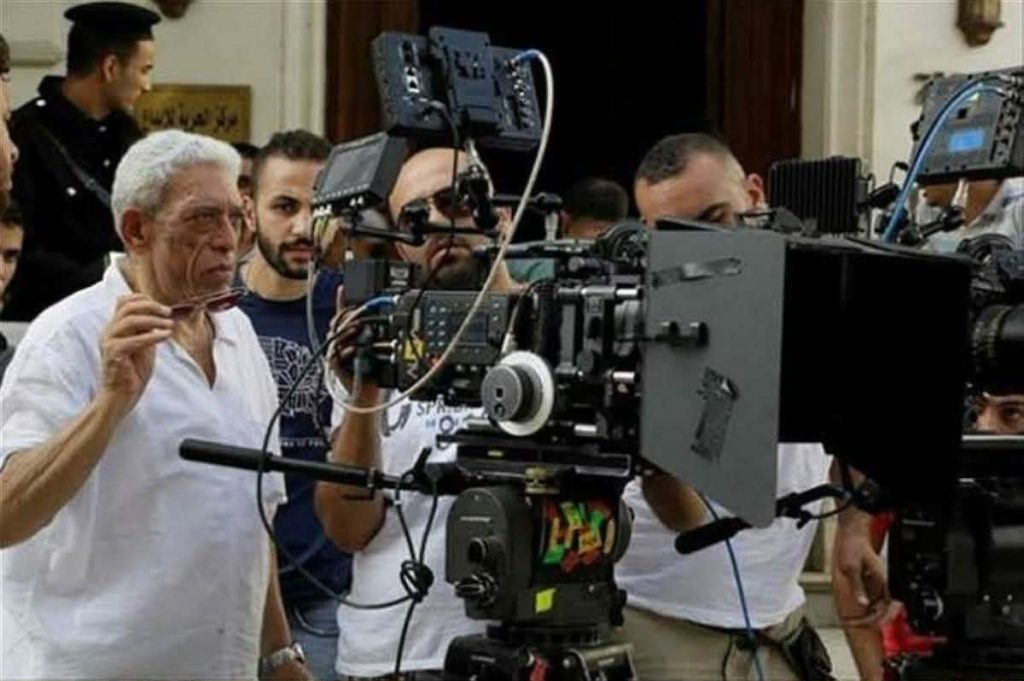
Daoud believed that the most important relationship for a director is not with the actor, editor, or cinematographer, but with the audience. This relationship preoccupied him throughout his career. He belonged to a generation of Cinema Institute graduates who suffered from an “adolescence” characterised by the desire to make films different from commercial cinema, which unfortunately linked the idea of the new, intellectual film with being unenjoyable or unattractive to audiences.
As for Daoud, throughout his years working in cinema, he tried to make films that reach people while also expressing himself, meaning they have a personal dimension without being off-putting. He sought the audience, but not by giving them what they were accustomed to, what he wanted to present. He experienced successes and failures along his journey, but overall, he succeeded in his general aim: making several people interested in this type of film, eager to watch them and seek out new ones.
Yahya in Different Worlds
Personal connection is the wellspring of Daoud’s cinema. He always said he was not a professional director or screenwriter; he only made films to be cured of the fever that seized him when an idea took hold. He bet on his audience, to whom he belonged: young, middle-aged, well-educated, intellectual, liberated individuals.
My personal attachment to his films increased, especially with the trilogy: Land of Fear (Arid al-Khawf, 1999), Messages from the Sea (Rasael al-Bahr, 2010), and Extraordinary Abilities (1992). Their protagonist is one: Yahya, in different worlds.
Daoud’s films pose existential questions that have multiple answers or no answers at all. He saw these questions as the fundamental material of philosophy, art, and even religion, which offer interpretations about the reasons for creation, life, and death. I am moved by this boldness in addressing philosophical questions that break the three taboos of Arab society: religion, sex, and power. He believed in individual freedom and being one’s own authority.
Abdel Sayed said of Land of Fear that it reflects his experience and that of his generation, not in working as a police officer or drug dealer, of course, but the experience of a generation entrusted with a mission and then completely forgotten. He believed Egypt’s 1967 defeat in the Six-Day War had a significant impact on this experience.
The three films share the theme of the protagonist’s journey, where Adam/Yahya becomes alienated from his world to search for lost meaning, resembling the journey of Adam or a prophet before revelation, or a philosopher who doesn’t reside in an ivory tower but roams the earth. Daoud relies on a narrator to tell the events, the method most suited to subjectivity and clarifying internal conflict.
The Temptation of Adam’s Apple
At the beginning of the journeys in Land of Fear, we find symbolic reference to the story of Adam. In the scene where the mission is presented to Yahya, we see him take an apple from a plate beside him, an indication of his acceptance of this temptation and entry into a new world under the operational name “Adam” on a mission titled “Land of Fear.”
In Messages from the Sea, when Yahya meets the new property owner of the building containing his family’s old apartment, the owner wants to demolish it to construct a large commercial mall. He offers Yahya an apple, but Yahya refuses this time because the house is connected to memories and feelings of nostalgia stronger than money. He is pursued until forced to leave—a sign of capitalism and reactionary forces overtaking humanity and beauty. Even Yahya’s old, innocent world is no longer safe.
In Extraordinary Abilities, the child Fereyda tempts Yahya with her strange abilities. He eats an apple that helps him tempt the child to reveal her extraordinary abilities,he places an apple on top of a cupboard, which Fereyda retrieves using her power to move objects telekinetically. Thus begins Yahya’s journey to Alexandria, a journey that will acquire meaning by chance.
The Philosopher’s Journey in Search of Truth and Freedom
Land of Fear poses deep philosophical questions and existential concerns about free will and the meaning of choice, employed within a tightly crafted dramatic plot. From the first moment, Yahya questions the correctness of his decision, despite his prior awareness of the difficulty of the path he chose.
These questions reach their peak when he discovers the futility of his letters after meeting the postal employee, who embodies the symbolism of the “Messenger” and tells him that what happened was not a coincidence but destiny. Here, we realise that Yahya was driven to his choice from the beginning, and his questioning of the letters’ purpose references Nietzsche’s idea of the “death of God”: Adam sent down to the Land of Fear on a mission without answers or ready-made meaning for life.
The conflict transforms into a central ethical question about good and evil: Does the end justify unethical means? Yahya doesn’t represent corruption superficially but delves into its essence, divided between his identity as a police officer and as Yahya Abu Daboura (his undercover persona). He sometimes admits to the pleasure of evil, but his moral compass prevents him from killing Brigadier General Omar Al-Asyouti in a symbolic confrontation resembling the struggle between Adam and Satan within an imagined paradise.
In Messages from the Sea, Yahya embarks on a parallel journey through a network of letters and relationships, the most important being a mysterious message from the sea in a language he doesn’t understand,a symbolic reference to humanity’s relationship with the absolute, with the unknowable. This message coexists with his relationship with Qabil (Cain), a symbol of power and sin, who appears strong outwardly but fragile internally, revealing that power has forms other than violence.
In Extraordinary Abilities, Yahya completes his journey as a philosopher seeking wisdom. He travels aimlessly after despairing of scientific research, making the child Fereyda a symbol of the “child-philosopher,” capable of wonder and asking questions, in contrast to the repressed world of adults. The journey ends at a mawlid (Sufi festival celebrating a saint’s birthday), where Yahya dissolves into a mystical experience, realising that he came to know, not to rest, and that the search itself is the essence of the journey.
Salvation in Love
At the end of Land of Fear, Yahya returns to Fereyda, as he had never known her before,Fereyda, whose appearance in his life made him live his most vital days, whose warmth radiated within him. Her open door was the sanctuary and the love that atones for sins.
In Messages from the Sea, Nora illuminates Yahya’s world, rescuing him from his darkness. With her, he becomes natural, no longer stuttering. He loves her more than music, the thing he loved most in life, while discovering that she was the unknown musician who used to play for him when he passed by her villa.
The film ends with Yahya and Nora after she returns to him and decides to live with him. They sit in a boat, and she tells him that it doesn’t matter what the sea’s message is or where it came from; it’s certainly a message from the sea for him. The love of Yahya and Nora lived despite attempts to kill it, and survived with a small boat that sheltered them. He didn’t understand the message but grasped a greater existential meaning.
In Extraordinary Abilities, Hayat discovers that her abilities, which she had been hiding, still have embers under the ashes when she loves Yahya and summons him. And Yahya doesn’t discover his abilities until after he encounters Hayat and Fereyda. Perhaps their extraordinary abilities are not individual powers, but the shared ability of love.
When they use their abilities in love, they become effective. But when they try to use them for the security apparatus, they fail. Similarly, when Fereyda uses her abilities in play and fun, it leads to her happiness. But when she is torn from her childish world and used as a medium in political matters, she becomes depressed, as if these abilities only know the innocent world.
Yahya returns once again to the pension by the sea, but this time he returns to Hayat and Fereyda, as if he has returned to rest and draw closer to those around him, realising that “maybe not all of them have extraordinary abilities”, but they do have the ability to love, understand, and accept the other.
Daoud Abdel Sayed’s major films include: The Land (1969), The Vagabonds (1985), Sardines (1986), Land of Fear (1999), Citizen, Informer and Thief (2001), Messages from the Sea (2010), and Extraordinary Abilities (1992). His work combined philosophical depth with accessible storytelling, making him one of Egypt’s most respected auteur filmmakers. He passed away on 27 December 2025.