Rediscovering Alexandria’s Soul: The Iskenderona Project Celebrates a City’s Layers
Beyond the well-trodden paths to ancient libraries and sunken palaces, a different kind of excavation is underway in Egypt’s legendary port city. The “Iskenderona” project, now in its eighth year, is not digging for artefacts but for memory, mobilising youth to document and reimagine the living heritage of neighbourhoods at risk of being forgotten.
A Cultural Spotlight in a Historic Quarter
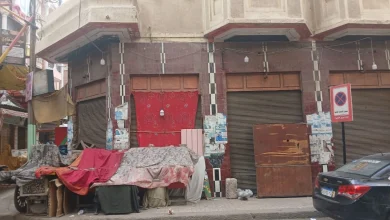
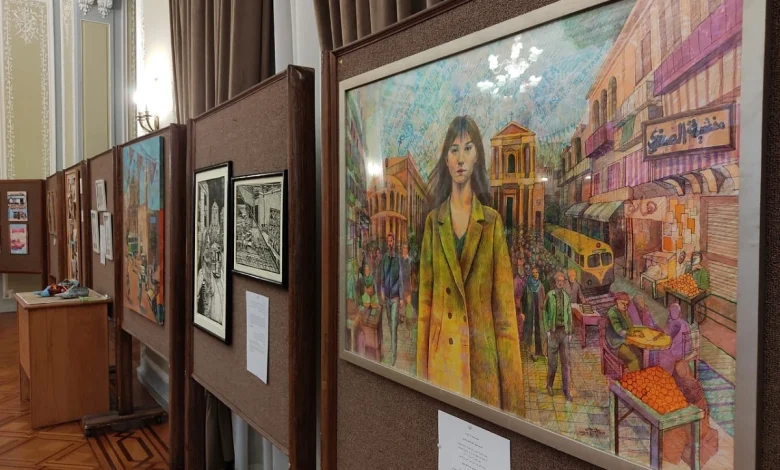
In the historic district of Al-Mansheya Al-Soghra, once the bustling commercial heart of Alexandria, Egypt, the eighth edition of the “Iskenderona” project has concluded, offering a profound look into the city’s complex cultural and architectural identity. Named for “Our Alexandria,” the initiative served as a vibrant testament to the city’s enduring spirit. The exhibition was hosted at the elegant Russian Cultural House in Alexandria, opened on December 4, 2025, and featured a series of workshops, an architectural design exhibition, and critical heritage documentation efforts.
The Iskenderona Project: A Bridge Between Past and Future
The project is spearheaded by the Raqoda Foundation, a non-profit cultural organization dedicated to preserving Egypt’s living heritage.
“The ‘Iskenderona’ project is a core initiative of our foundation, which has been active for a decade,” explains Dr. Doaa Mahfouz, the foundation’s Community Engagement Officer. “Our work has gained significant international recognition, including accreditation from UNESCO’s Intangible Cultural Heritage committee in 2024 and membership in ICESCO (the Islamic World Educational, Scientific and Cultural Organization).”

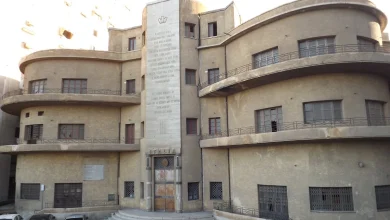
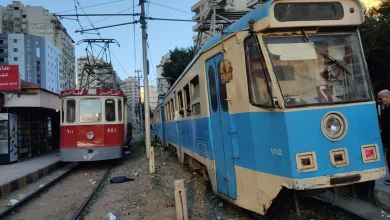
The eighth edition brought together a group of carefully selected artists, architects, and designers. Their workshops engaged deeply with the tangible and intangible heritage of Al-Mansheya Al-Soghra, exploring themes such as the district’s distinctive Italianate and cosmopolitan architecture, its folk arts and local traditions, the iconic Alexandria tram as a symbol of urban life, and the religious and intellectual diversity that has defined the city as a Mediterranean crossroads for centuries.
Following the development phase, the project received support from Egypt’s Tourism Promotion Authority. The final exhibition was held at the Russian Cultural House, a fitting venue in a city long shaped by international influences, and initial workshops were hosted by the Alexandria National Museum.


Core Mission: Cultivating Belonging Through Heritage
For the project’s leaders, the goal is deeply humanistic. “The aim of ‘Iskenderona’ is to foster a genuine sense of belonging among young people,” says Dr. Nader Mohamed Gharib, an architecture professor and project trainer. “By connecting them to the roots of a historic area like this, we help them understand their place in a continuum of history, while also showcasing their contemporary artistic voices.”
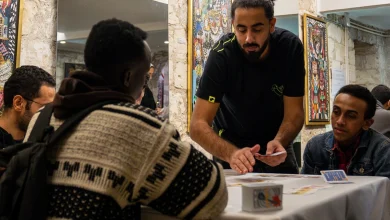
The process was immersive. After theoretical training, participants embarked on field tours, engaging directly with the district’s residents and built environment. “These tours sparked incredible creativity,” Dr. Gharib notes. “They transformed the participants’ understanding of heritage from an abstract concept into a living, breathing reality with modern relevance and even economic potential.”
A Living Legacy: What Will Our Generation Leave Behind?
Dr. Gharib frames the work within a larger philosophical question about legacy. “I teach my students a simple progression: from system, to order, to commitment, to belonging, and finally to giving,” he reflects. “The art created here today is tomorrow’s heritage. We must ask ourselves: Will we leave behind something as valuable as past generations did? To do that, we must engage deeply with the old to create something meaningful and contemporary for the future.”
He points to Alexandria’s ongoing urban transformations as a critical context. While praising positive developments like the restoration of Nabi Daniel Street and the Greco-Roman Museum, he cautions against top-down projects that lack expert integration, citing less sensitive renovations in other historic religious complexes.
Uncovering Hidden Histories: A Student’s Journey
The project’s power lies in these personal journeys of discovery. Nouran El-Shafey, an architecture student at Alexandria University, chose to document three of the district’s historic churches: Saint Catherine’s, the Greek Orthodox Church, and the Roman Catholic Church of Our Lady of Sorrows.
“I was shocked that such a well-known area had so little formal documentation,” El-Shafey says. Her research unearthed stories of community and adaptation: the Greek Church built to serve a displaced congregation, and the Roman Catholic church founded by a Damascene merchant for Arabic-speaking worshippers. She discovered that the three churches form a subtle triangular geometry mirroring the old square’s layout, which was once the epicentre of the city’s commercial and social life.
Why This Work Matters: An Expert’s Perspective
The importance of such grassroots, youth-led documentation is emphasised by heritage specialists. Dr Dina Ezz El-Din, a professor of tourism and community development, is a longtime supporter of the Raqoda Foundation’s work.
“Foundations like Raqoda, powered by young people, are essential for safeguarding heritage,” Dr Ezz El-Din states. “Choosing Al-Mansheya Al-Soghra this year was inspired. Wandering the exhibition, I was transported by images of old shops and streets; it revived my own childhood memories. This is exactly what we need: to make the invisible history of these places visible and felt by a new generation that didn’t experience it firsthand.”
She praised the exhibition’s diversity, noting how participants reimagined everyday streets and shops through their art. “The artist’s eye is unique,” she concluded. “It finds profound beauty in the ordinary details we overlook, reminding us all to look closer at the world around us.”