From Camel Racing to Falconry: How Egypt’s New Valley Festival Revives Desert Heritage
For four consecutive days, the city of Kharga, the capital of Egypt’s vast New Valley Governorate in the Western Desert, hosted the New Valley International Festival of Traditional Sports and Arts. The event brought together participants from several Egyptian governorates alongside delegations from Arab countries, positioning the New Valley as a growing hub for cultural heritage, traditional sports, and people-to-people diplomacy.
The festival offered a rich program of camel and horse racing, traditional archery, falconry, Saluki hunting dog competitions, folkloric performances, poetry, and handicrafts, demonstrating that Egypt’s living heritage is not confined to museums but remains practised, evolving, and shared across generations.
The Heritage Village: Introducing Bedouin Life to a Wider World
Festival activities began at the Heritage Village, located north of Kharga. Designed as an immersive space, the village recreated everyday Bedouin life in Egypt’s desert regions. The scent of traditional Bedouin cooking, the arrangement of tents, and the display of handmade crafts immediately transported visitors, many of whom were international guests, into a way of life shaped by the desert environment.
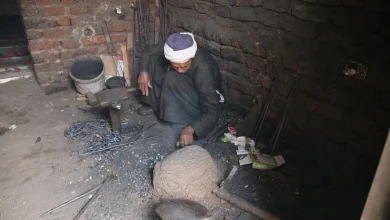
Pavilions represented nine Egyptian governorates, alongside exhibits from Arab countries, offering visitors a comparative view of shared traditions across the region. Rather than a static exhibition, the Heritage Village functioned as a living cultural space where crafts were made on-site and oral traditions were actively performed.
One of the most striking moments was a Bedouin wedding ceremony. The ritual began with the decoration of the howdah, a ceremonial seat placed atop a camel, followed by a traditional procession and women’s wedding chants that echoed across the oasis. The scene was not a theatrical reenactment, but a faithful presentation of customs still practised today among oasis communities.
Mohamed Selim, a member of the Sinai Heritage Association, explained the significance of the group’s participation:
“We came from the Land of Turquoise, Sinai, to the land of the oases to affirm one message: Egyptian Bedouin heritage is a continuous bridge that geography cannot break. Our presence here is not simply to represent Sinai, but to show the cultural interconnectedness of tribes from eastern and western Egypt.”

Camel and Horse Racing: Desert Sports Rooted in History
At the Camel Racing and Equestrian Club, competition intensified as the festival moved into its sporting program. Eighty camels of pure Arab lineage competed in races that tested both speed and endurance. Participants arrived from governorates including Ismailia, Sohag, Qena, Luxor, North and South Sinai, alongside local breeders from the New Valley.
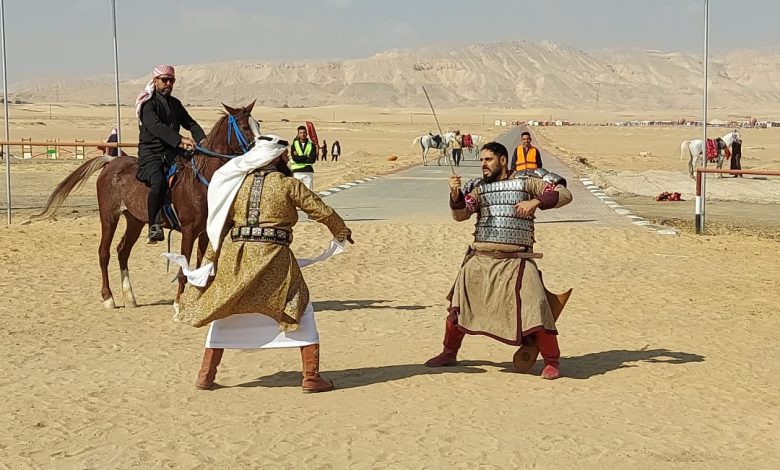
Horse competitions followed, featuring sixty Arab horses in endurance, stamina, and beauty categories. Riders from Sharqia, Matrouh, and Aswan took part, highlighting the national reach of the event. For non-specialist audiences, these competitions reflect traditions that historically played a central role in desert travel, warfare, and trade routes across North Africa and the Arabian Peninsula.
Traditional archery added another dimension to the competitions. Twenty-eight archers participated, including international competitors from the United Arab Emirates, Kuwait, Turkey, and Jordan. Shooting was performed both from stationary positions and while mounted on horseback, a demanding skill that blends balance, precision, and deep knowledge of horsemanship.


Photo: Hadeer Mahmoud
Falconry, Saluki Dogs, and Living Desert Heritage
In a rare and visually striking addition, birds of prey took part in the festival’s competitions. Twenty-four bird,21 falcons and three eagles flew over the festival grounds in coordination with the Egyptian Hunting Association. Falconry, recognised by UNESCO as an Intangible Cultural Heritage, remains a shared tradition across Egypt and the Arab world.
The festival also hosted Saluki dog races, with seven dogs competing in hunting trials. The Saluki, one of the world’s oldest domesticated dog breeds, has been used for centuries in desert hunting. The competitions underscored the continuity of traditional knowledge related to breeding, training, and ethical hunting practices.
Captain Hani Al-Fassam of Kuwait, an international trainer and judge in traditional archery, told Bab Masr that the festival represents an important platform for cultural exchange:
“Equestrian and archery traditions across Arab countries share the same foundations, even if details such as saddles or clothing differ. Events like this allow us to recognize both our shared heritage and our local distinctions.”
He noted that Kuwaiti riders traditionally wear the dijla, mihzam, and ghutra with agal—symbols of dignity and Arab identity that resonate strongly with similar traditions in Egypt.
Popular Diplomacy from Egypt’s Western Desert
Governor of the New Valley, Major General Dr Mohamed Al-Zamlout, described the festival as more than a sporting event, calling it a form of popular diplomacy. He explained that hosting international delegations from countries such as Saudi Arabia, Yemen, and Sudan sends a message of peace and openness from Egypt’s desert regions:
“We do not revive heritage to mourn the past, but to draw strength from it as we move toward the future.”
Al-Zamlout highlighted the inauguration of new facilities during the festival, including the Shooting and Hunting Club, the first of its kind in the governorate. These developments, he said, reflect Egypt’s broader strategy to develop border regions and position them as destinations for cultural, sports, and eco-tourism.
Captain Ahmed Abdel Karim, a Saluki trainer and participant, emphasised the symbolic value of holding the competitions in the New Valley:
“This environment is the natural stage for Saluki hunting. Being here is not just competition—it is a return to the roots of the sport.”
He praised the organization of the races and the allocation of an official track, noting that such recognition supports the preservation of pure Arab breeds and the transmission of training traditions to younger generations.

Government Support and Sports Infrastructure
During the closing events, Dr. Ashraf Sobhi, Egypt’s Minister of Youth and Sports, stressed the government’s commitment to supporting heritage-based sports festivals.He stated that the event reflects Egypt’s strategy of combining sports, culture, and development, particularly in underserved regions:
“What we witnessed in the New Valley is a practical application of building the human being. The presence of advanced sports infrastructure here confirms that development is reaching every part of Egypt.”
Sobhi pointed to the opening of the internationally equipped shooting club and the launch of the Border Governorates Olympiad Torch from the New Valley as signs of long-term investment in the region.
Significant preparation went into organising the festival. Mohamed Fikry, Undersecretary of the Ministry of Youth and Sports in the New Valley, explained that months of planning were required.
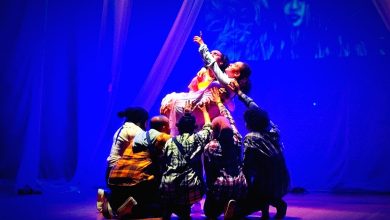
More than 250 young men and women from various governorates participated in performances, sports events, and traditional games, including Seega and Tab. According to Fikry, the primary goal was to reconnect young Egyptians with their cultural heritage while presenting it in a contemporary, engaging format.
A Closing Ceremony Looking Toward the Future
The closing ceremony, held at the Grand Conference Hall, combined solemnity and celebration. As young reciter Mohamed Ahmed Hassan recited verses from the Holy Qur’an, winners were honoured and commemorative shields were presented to sponsors and delegations.
The lighting of the Border Governorates Olympiad Torch officially marked the end of the festival. Yet its broader impact continues, affirming that the New Valley is not a peripheral space, but a living cultural centre where heritage, sport, and future-oriented development converge.