Egypt on a Plate: The Cross-Country Story of Koshari, a New UNESCO Heritage Icon
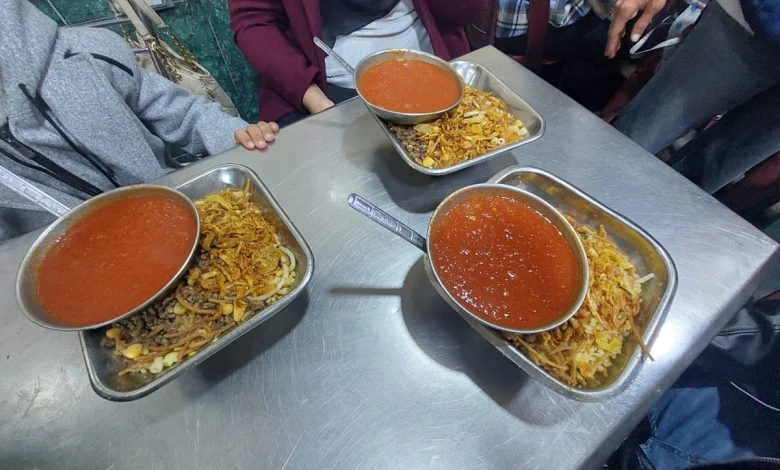
Following the official recognition of Egyptian Koshari on UNESCO’s Intangible Cultural Heritage lists, the dish transcends its status as mere comfort food. It is now a global cultural artefact. To understand what makes it so indispensable, Bab Masr embarked on a field tour tracing its journey from the agricultural south to the industrial north and finally to the Mediterranean coast.
This is a story told in steam rising from crowded pots, in generations working the same family cart. It is the story of Egypt, served in a bowl ( and sometimes, surprisingly, a sandwich!)
Qena:The Lifeblood of the Street
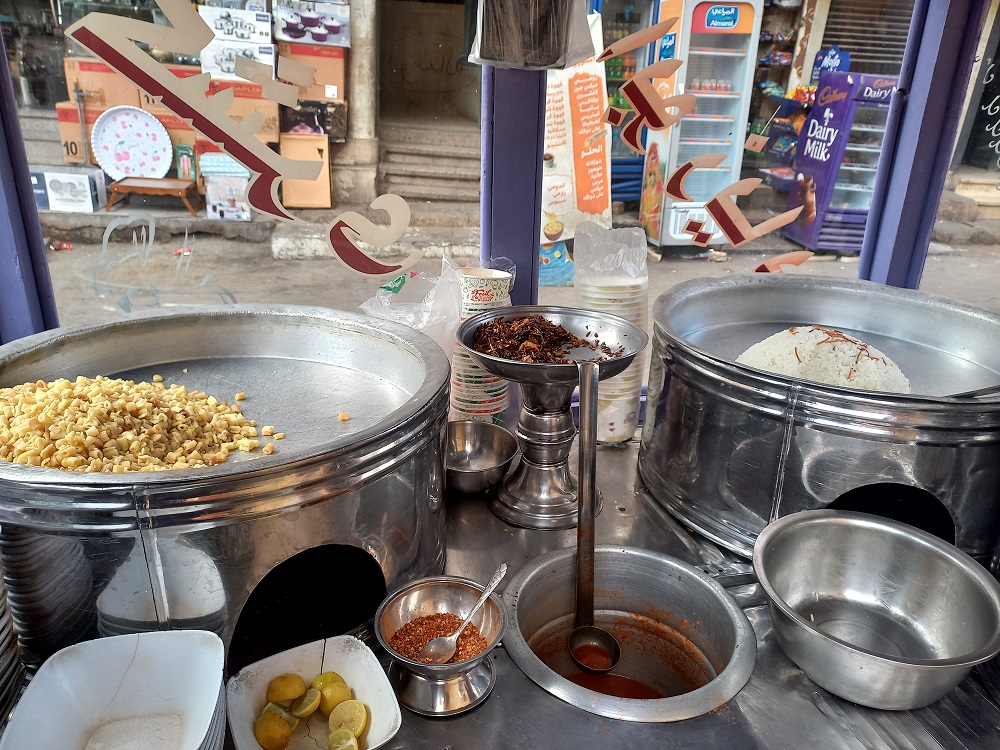
In the Upper Egyptian governorate of Qena, the rhythm of daily life has long been punctuated by the presence of koshari vendors. For decades, their mobile carts have been fixed points in the urban landscape, serving everyone from students rushing to class to government workers on a lunch break.
The recipe for its ubiquity is simple economics: a filling combination of rice, pasta, lentils, and a spicy tomato sauce is far more affordable than meat. “My whole family works in cooking,” says Bilal Amin, a young vendor in the El-Shabban El-Muslimin district. His father chose this trade because koshari is “within everyone’s reach, and all classes can buy it.”
Bilal’s day begins before dawn, with his mother starting the communal family cook. By 10 a.m., he is stationed in his signature blue cart, a beacon for regulars. Portions are sold on a sliding scale of both size and price, from a 5 EGP child’s serving to a 30 EGP plate for a hungry labourer. The business is a carefully timed relay: when Bilal returns home in the mid-afternoon, his mother has already prepared a second batch for his father to sell through the evening.
This model of familial inheritance is the bedrock of the trade. In the historic Omar Effendi district, Mostafa Abu Abdullah presides over a cart adorned with hand-painted proverbs like “God is the sought help”. He inherited the business, just as he inherited the conviction that the recipe must not change. “We offer the simple koshari that the people of Qena are accustomed to,” he states. For him, its purity is its promise: “It’s a meal for the rich and the poor.” Its fame extends to towns like Qus, where veteran sellers like Hamdi Bassal see huge demand, especially from university students returning home from their lectures late in the evening.
Innovation on the Nile: Minya and the Sandwich Revolution
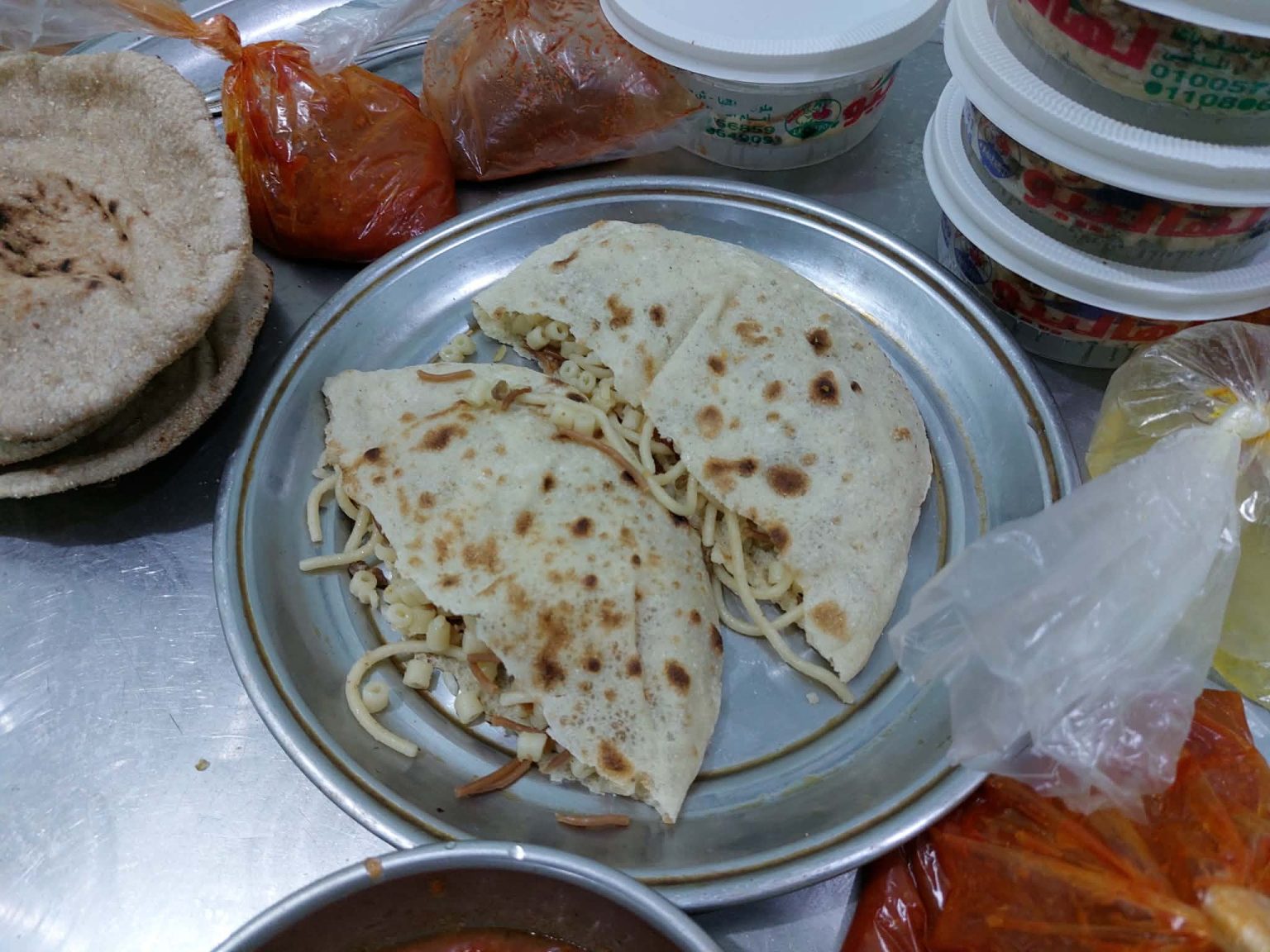
Travelling north into Middle Egypt, the fundamental love for koshari remains, but its form undergoes a creative transformation. In the governorate of Minya, the classic piled-high plate is often swapped for a handheld feast: the koshari sandwich.
On Port Said Street in Abu Qurqas, the call of “spicy koshari sandwiches with crispy onions” cuts through the noon bustle. For a populace seeking a quick, hearty meal to “lighten the hardship of daily life”, this complete meal in a sandwich is a perfect solution.
Hajj Faisal, owner of a popular Minya shop, sees himself as a custodian of feeling. “Koshari is the beloved of the masses”, he says. “It’s a complete meal that expresses the persona of the Egyptians” His shop has evolved with local tastes, now offering varieties with minced meat, chicken, or liver, and “de luxe” casserole versions.
Yet, even amidst innovation, the ethos of accessibility holds firm. Hajj Faisal recounts a time when a bag of koshari and a loaf of bread cost one pound and sustained a student for a day. While inflation has pushed prices up, the principle remains. “Those who have money eat, and those who don’t, eat,” he says, summarising a quiet code of community. “If I feed someone who can’t pay and they pray for me, that is my greatest gain.”
Chef Mohamed Mostafa says, “I love this profession.” He elaborates, “I didn’t just learn the secrets of cooking koshari, but I learned the ethics of the profession from my father, who instructed me to always be cheerful and well-spoken to win people’s hearts”.
Ali Ibrahim notes high demand for the Marmariya sandwich (pasta with sauce) and the “de luxe” koshari sandwich with onions. Sweet dishes like muhalabiya (milk pudding), Om Ali, and rice pudding help balance the dish’s heat

Koshari as Keepsake:The Living Memory of Asyut
In the ancient city of Asyut, koshari is not just consumed; it is remembered. Here, the dish is woven into personal and civic history, a thread connecting generations.
The proof is in the longevity of its institutions. Steps from the bustling railway station stands Koshari and Halawani Nagmet El-Homsany, widely considered the city’s first such restaurant. For regulars like Ramadan Shafiq, it is “a daily station of warmth inherited by people generation after generation” The taste, he insists, is a time capsule: “With every plate from the ancient pot, customers return by their memory to the first taste.”
This sentiment is echoed by customers for whom the dish is a repository of personal history. “Koshari isn’t just food… It’s a longstanding love from when I was a child until today,” says Mohamed Abdel-Baset, now in his forties. For engineer Ahmed Hussein, it is a sensory portal: “Koshari for me isn’t just a meal; it’s a daily ritual from university days. The smell of onions frying would guide my friends and me before we even arrived.”
Near the railway station, Koshari Al-Hanaa stands as the second-oldest shop. Manager Hisham Mostafa says it has opened for decades and, despite its small size and competition, boasts a special taste and smell that attracts passersby. “The price of koshari long ago didn’t exceed one pound,” but rising costs changed that. Yet, it has “retained its original spirit”.
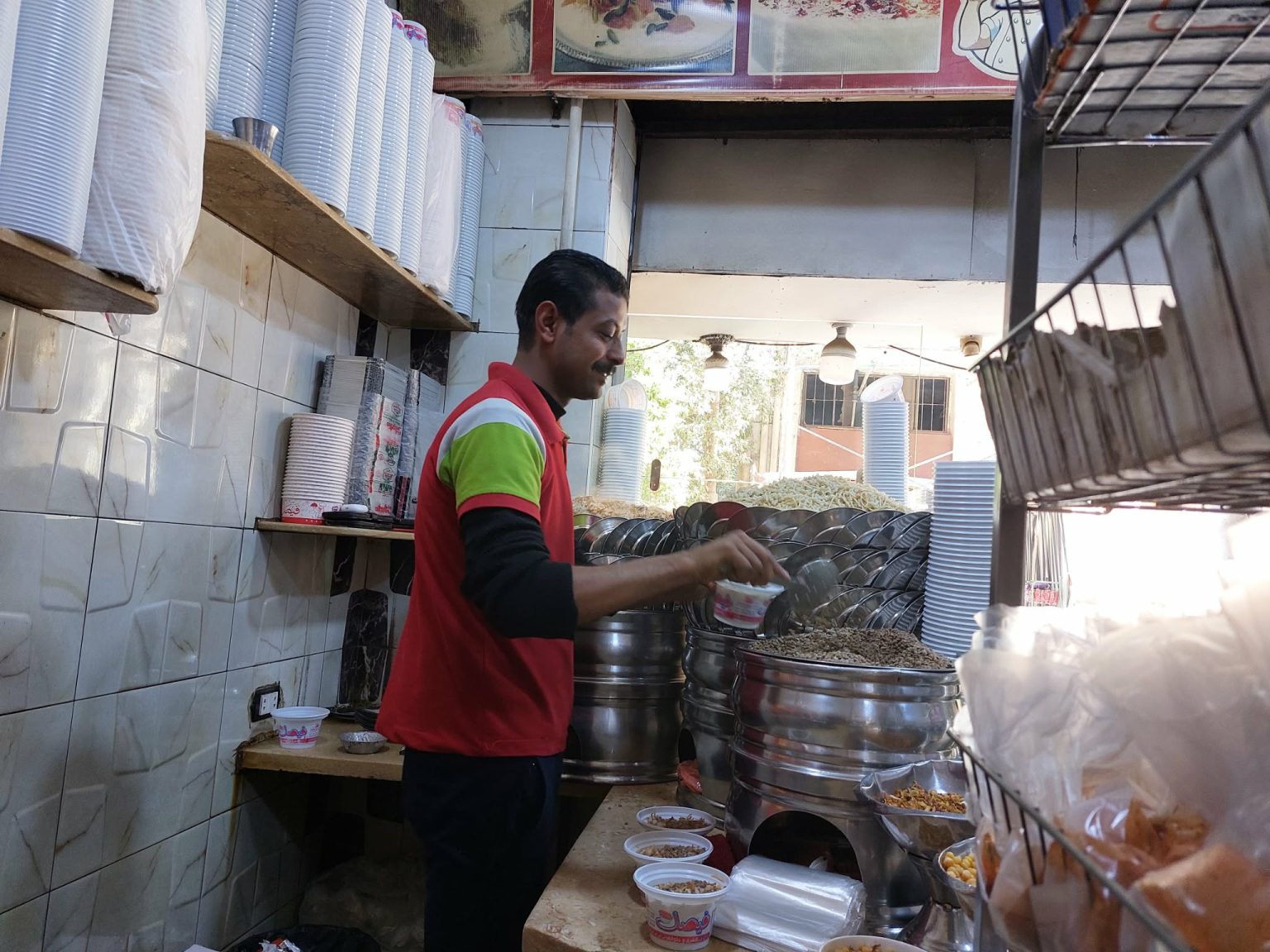
Alexandria: A Coastal Dialect of a National Language
As the koshari trail reaches the Mediterranean, the dish sheds the dust of the agricultural south for the salt-tinged air of Egypt’s great port city. In Alexandria, the foundational recipe speaks in a distinct coastal dialect, with koshari with liver emerging as the signature local idiom.
Here, the dish adapts to the city’s rhythm. Anthropologist Nihal Mostafa observes that Alexandria’s version is far simpler in for just rice and yellow lentils, a reflection of a faster-paced urban life where it often remains a hearty, home-cooked meal. While the city’s proximity to the sea inspires variants like shrimp koshari, these remain largely culinary curiosities, made to special order rather than featured on the standard menu of the street.
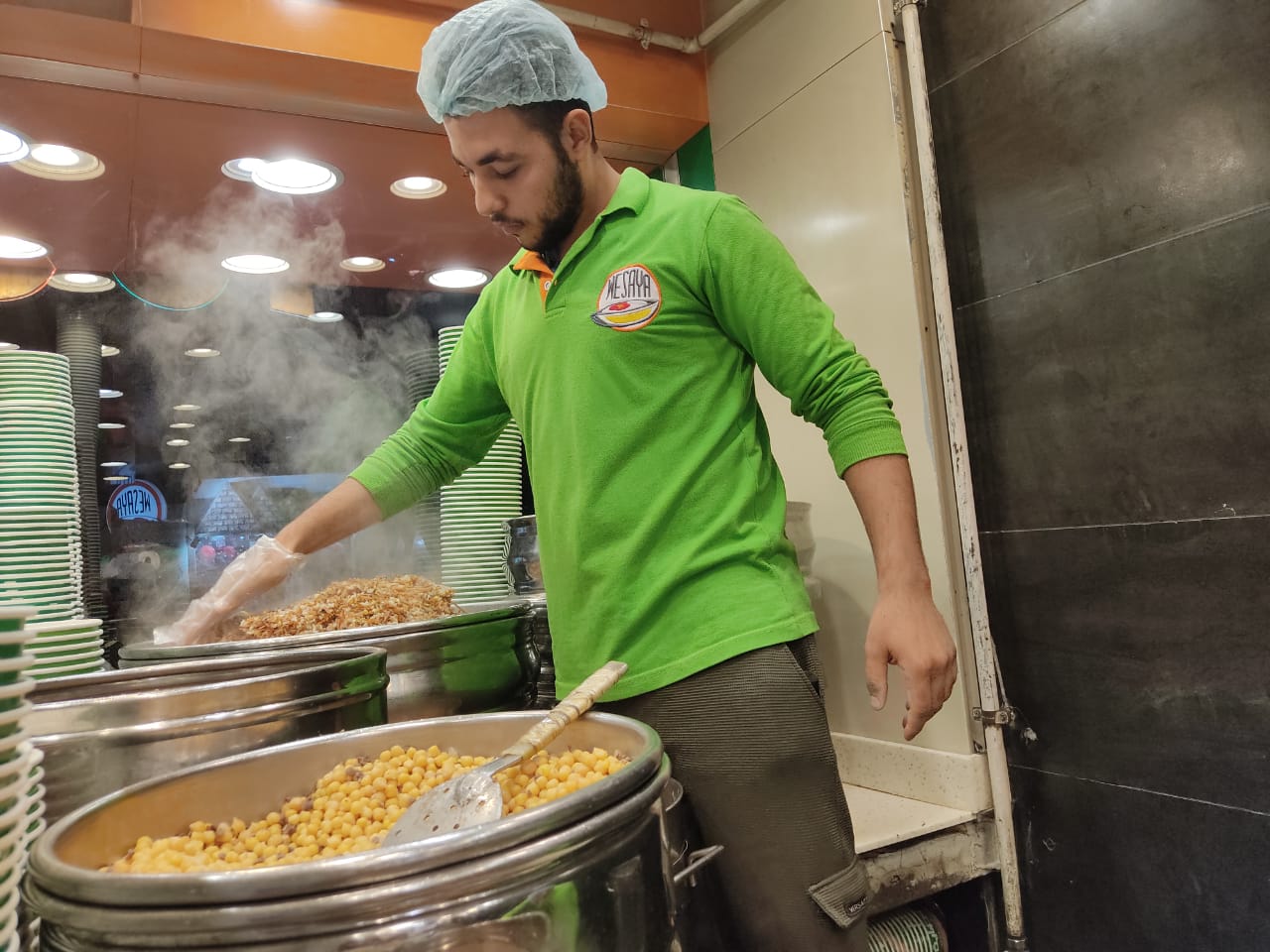
For vendor Alaa El-Hanfy, a transplant from Cairo, the consumption differences are stark. “The way people eat it in Cairo in sandwiches or bags isn’t known here,” he notes. “But ‘koshari with liver’ is hugely popular.” Yet, even as he acknowledges this regional twist, El-Hanfy articulates the universal dogma of the dish’s architecture. He breaks down the sacred balance for authentic Egyptian koshari: one-third rice, one-third lentils and pasta, and one-third chickpeas and the fried onion garnish known as taqliya. “Any deviation from this,” he insists with the conviction of a purist, “isn’t real Egyptian koshari.”
Zen and the art of the perfect Koshari
For vendor Alaa El-Hanfy, a transplant from Cairo, the consumption differences are stark. “The way people eat it in Cairo in sandwiches or bags isn’t known here,” he notes. “But ‘koshari with liver’ is hugely popular.” Yet, even as he acknowledges this regional twist, El-Hanfy articulates the universal dogma of the dish’s architecture. He breaks down the sacred balance for authentic Egyptian koshari: one-third rice, one-third lentils and pasta, and one-third chickpeas and the fried onion garnish known as taqliya. “Any deviation from this,” he insists with the conviction of a purist, “isn’t real Egyptian koshari.”
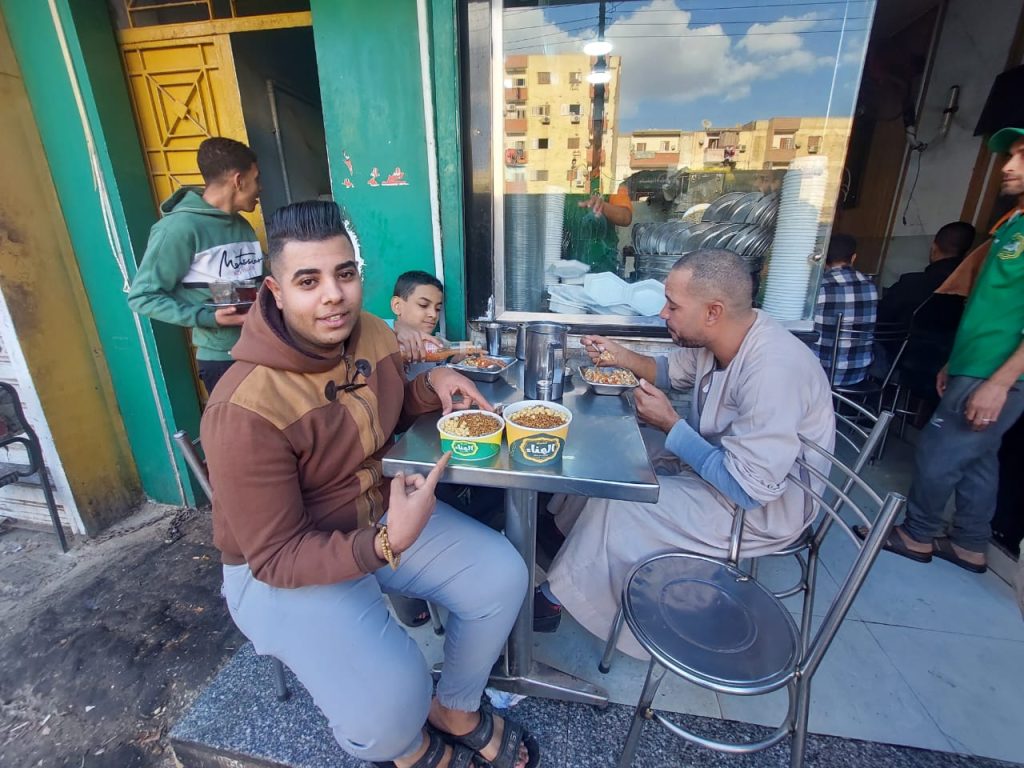
From the familial relay of carts in Qena to the memory-steeped establishments of Asyut and the liver-infused pots of Alexandria, koshari reveals itself as a single, enduring story. It is a narrative of family, resilience, and shared identity, told not in pages but in portions, served hot to anyone who approaches, without regard for station—a story where everyone, rich or poor, has a seat at the table.