Why Egypt’s “Red Palace” Was Demolished Despite Heritage Laws
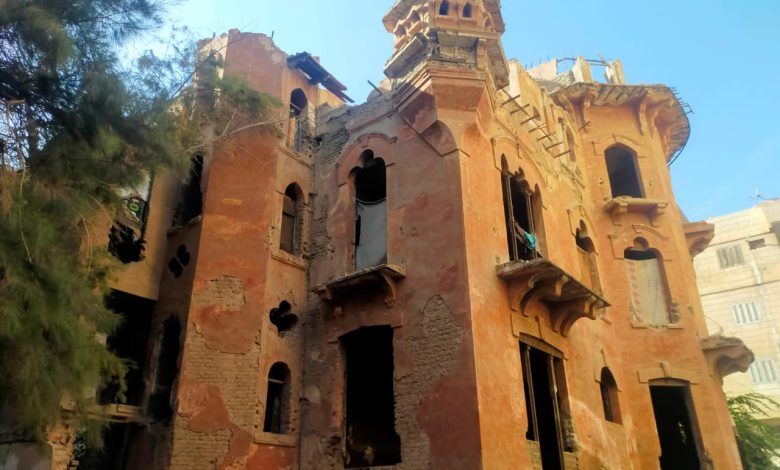
The demolition of the “Red Palace,” also known as the “Iskandar Pasha Palace,” in the Egyptian city of Mansoura has caused significant local outrage. Preservationists and residents concerned with the city’s architectural heritage are dismayed by its loss, and images of the demolition sparked intense debate across Egyptian social media.
Much of the online discussion, however, has occurred without full awareness of the complex legal and historical background of the case.

A Legal Battle for Preservation
Dr Muhannad Fouda, founder of the local “Save Mansoura” initiative, explained that the palace was officially registered as a heritage building of “distinctive architectural style.” This listing, under a 2016 ministerial decree, should have protected it from demolition or modification according to Egypt’s Law 144 of 2006. This law prohibits the demolition of buildings linked to national history, historical figures, or those considered tourist attractions.
Fouda does not contest the court’s final ruling but calls for a parliamentary review of Law 144 itself. He argues the issue is part of a recurring pattern where similar heritage buildings are lost.

The “Relative Value” of a Local Landmark
A key point of contention, according to Fouda, is the assessment of the building’s worth. The court-appointed expert committee, typically composed of specialists from outside the local area, judged that the Red Palace did not meet the national standard for “distinctive architectural style.” They deemed it a derivative imitation of its period, unconnected to major historical events or figures.
Fouda argues this assessment misses the building’s “relative value.” While it might not stand out among Cairo’s grand historic architecture, it was a premier example of distinctive, early 20th-century design in Mansoura itself and a key part of the city’s unique visual identity. With proper care, he believes it could have become a notable local landmark.
He also notes that the law stipulates the state can fund the reinforcement and maintenance of such protected buildings, but that over a decade of appeals for help to save and restore the palace went unanswered.
The Path to Demolition
The owner sought permission to demolish the building, which was initially denied. After a legal challenge, the court’s experts recommended its removal from the heritage list. Following this, a ministerial decision in 2025 formally delisted the property. A separate safety committee then inspected the now-neglected structure, declared it dangerously unstable, and authorised its complete demolition.
History and Significance of the Red Palace
Built between 1920 and 1922, the three-story “Red Palace” was notable for its Gothic-inspired design, cross-shaped windows, and distinctive red paint. A tower with a fish-scale tiled roof crowned the building, which was set within a garden. It later became known as the Iskandar Pasha Palace after a subsequent owner.
After years of ownership disputes and neglect following the owner’s death, the palace fell into severe disrepair, becoming a subject of local ghost stories before it was finally demolished.

Preservation Efforts
The “Save Mansoura” initiative, which used an image of the Red Palace as its logo, actively campaigned to save it. In 2015, they even hosted a cultural event called “Balcony Opera” inside the building to draw attention to its plight. The group proposed multiple plans for restoration and adaptive reuse, urging authorities to broker an investment deal between the owner and developers, but these efforts were ultimately unsuccessful.
A Broader Concern
The fate of the Red Palace highlights a wider issue in Egypt. Many cities contain buildings of local historical and architectural significance that are left to decay due to legal neglect. They often face the same process of delisting and demolition, erasing the unique character of urban neighbourhoods.
Preservationists hope authorities will re-examine the laws designed to protect heritage, closing loopholes and ensuring greater cooperation between property owners and the state. The goal is to find sustainable solutions that preserve Egypt’s diverse urban identities for future generations, rather than seeing its local landmarks vanish.