Zaghloul Mosque: A Minaret of Prayer and a Beacon of Resistance in Rosetta
Discover the Zaghloul Mosque in Rosetta, a Mamluk architectural masterpiece and a symbol of Egypt’s resistance against British invasion in 1807, where a single minaret sparked a historic uprising.
Zaghloul Mosque in the historic Egyptian city of Rosetta (Rashid) is not remarkable merely for the elegant curves of its minaret or the age of its stonework, which dates back to the Mamluk era. Its true distinction lies in its role during one of Egypt’s most dramatic moments of resistance. In March 1807, the mosque’s minaret became the epicentre of a popular uprising against the British Fraser Expedition, transforming a place of worship into a strategic command post and symbol of defiance.
In Rosetta, the minaret was not simply a platform for the call to prayer. It became a watchtower, a beacon of coordination, and a rallying point for collective action. From its heights, cries of Allahu Akbar echoed across the city, signalling the launch of a carefully orchestrated resistance that would defeat a major imperial force.
Minarets of Rosetta: Watchtowers and Fire Messengers
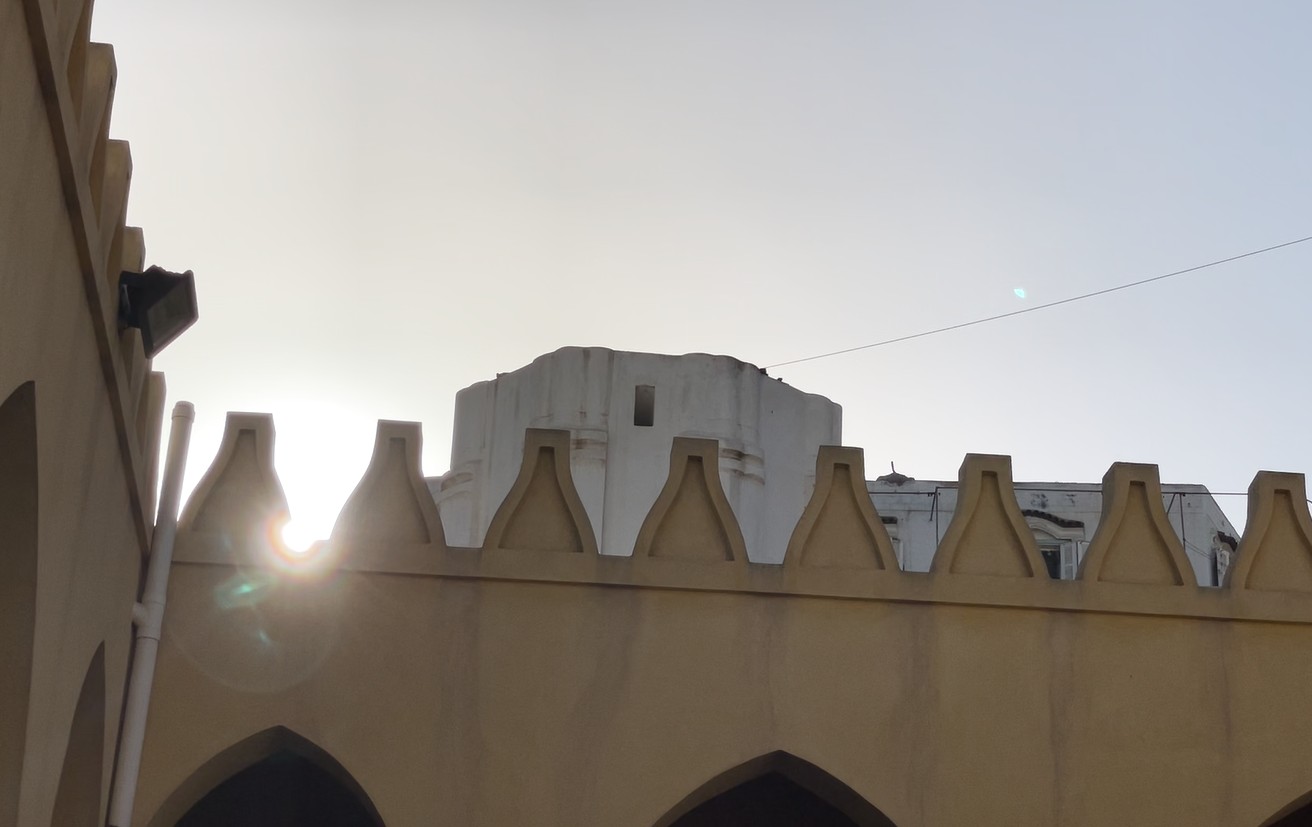
Dr El-Sayed Ahmed Bashir, Inspector of Antiquities in Rosetta, explains that minarets historically served multiple purposes beyond their religious role. Architecturally, they reflected local styles and construction traditions. Functionally, they were designed to elevate the call to prayer. Yet, in times of danger, they also acted as early-warning systems.
According to Bashir, ancient communication networks relied on visual signals transmitted from minaret to minaret using fire. Carefully lit flames allowed urgent news to travel astonishing distances in a single night, linking Alexandria with cities across North Africa. In moments of military threat, these fiery beacons functioned as an early alarm system, alerting communities and mobilizing defenses.
Zaghloul Mosque: The Civic Heart of Rosetta
Historical records from Egypt’s Ministry of Awqaf trace the mosque’s earliest construction to 995 AH (1587 CE), when Sayyid Nasr al-Din Zaghloul founded its southern section. Over the centuries, the mosque expanded through three major architectural phases. An early Mamluk structure attributed to Firuz al-Salahi was followed by a significant enlargement in 1549 by Ali Zaghloul. The final phase, completed in the 17th century by Mohy al-Din Abd al-Qadir, added the eastern section and its fully formed minaret.
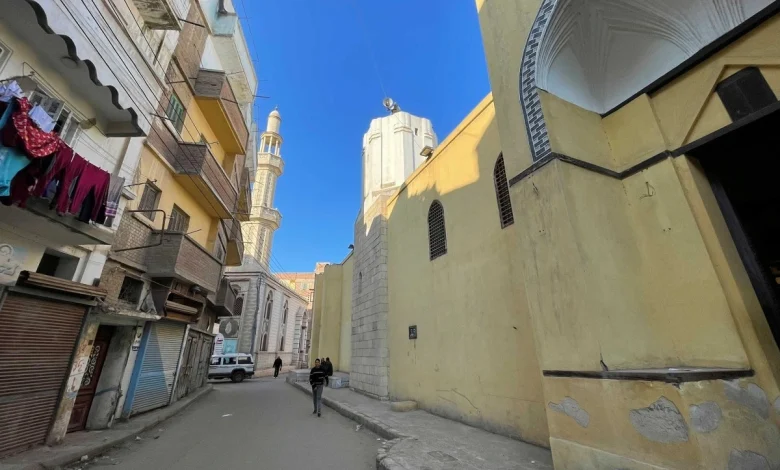
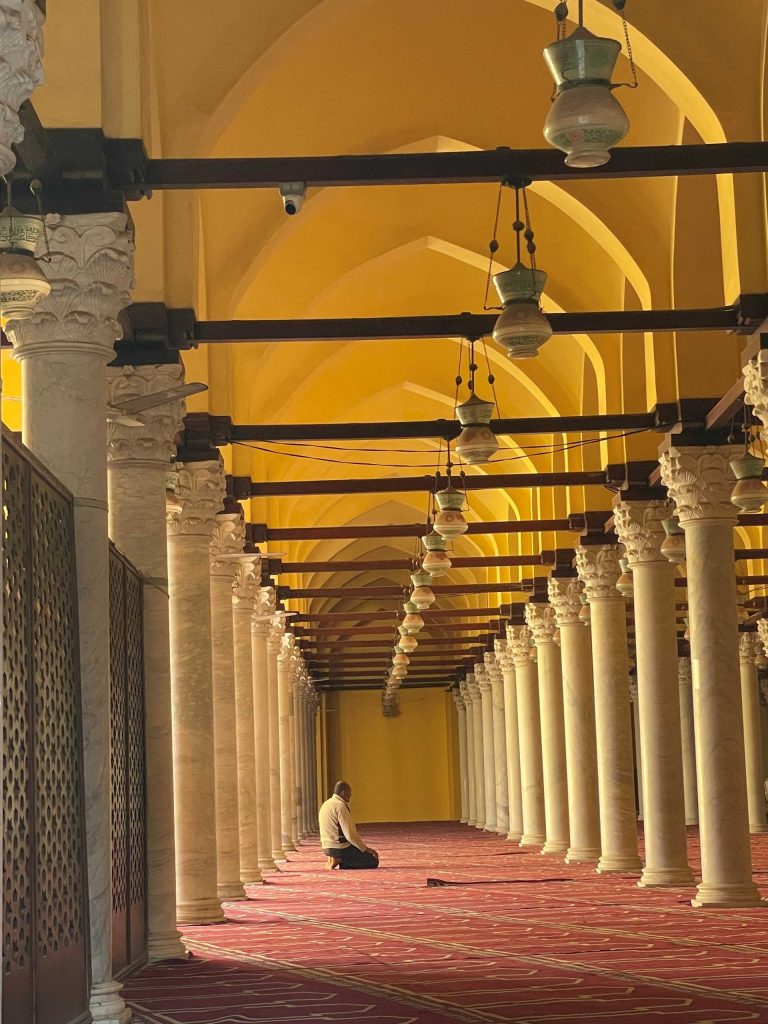
Covering approximately 5,300 square meters, Zaghloul Mosque remains the largest in Rosetta. It is supported by 244 marble and granite columns arranged in a layout reminiscent of Cairo’s Al-Azhar Mosque, crowned with small Ottoman-style domes. Two minarets rise from its sides: the eastern minaret remains intact, while the western minaret still bears the scars of British bombardment during the 1807 campaign.
Documenting the Wound: Restoration as Historical Testimony
During restoration work, conservators faced a critical decision: whether to rebuild the damaged minaret to its presumed original form or preserve the visible scar of bombardment. Authorities ultimately chose to document history rather than erase it.
The minaret was stabilized in its slanted, truncated form, preserving the physical evidence of British shelling. Despite criticism from some architectural historians, Egypt’s Supreme Council of Antiquities defended the decision, citing photographic documentation from the 1930s. Today, the broken summit stands as a permanent memorial, transforming architectural damage into national testimony.
From Abu Mandur Hill: Where Cannons Once Stood
From the sandy heights of Abu Mandur Hill, overlooking the Nile delta, local tour guide Mohamed Wagih points to the remnants of a centuries-old fortress once used by both French and British occupiers. It was from this strategic vantage point that British cannons were aimed directly at Zaghloul Mosque’s minaret in retaliation for the resistance signal.
According to Wagih, while the hilltop fortress lies largely silent in ruin, the minaret below remains alive, embodying memory, endurance, and the unbroken will of the city.
Living Memory Inside Sacred Walls
Inside the mosque’s vast courtyard, worshippers still reflect on its layered history. Ahmed Al-Ajwany, a lifelong resident of Rosetta, describes the mosque as the city’s equivalent of Cairo’s Al-Azhar. It was here that resistance leaders Sheikh Hassan Krit and Governor Ali Bey al-Salankali planned their defense.
For Rosetta’s people, each prayer offered within these walls echoes with remembrance. The mosque is not merely a monument, but a living chronicle of courage, resilience, and collective dignity.
From Subjects to Citizens: A Historical Awakening
In their influential work The Awakening of the Governed, intellectuals Mahmoud Hussein—writing under a shared pseudonym- argue that Rosetta’s resistance marked a decisive shift in Egyptian political consciousness. The city’s victories over both French forces in 1801 and British troops in 1807 shattered the illusion of invincible foreign rule and undermined centuries-old notions of passive submission.
Zaghloul Mosque, described by historian Dr. Said Rakha as “Rosetta’s Azhar,” became the incubator of this transformation. Here, resistance ceased to be loyalty to a ruler and became the defence of a homeland. In this space, the foundations of modern Egyptian citizenship began to take shape.
Architecture as Historical Record
Zaghloul Mosque demonstrates how architecture can function as historical testimony rather than mere form. Its unfinished minaret records violence, resistance, and survival in stone, offering a rare example of preservation that privileges memory over aesthetic completion. In doing so, it transforms a religious monument into a lasting document of political awakening and civic consciousness.