The Fading Grandeur of Mikhail Louka Al-Zaq Palace: The Truth Behind the Demolition Rumors
A deep dive into the fate of Asyut’s historic Mikhail Louka Al-Zaq Palace, exposing the architectural mafia, bureaucratic stagnation, and the urgent fight to save Egypt’s Baroque heritage from total demolition.
Over the past five years, the Mikhail Louka Al-Zaq Palace in Asyut has stood at the center of a swirling controversy, sparking relentless questions over its ultimate fate. Rumors have once again surfaced, whispering of the palace’s imminent de-listing from antiquities registries and its looming demolition. These whispers spread like wildfire across social media and various news platforms, igniting deep anxieties among heritage guardians and lovers of Egypt’s historic architecture. Despite the widespread circulation of these reports, a dense fog of ambiguity shrouds the legal and historical status of the palace. In the absence of decisive official clarifications to quell the raging debate, and trapped between conflicting narratives and fears of losing one of the most prominent architectural testaments to Asyut’s early 20th-century golden age, questions continue to mount regarding the palace’s destiny and the veracity of its alleged demolition.
Between Grandeur and Decay: A History Erased
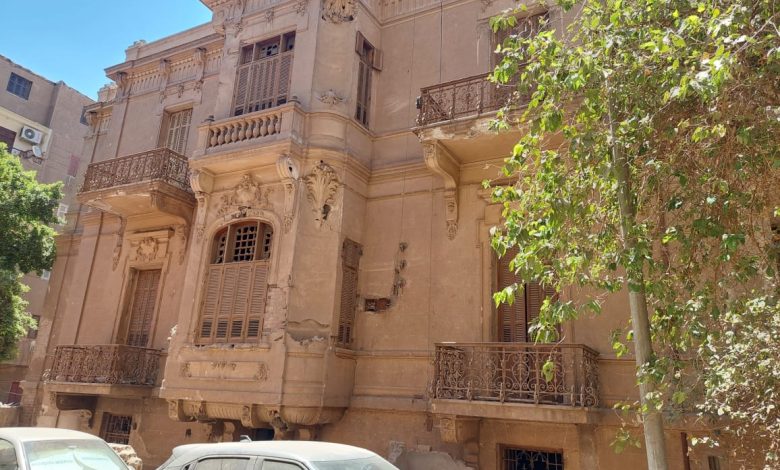
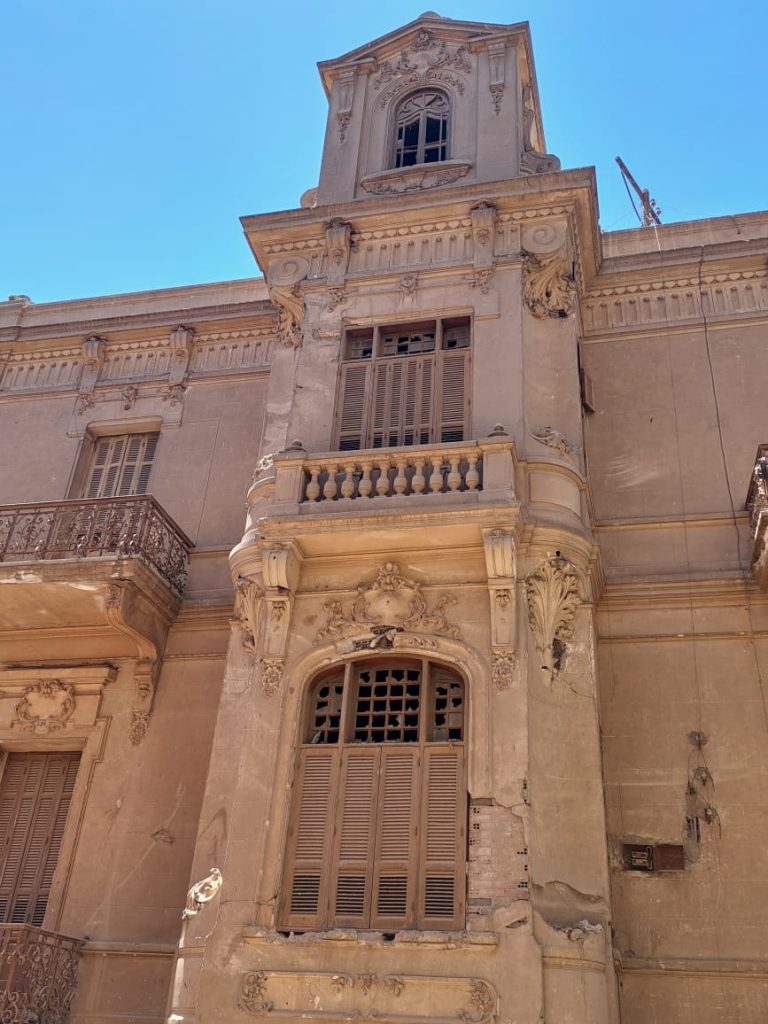
Erected in 1914, the Mikhail Louka Al-Zaq Palace channels the opulence of the European Baroque style. It boasts lavish ornamentation, sweeping architectural curves, and intricate artistic details that mirror the monumental investments and aesthetic mastery defining the palatial estates of that golden era. The palace proudly bears number 27 on Al-Gomhouria Street.
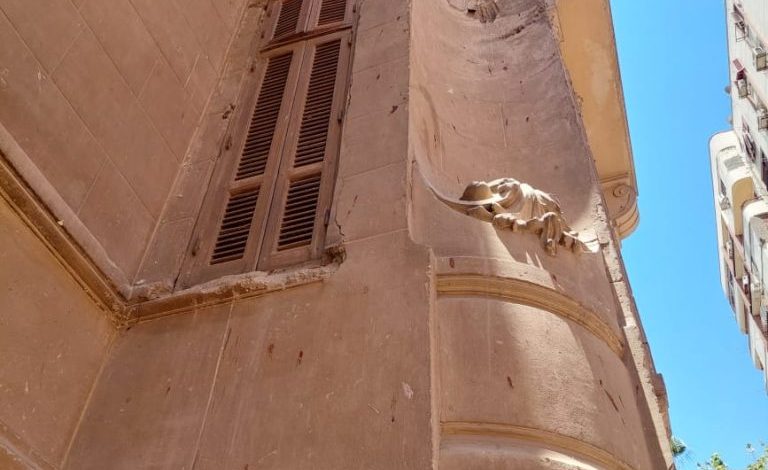
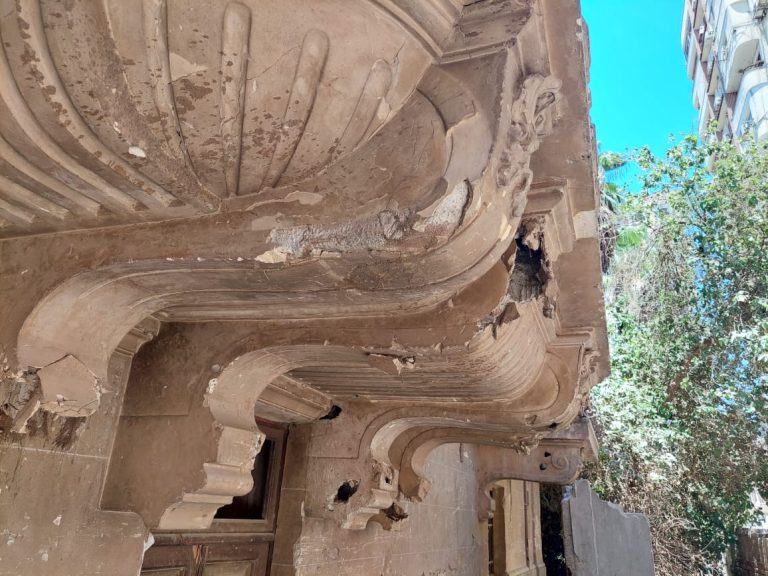
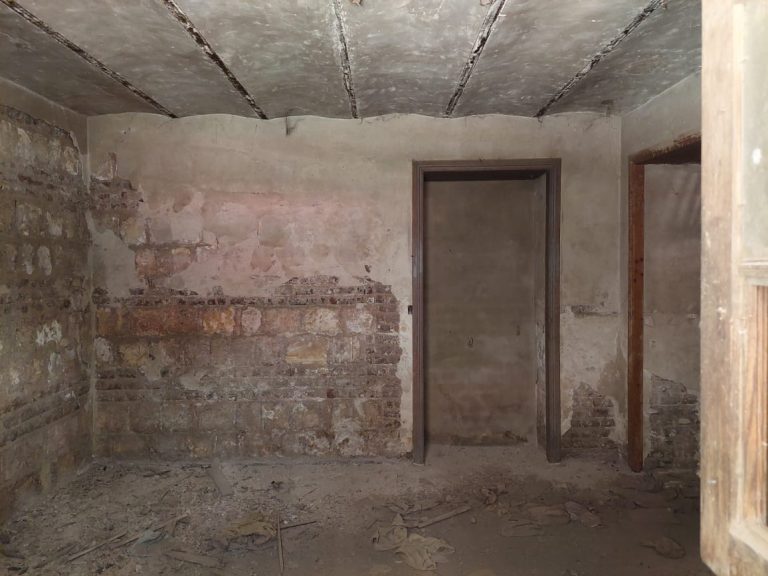
Behind crumbling walls, the palace stands in a lonely duel against neglect and the relentless march of time. During a field visit by Bab Masr, mounds of refuse lay scattered around the structure. Demolition has already claimed significant portions of its perimeter wall, stripping the site of its historical dignity and transforming the surrounding enclave into a wasteland of debris. While the palace once drew prestige from its sweeping front garden and outer wall, which bestowed a singular architectural identity upon it, its current state exposes a rapid, agonizing deterioration. Clear structural wounds scar its facades, sections of certain walls have collapsed into rubble, and its rooms stand hollow, stripped of any sign of life or purpose, a stark tableau reflecting the sheer scale of the challenges facing the preservation of this vital heritage landmark.
The Historical Weight of the Palace
Ownership of the palace originally belonged to the heirs of Mikhail Louka Al-Zaq, before they sold the property to the Coptic Orthodox Bishopric of Asyut. It secured its place on the registry of Islamic, Coptic, and Jewish antiquities via Prime Minister Decree No. 1226 of 1998, a designation earned through its singular architectural and decorative grandeur, which sets it apart from contemporary historic structures.
Caught Between De-listing and the Sledgehammer
“The continuous demolition of historic palaces is not merely the destruction of old brick and mortar; it is the systematic erasure of Asyut’s history and its soul,” says Asmaa Abdel Fattah, an architect residing in the city. “Preserving heritage represents the highest pinnacle of cultural refinement. How have we reached a point where our history and heritage are placed squarely under the guillotine of demolition and de-listing?”
Abdel Fattah adds: “A palace like that of Mikhail Louka is an architectural masterpiece resting right in the heart of our city. Five years ago, we were all blindsided by rumors of its removal from the antiquities registry, and today, news of its impending demolition spreads like wildfire. We remain entirely in the dark about what happens behind closed doors at the ministry of antiquities, and why we persist in wiping out everything precious and beautiful in Asyut. Dozens of buildings have crumbled right under the noses of public officials, while everyone watches in absolute, chilling silence.”
The Architecture Mafia
“The palace has now deteriorated into a literal dumping ground, bearing scars of destruction that feel entirely deliberate,” the architect continues. “The agonizing truth is that dozens of uniquely characterized palaces in Asyut have been razed to the ground, only for concrete residential towers to sprout in their stead. It has transformed into a syndicate of predatory brokers, and I firmly believe they pull the strings behind this assault on Asyut’s architectural legacy. Everything revolves around profit, real estate investment, and narrow self-interest. A select few line their pockets by completely obliterating every standing testament to Asyut’s rich architectural history.”
Unveiling the Truth of the De-listing
“To date, no official decree has been issued to de-list the Mikhail Louka Al-Zaq Palace from the antiquities registries,” clarifies Nashat Hassan, General Supervisor of Coptic, Islamic, and Jewish Antiquities in Asyut. “What does exist is a board recommendation from the Supreme Council of Antiquities to de-list it, dating back to 2022, but a formal ministerial decree has never materialized. As for the claims stating it was removed from the registry of architecturally distinctive buildings, that narrative is utterly baseless and entirely false. The palace remains firmly anchored on the list of distinctive heritage buildings, and by law, no one can lay a finger on it.”
He adds: “The matter is currently undergoing review, and it is the current owner of the palace who refuses to execute restoration works.” Hassan notes that while a legal knot complicates the Supreme Council of Antiquities’ recommendation, the building remains securely under the jurisdiction and responsibility of the Coptic, Islamic, and Jewish Antiquities sector. He continues: “We work tirelessly and spare absolutely no effort in our relentless pursuit to restore all historic sites across Asyut. Financial and technical estimates have already been finalized for the restoration of the Thabet Bathhouse, the Thabet Wekala (historic caravanserai), and the Shalabi Wekala (historic caravanserai). These are currently awaiting the Minister’s final approval for public tender. Furthermore, a decisive decree has been enacted to restore and develop the Alexander Pasha Palace, transforming it into Asyut’s national museum.”
The Guardian Committee
Mohamed Helmy, Dean of the Faculty of Fine Arts in Asyut and head of the governorate’s committee for inventorying architecturally distinctive buildings, confirms that the Mikhail Louka Al-Zaq Palace remains fully registered on the preservation lists. It has escaped any official de-listing to this day, and he notes that the monument rests firmly under the protective custody of the Coptic, Islamic, and Jewish Antiquities authority in Asyut.